

Book guide and evaluation
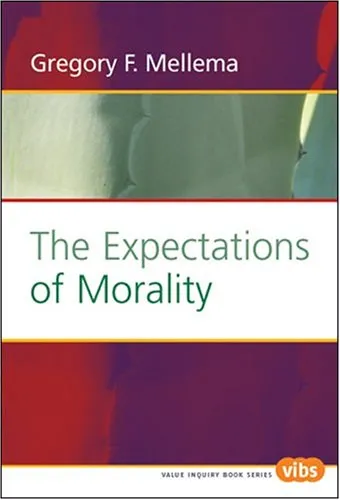
The Expectations of Morality (Value Inquiry Book Series, 158)
Gregory F. Mellema
English
Beginner
Essays
4.0 / 5
0 reviews
2004
Published
162
pages
411
views
Introduction to "The Expectations of Morality" Morality shapes the foundation of human interactions, presenting itself as a dynamic spectrum of personal, social, and cultural expectations. In my book, "The Expectations of Morality", I delve deeply into the intricate rela
Before you read
What will you get from this book?
Introduction to "The Expectations of Morality"
Morality shapes the foundation of human interactions, presenting itself as a dynamic spectrum of personal, social, and cultural expectations. In my book, "The Expectations of Morality", I delve deeply into the intricate relationship between the moral obligations we perceive and the expectations we impose on one another in diverse contexts. Part of the esteemed Value Inquiry Book Series, entry 158, this work is aimed at exploring complexities surrounding our moral choices, actions, and the weight of societal norms.
This book investigates how morality operates under a lens of varying expectations and explores the potential friction between individual autonomy and collective standards. As you journey through these pages, you will find in-depth discussions on responsibility, moral dilemmas, and the notion of voluntary and involuntary moral expectations. Let us now examine the key aspects that outline the book's structure and impact.
Detailed Summary of the Book
At its core, "The Expectations of Morality" examines a pivotal question: to what extent do moral obligations stem from the expectations individuals hold for one another within a society? The book begins by laying a philosophical foundation, exploring classical theories of morality and the role human interaction plays in shaping ethical behavior.
By dividing moral expectations into categories like voluntary and involuntary, the book provides readers with a nuanced understanding of how morality is both embraced and imposed. It investigates scenarios where conflicting moral obligations emerge—what happens when you're expected to conform to one societal norm that might contradict another? Through both hypothetical examples and real-world applications, the book examines moral failures, societal pressures, and the implications of meeting or failing expectations.
Additionally, discussions venture into the moral responsibilities attached to roles—whether as parents, employees, professionals, or community members. Finally, I aim to demonstrate how morality moves beyond mere compliance with rules and enters the domain of aspirational virtue.
Key Takeaways
- Morality often revolves as much around implicit expectations as explicit obligations.
- The dual categorization of moral expectations—voluntary and involuntary—determines how we respond to ethical scenarios.
- Moral conflicts arise when expectations overlap or contradict, challenging individuals to navigate these tensions with discretion and introspection.
- Societal roles come with a set of inherent expectations that influence our moral obligations.
- True morality goes beyond fulfilling external demands and evolves into a pursuit of ethical excellence.
These insights help readers frame their own understanding of morality, offering tools for analyzing their decisions and actions more critically.
Famous Quotes from the Book
"Moral responsibility is inevitably tied to the expectations we either embrace or fail to acknowledge in our relationships with others."
"The tension between what is expected of us and what we expect of ourselves is the crucible in which genuine morality is tested."
"To fulfill moral expectations is one thing; to aspire to values that transcend them is an altogether greater achievement."
Why This Book Matters
"The Expectations of Morality" is not just a theoretical inquiry into ethics; it is a practical guide for understanding real-world moral complexity. It provides readers who are philosophers, ethicists, and intellectually curious individuals with a roadmap to dissecting the expectations surrounding them.
Whether you're navigating personal relationships, workplace dynamics, or broader societal interactions, the concepts in this book encourage reflection, inspire moral growth, and emphasize the importance of aspiring toward ethical integrity. By focusing on the interplay of expectations and morality, this book offers both a philosophical framework and practical wisdom for anyone interested in navigating the evolving demands of contemporary society.
Morality is not static—it evolves alongside human relationships and institutions, and so must our understanding of it. This book provides the tools anyone needs to engage critically with the expectations that define our moral existence.
Ask this book
Your question is answered in the context of this title and author. Each answer uses 2 points.
Sign in to ask the book assistant.
Reader reviews
0 reviews, 4.0 average out of 5
No reviews yet
If you have read this book, help the next reader with your experience.
Write a review
Sign in to publish a review.
Reader questions and answers
Ask a focused question and learn from the community.
Sign in to ask or answer a question.
No questions yet
Be the first to ask a clear, useful question.
What to read next
Related references that continue this learning path.


The Oxford History of Poetry in English: Volume 3. Medieval Poetry: 1400-1500
Julia Boffey (editor),A. S. G. Edwards (editor)
2023
View book
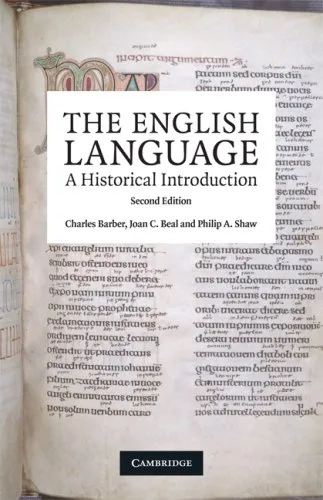
The English Language: A Historical Introduction
Charles Barber,Joan C. Beal,Philip A. Shaw
2009
View book