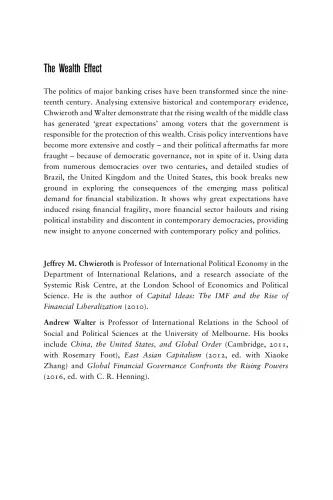
The Wealth Effect: How The Great Expectations Of The Middle Class Have Changed The Politics Of Banking Crises
Chwieroth, Jeffrey M.;Walter, Andrew
2019
View book
Book guide and evaluation
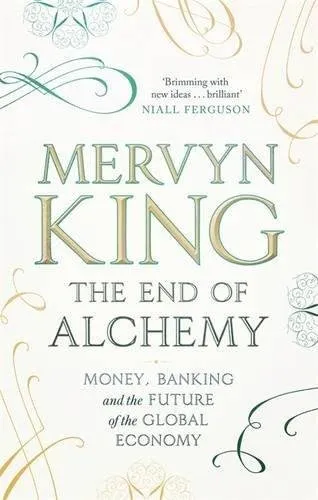
Mervyn King
0 reviews
Published
pages
views
Introduction to 'The End of Alchemy: Money, Banking, and the Future of the Global Economy' Written by Mervyn King, former Governor of the Bank of England, 'The End of Alchemy' presents a profound analysis of the global economic system. King explores the intricacies of mo
Before you read
Written by Mervyn King, former Governor of the Bank of England, 'The End of Alchemy' presents a profound analysis of the global economic system. King explores the intricacies of money, banking, and the real-world implications of our financial practices. This book serves as both a critique of past economic failures and a blueprint for future stability.
'The End of Alchemy' delves into the roots of financial instability that have repeatedly led to economic crises. King argues that the traditional banking system, likened to alchemy, requires a fundamental transformation. The author posits that modern finance operates on an illusion of stability, much like alchemy's promise of turning base metals into gold, which ultimately cannot ensure long-term economic health.
King explores historical economic collapses and identifies recurrent patterns, presenting them as evidence of systemic flaws. He chronicles the evolution of money and banking to highlight how these structures have both bolstered and burdened economies. The book then transitions to proposing innovative solutions, including a novel mechanism King refers to as the “pawnbroker for all seasons,” aimed at preventing future crises by ensuring that banks can withstand financial storms without succumbing to them.
“The alchemy of the system is an illusion. It is not a distortion; it is an illusion.”
“The way to preserve the open market economy is not by understanding every problem, but with institutional arrangements that foster the resilience to withstand unexpected shocks.”
'The End of Alchemy' is essential reading for policymakers, economists, and anyone interested in the stability of global finance. Mervyn King provides an insider’s perspective on the challenges faced by economies and the flawed philosophies that have perpetuated financial crises. By challenging traditional concepts and proposing forward-thinking solutions, King’s work encourages a reevaluation of how we think about money and banking.
The book is timely, given the increasing interconnectedness of global markets and the potential risks they bring. It provides readers with a lucid understanding of economic principles and advocates for proactive reforms. As financial systems worldwide face unprecedented challenges, King’s insights are both an urgent warning and a guide to crafting a more resilient economic future.
Your question is answered in the context of this title and author. Each answer uses 2 points.
0 reviews, 4.2 average out of 5
Sign in to publish a review.
Ask a focused question and learn from the community.
Related references that continue this learning path.
Chwieroth, Jeffrey M.;Walter, Andrew