Book guide and evaluation
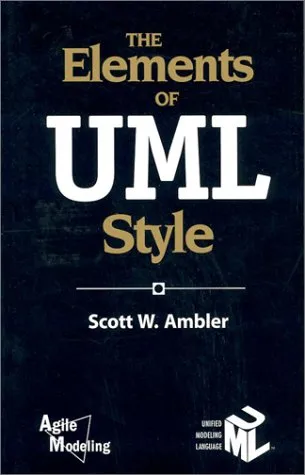
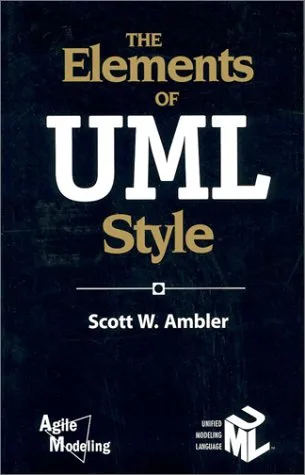
The Elements of UML™ Style (Sigs Reference Library)
Scott W. Ambler
English
Beginner
vocab
4.5 / 5
0 reviews
2002
Published
162
pages
520
views
Welcome to the introduction of "The Elements of UML™ Style", a definitive guide to mastering the Unified Modeling Language (UML) with clarity and precision. This book, part of the Sigs Reference Library, is a valuable resource for anyone involved in software design and archit
Before you read
What will you get from this book?
Welcome to the introduction of "The Elements of UML™ Style", a definitive guide to mastering the Unified Modeling Language (UML) with clarity and precision. This book, part of the Sigs Reference Library, is a valuable resource for anyone involved in software design and architecture.
Detailed Summary of the Book
In "The Elements of UML™ Style", Scott W. Ambler provides a comprehensive examination of UML conventions, focusing on practical advice for designing and documenting your software robustly. The book demystifies UML by distilling its components into easy-to-understand elements, guidelines, and best practices. By emphasizing simplicity and precision, Ambler ensures that UML diagrams communicate effectively within a team and across diverse software projects.
The book is meticulously structured, offering sections on different UML diagrams, such as class diagrams, use case diagrams, sequence diagrams, and more. Each section elaborates on stylistic choices that promote clarity and detail best practices for documenting software designs. Ambler's insights help readers produce clear, accurate, and effective UML models that facilitate communication and support agile development principles.
Key Takeaways
- Understand the importance of UML as a language to convey software design specifications unambiguously.
- Learn about the recommended stylistic guidelines for creating comprehensible UML diagrams.
- Explore the effective organization of UML elements like classes, interfaces, and packages for clean architecture.
- Gain insights into enhancing cross-disciplinary communication through clear documentation.
- Optimize your UML diagrams for better readability and understanding, especially for non-technical stakeholders.
Famous Quotes from the Book
“UML is not about boxes and arrows, it's about creating a shared understanding.”
“The purpose of a model is to communicate a portion of the design efficiently. It's not just an artifact to complete a checklist.”
Why This Book Matters
The significance of "The Elements of UML™ Style" lies in its focus on simplifying the adoption of UML. As software development evolves rapidly, with methodologies shifting towards agile practices, a reliable illustrative style becomes crucial. UML serves as the lingua franca for software modelers, architects, and developers, and mastering its utilization is indispensable for effective collaboration.
This book matters because it does not merely list UML notation; it educates readers on how to effectively use UML to enhance documentation quality and improve project communication. By applying the guidelines and principles within this book, software teams can ensure that their models are not only technically correct but also convey the essential design intent.
Furthermore, the book bridges the gap between theory and practice, offering readers vital skills to apply UML immediately to real-world projects. Its relevance spans across various industries, making it a timeless asset for professionals keen on producing reliable and maintainable software architecture.
In conclusion, whether you are a seasoned developer, a software architect, or a student aspiring to enter the software industry, "The Elements of UML™ Style" is an essential read. It provides you with the keys to unlocking effective software communication through UML, ensuring your designs are both articulate and enduring.
Ask this book
Your question is answered in the context of this title and author. Each answer uses 2 points.
Sign in to ask the book assistant.
Reader reviews
0 reviews, 4.5 average out of 5
No reviews yet
If you have read this book, help the next reader with your experience.
Write a review
Sign in to publish a review.
Reader questions and answers
Ask a focused question and learn from the community.
Sign in to ask or answer a question.
No questions yet
Be the first to ask a clear, useful question.
What to read next
Related references that continue this learning path.