Principles of Psychology: a Systematic Text in the Science of Behavior
Fred S. Keller,William N. Schoenfeld
1995
View book
Book guide and evaluation
Liliana Tolchinsky
0 reviews
Published
pages
views
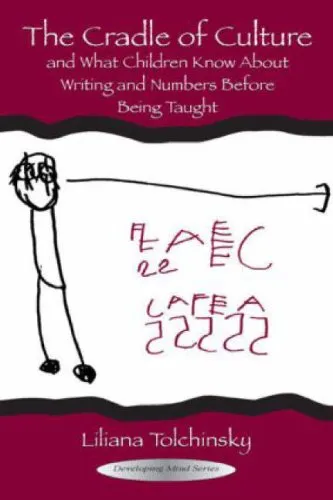
Introduction to "The Cradle of Culture" In 'The Cradle of Culture: And What Children Know About Writing and Numbers Before Being Taught', author Liliana Tolchinsky explores the rich and often overlooked cognitive endowments children possess pre-instruction. Her work delv
Before you read
In 'The Cradle of Culture: And What Children Know About Writing and Numbers Before Being Taught', author Liliana Tolchinsky explores the rich and often overlooked cognitive endowments children possess pre-instruction. Her work delves deeply into children's spontaneous understanding of writing and numbers, inviting readers to rethink conventional perceptions of how knowledge in these domains develops.
This book provides a comprehensive examination of how very young children perceive, interpret, and use writing and numbers long before formal education begins. Tolchinsky posits that children are not blank slates; instead, they bring intrinsic competencies to their learning experiences. These competencies are shaped by the culture and environment into which they are born and play a crucial role in their cognitive development.
Part I of the book focuses on children's understanding of writing. It unpacks the early mastery of scribbles that represent early attempts at written communication, illustrating that young minds distinguish between drawing and writing. Through various observations and studies, the book demonstrates that children develop hypotheses about writing that are informed by their environmental encounters with text and literacy practices.
Part II shifts to children's innate numerical knowledge. Tolchinsky shares her findings on how children intuitively perceive quantity and numerical relationships without having been formally taught. Using anecdotes and research data, she explains how children reveal sophisticated insights into numbers and arithmetic through play and everyday activities.
"Children come into this world primed to make sense of symbols and numbers, weaving their own narratives from the tapestry of cultural cues that surround them."
"The lines between play and learning blur, as children embark on their journeys of discovery with a fertile mix of curiosity and creativity."
The insights shared in 'The Cradle of Culture' are vital for educators, parents, and policy makers. Liliana Tolchinsky challenges the notion that education starts with formal teaching, asserting instead that it begins far earlier with the child's first experiences in the world. This perspective calls for a re-evaluation of early childhood education practices, urging us to cultivate environments that recognize and nurture the nascent abilities children bring with them.
By understanding the mechanisms through which young children engage with writing and numbers, we can better tailor educational approaches that harness these foundational skills. Tolchinsky's work advocates for a paradigm shift, one that recognizes children's intrinsic potential and the profound implications of cultural context on their development.
Your question is answered in the context of this title and author. Each answer uses 2 points.
0 reviews, 4.5 average out of 5
Sign in to publish a review.
Ask a focused question and learn from the community.
Related references that continue this learning path.
Fred S. Keller,William N. Schoenfeld

Daniel J. Siegel