Book guide and evaluation
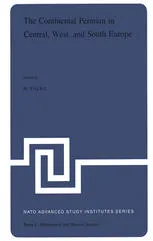
The Continental Permain in Central, West, and South Europe: Proceedings of the NATO Advanced Study Institute held at the Johannes Gutenberg University, Mainz, F.R.G., 23 September – 4 October, 1975
H. Falke (auth.),H. Falke (eds.)
English
Beginner
Artificial Intelligence (AI)
4.3 / 5
0 reviews
1976
Published
360
pages
569
views
Introduction "The Continental Permian in Central, West, and South Europe" is a compendium of diverse insights and detailed analyses stemming from the proceedings of the NATO Advanced Study Institute. This significant gathering was held from September 23 to October
Before you read
What will you get from this book?
Introduction
"The Continental Permian in Central, West, and South Europe" is a compendium of diverse insights and detailed analyses stemming from the proceedings of the NATO Advanced Study Institute. This significant gathering was held from September 23 to October 4, 1975, at the Johannes Gutenberg University in Mainz, Federal Republic of Germany. The book is an essential resource for geologists, paleontologists, and researchers focused on the Permian period's geological and paleoclimatic phenomena, particularly in Central, West, and South Europe. The contributions encapsulate a broad spectrum of themes and methodologies, affirming the complexity and diversity of the Permian systems in these regions.
Detailed Summary of the Book
This book systematically explores the Continental Permian stratigraphy, sedimentology, and paleoenvironments of Central, West, and South Europe. Each chapter is meticulously crafted by experts in the field, offering a compendium of knowledge that demonstrates the variability and continuity of Permian deposits across Europe. The proceedings analyze the intricate record of changes in environment, climate, and biota during the Permian period, approximately 299 to 252 million years ago, leading up to the largest mass extinction event in Earth's history.
Key insights include the evaluation of depositional environments, the impact of tectonic activities on sedimentation, and the study of fossil records which provide a window into the Permian ecosystems. Discussions cover fluvial, lacustrine, and aeolian processes crucial in shaping the Permian deposits and the fascinating interplay between terrestrial and marine influences on the sedimentary record.
Key Takeaways
- The Continental Permian period was marked by significant geological and climatic shifts that influenced the stratigraphy of Central, West, and South Europe.
- The interplay of sedimentological processes played a critical role in the development of diverse depositional environments.
- The book provides evidence for extensive tectonic movements and their effects on the Permian landscapes.
- In-depth analyses of fossil records enhance our understanding of Permian flora and fauna and their evolutionary significance.
Famous Quotes from the Book
“Understanding the Permian period is key to unraveling the history of Earth's great evolutionary transitions.”
“The Permian deposits in Europe serve as a crucial archive of past climates and ecosystems, providing invaluable insights into ancient biodiversity dynamics.”
Why This Book Matters
This book is of paramount importance for researchers and students interested in the Permian period because it encapsulates the collective expertise and findings from a significant scientific event. By compiling the proceedings of this seminal conference, the book stands as a comprehensive source of knowledge and a point of reference for future research in geology and paleontology. Its relevance extends beyond academic circles, offering insights that can aid in understanding modern climate change by providing historical context and trends.
The artful integration of stratigraphic and sedimentologic studies offers new perspectives and fosters a deeper appreciation of the natural forces that have sculpted the Earth's geological history. The collaborative element of these proceedings illustrates the importance of interdisciplinary research and international collaboration in addressing complex scientific questions.
Ask this book
Your question is answered in the context of this title and author. Each answer uses 2 points.
Sign in to ask the book assistant.
Reader reviews
0 reviews, 4.3 average out of 5
No reviews yet
If you have read this book, help the next reader with your experience.
Write a review
Sign in to publish a review.
Reader questions and answers
Ask a focused question and learn from the community.
Sign in to ask or answer a question.
No questions yet
Be the first to ask a clear, useful question.
What to read next
Related references that continue this learning path.
Machine Learning and Data Mining in Pattern Recognition: Second International Workshop, MLDM 2001 Leipzig, Germany, July 25–27, 2001 Proceedings
Ari Visa (auth.),Petra Perner (eds.)
2001
View book