Book guide and evaluation
The Complete Guide to Perspective Drawing: From One-Point to Six-Point
Craig Attebery
English
Advanced
Painting & Drawing
4.6 / 5
0 reviews
2018
Published
371
pages
573
views
Computers can calculate perspective angles and create a drawing for us, but the spontaneity of mark making, the tactile quality of a writing surface, the weight of a drawing instrument, and the immediacy of the human touch are sensations that keep traditional drawing skills perpe
Before you read
What will you get from this book?
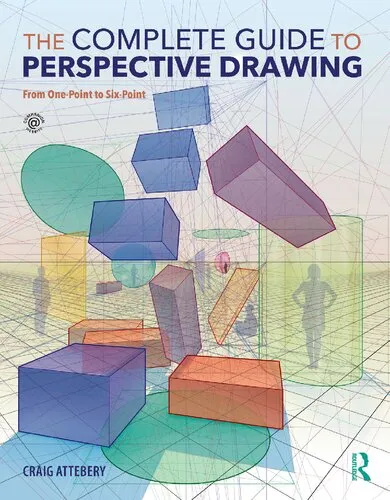
Computers can calculate perspective angles and create a drawing for us, but the spontaneity of mark making, the tactile quality of a writing surface, the weight of a drawing instrument, and the immediacy of the human touch are sensations that keep traditional drawing skills perpetually relevant. The sensuality and convenience of the hand persists and will survive as a valuable communication tool, as will the need to accurately express your ideas on paper. As a professional, understanding the foundations of drawing, how we process images, and how we interpret what we see are principal skills. Understanding linear perspective enables artists to accurately communicate their ideas on paper. The Complete Guide to Perspective Drawing offers a step-by-step guide for the beginner as well as the advanced student on how to draw in one-point through six-point perspective and how to make scientifically accurate conceptual illustrations from simple to complex situations.
Ask this book
Your question is answered in the context of this title and author. Each answer uses 2 points.
Sign in to ask the book assistant.
Reader reviews
0 reviews, 4.6 average out of 5
No reviews yet
If you have read this book, help the next reader with your experience.
Write a review
Sign in to publish a review.
Reader questions and answers
Ask a focused question and learn from the community.
Sign in to ask or answer a question.
No questions yet
Be the first to ask a clear, useful question.
What to read next
Related references that continue this learning path.