Practical Troubleshooting of Electrical Equipment and Control Circuits
Mark Brown, Jawahar Rawtani M.Sc(Tech) MBA, Dinesh Patil B.E (I&C) DipEE
2005
View book
Book guide and evaluation
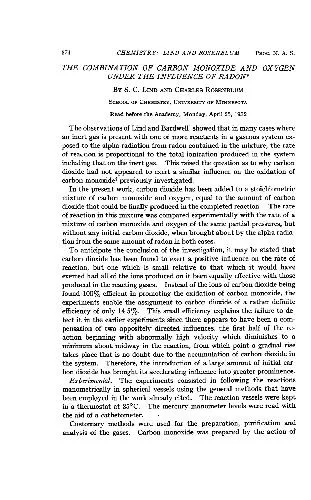
Lind S. C.,Rosenblum C.
0 reviews
Published
pages
views
Introduction The groundbreaking book, "The Combination of Carbon Monoxide and Oxygen under the Influence of Radon," is a comprehensive exploration into the fascinating intersection of chemical reactions influenced by environmental radioactive elements. Authored
Before you read
The groundbreaking book, "The Combination of Carbon Monoxide and Oxygen under the Influence of Radon," is a comprehensive exploration into the fascinating intersection of chemical reactions influenced by environmental radioactive elements. Authored by Lind S. C. and Rosenblum C., this work delves into the complex mechanisms through which radon, a naturally occurring radioactive gas, impacts the chemical interactions between carbon monoxide (CO) and oxygen (O₂). By meticulously analyzing these dynamics, the authors provide an illuminating perspective on radon's dualistic role as both a hazardous and a potentially useful component in advanced chemical processes.
Written for a diverse audience, including chemists, researchers, environmental scientists, and students, this book not only sheds light on a specific chemical phenomenon but also offers broader insights into the nature of chemical reactions as modulated by radiation. The text is rich with experimental data, theoretical perspectives, and practical applications, making it a valuable resource for anyone interested in the deeper layers of chemical science.
The core of the book lies in its extensive examination of how radon affects the reaction between carbon monoxide and oxygen. Through a series of carefully controlled experiments, the authors demonstrate that radon can act as both a catalyst and an inhibitor under different conditions, affecting the rate and products of this classic oxidation reaction.
In the initial chapters, the authors introduce the basic properties of the gases involved, outlining the molecular structure and typical behaviors of carbon monoxide and oxygen in isolated environments. Following this, they delve into the characteristics of radon, offering a detailed look at its radioactive nature and prevalence in various environments.
The middle section of the book is dedicated to the detailed experimental procedures and results. The authors describe a variety of experimental setups designed to isolate and measure the influence of radon on CO and O₂ reactions. Each experiment is thoroughly discussed, with a focus on how different concentrations of radon, temperature variations, and pressure levels impact the reactions.
Concluding sections bring together the data and theories presented throughout the book, exploring potential applications in fields such as environmental science, industrial chemistry, and public health.
"In the invisible dance of atoms and particles, radon emerges as an unexpected choreographer, shaping the performance of chemical reactions in the quiet spaces it inhabits."
"The challenge lies not in understanding isolated chemical interactions, but in integrating the myriad influences of our natural world into cohesive scientific narratives."
This book is significant beyond its immediate scientific contributions. It challenges established notions about radioactivity and chemical processes, advocating for a nuanced understanding of how these elements interact. By providing a comprehensive analysis of an overlooked aspect of chemical science, the book encourages further exploration and interdisciplinary research.
Moreover, the insights presented within these pages have potential implications for public health, environmental policy, and industrial operations. As the world grapples with the dual challenges of energy production and environmental conservation, understanding chemical interactions in the presence of natural radioactive elements becomes increasingly critical. This book offers a vital, detailed examination that broadens our understanding and opens new avenues for scientific inquiry.
Your question is answered in the context of this title and author. Each answer uses 2 points.
0 reviews, 5.0 average out of 5
Sign in to publish a review.
Ask a focused question and learn from the community.
Related references that continue this learning path.
Mark Brown, Jawahar Rawtani M.Sc(Tech) MBA, Dinesh Patil B.E (I&C) DipEE