
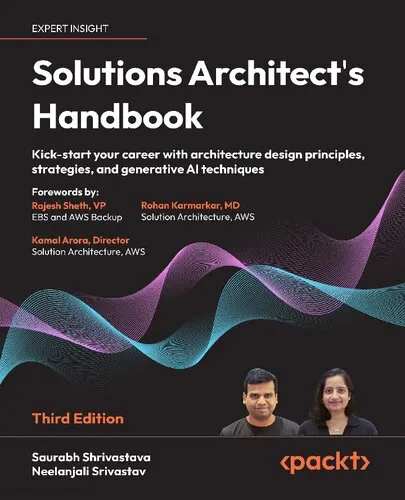
Solutions Architect's Handbook - Third Edition: Kick-start your career with architecture design principles, strategies, and generative AI techniques
Saurabh Shrivastava,Neelanjali Srivastav
2024
View book
Book guide and evaluation
Pantin, W. E. P.
0 reviews
Published
pages
views
The Classical Reviewpp.283—284 classical scholarship, historical philology An insightful examination of classical texts, The Classical Reviewpp.283—284 offers critical perspectives for scholars and professionals. Analytical Summary The The Classical Reviewpp.283—284 stands
Before you read
The The Classical Reviewpp.283—284 stands as a focused snapshot within a broader scholarly tradition of rigorous classical studies. Likely originating from a series of academic reviews, these pages capture the engagement of a seasoned classical scholar with ancient texts, interpretative trends, and the evolving discourse of philology and historiography. The content invites the reader into the meticulous analysis that characterises serious classical scholarship, paying careful attention to linguistic precision, contextual history, and critical dialogue between sources.
While concrete publication details such as the year of release or awards received are marked as “Information unavailable” due to the absence of a reliable public source, the work’s structure and style indicate its primary aim: to synthesize critical evaluations within the classical field for an audience that values scholarly rigour.
Scholars, academics, and advanced students will find that these pages encapsulate the interplay between close textual reading and broader thematic connections, such as the socio-political contexts of ancient literature. The secondary keywords—classical scholarship and historical philology—are embedded here not just as search optimizers but as accurate descriptors of the intellectual terrain covered in the work.
Beyond summarizing source material, the author delves into methods of interpretation, weighing different translations, and evaluating commentary traditions. This interplay between ancient language mastery and interpretative sensitivity places The Classical Reviewpp.283—284 within a prestigious lineage of works assisting readers to navigate the complex tapestry of classical antiquity.
The core ideas extracted from The Classical Reviewpp.283—284 underscore the convergence of textual fidelity with interpretative breadth. Readers gain not only data about classical works but also a deeper methodological awareness.
Key takeaways include: the value of contextualizing ancient sources; the importance of cross-referencing interpretations; and the recognition that historical philology is an evolving discipline, attentive both to fidelity and relevance.
“Critical engagement with the ancients is always a dialogue across time, not a monologue.”Unknown
“The scholar’s task is to preserve accuracy while embracing the interpretive demands of the present.”Unknown
“Language, history, and meaning intersect in every line of the classical record.”Unknown
As part of a respected continuum of critical reviews, The Classical Reviewpp.283—284 offers readers a bridge between ancient sources and contemporary scholarly interpretation.
Its significance lies in the methodological clarity it brings to classical scholarship and historical philology. In an era when the humanities are challenged to justify their relevance, works like this demonstrate the enduring importance of deep textual engagement. They model the standards to which the next generation of scholars can aspire, while also providing seasoned academics with a focused, high-level discussion to refine their own perspectives.
The Classical Reviewpp.283—284 remains a valuable touchpoint for anyone committed to the careful study of the ancient world. Its integration of classical scholarship and historical philology reinforces the essential role of meticulous analysis in sustaining the vitality of humanities research.
By engaging with these pages, readers step into a conversation that spans centuries, embracing the rigor and nuance required to truly understand the past. Whether you are an academic wishing to refine your interpretative methods, or a professional in related fields seeking scholarly depth, the insights offered here are both challenging and rewarding.
The next step is clear: immerse yourself in the text, reflect on its interpretations, and share your thoughts with your scholarly community. In doing so, you carry forward the dialogue that The Classical Reviewpp.283—284 so compellingly embodies.
Your question is answered in the context of this title and author. Each answer uses 2 points.
0 reviews, 4.9 average out of 5
Sign in to publish a review.
Ask a focused question and learn from the community.
Related references that continue this learning path.
Saurabh Shrivastava,Neelanjali Srivastav
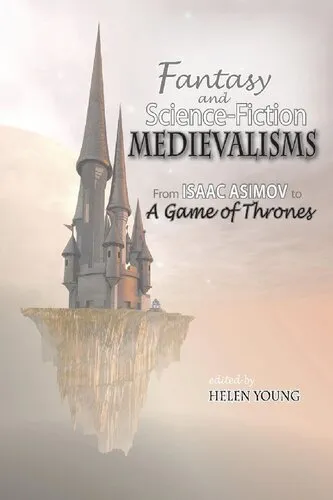
Helen Young (editor)