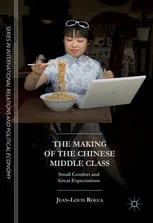
The Making of the Chinese Middle Class: Small Comfort and Great Expectations
Jean-Louis Rocca (auth.)
2017
View book
Book guide and evaluation
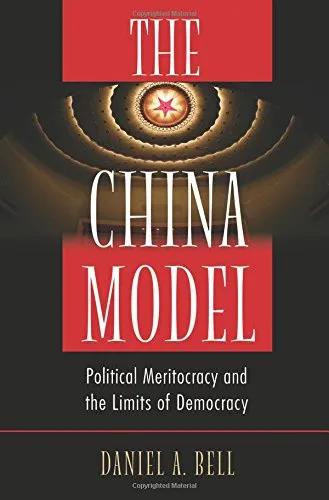
Daniel A. Bell
0 reviews
Published
pages
views
The concept of political meritocracy has long been debated but rarely examined with the depth and balance found in "The China Model: Political Meritocracy and the Limits of Democracy." Authored by Daniel A. Bell, this book offers a rich analysis of the Chinese political model
Before you read
The concept of political meritocracy has long been debated but rarely examined with the depth and balance found in "The China Model: Political Meritocracy and the Limits of Democracy." Authored by Daniel A. Bell, this book offers a rich analysis of the Chinese political model, scrutinizing its merits and limitations while contrasting it with Western democratic ideals. Through meticulous research and a nuanced approach, Bell presents a vision of governance that challenges conventional wisdom and encourages a rethinking of political possibilities.
The book delves into the complexities of China's political system, characterized by its distinctive model of governance—political meritocracy. Bell explores how this system operates, emphasizing the selection and promotion of leaders based on ability and merit rather than popularity or electoral success. He argues that such a system can lead to more competent governance, especially in a vast country like China with its diverse and complex challenges.
Bell doesn't shy away from discussing the criticisms and potential pitfalls of meritocracy. He acknowledges issues such as bureaucratic elitism, potential for corruption, and the lack of public accountability. Furthermore, the book contrasts China’s meritocratic system with Western democratic practices, highlighting the trade-offs inherent in both systems. Bell invites readers to consider whether incorporating elements of meritocracy might enhance democratic systems, especially in addressing long-term challenges that require expert decision-making.
"Political meritocracy makes good on its promise of capable leadership not by empowering every voice, but by empowering the competent."
"Democracy empowers citizens with the belief that each vote shapes the future, but it is the burden of meritocracy to craft leaders who can foresee and navigate that future."
In an era marked by political disillusionment and calls for reform across the globe, "The China Model" provides a necessary provocation to the Western-dominated discourse on governance. Bell’s examination of China’s political system forces readers to confront difficult questions about the nature of effective leadership and governance. The book is particularly relevant as nations grapple with increasingly complex global challenges that require both innovative solutions and expert knowledge.
Moreover, Bell’s balanced critique of both meritocracy and democracy offers an opportunity for readers to reflect on their own political systems and consider reformative strategies that may not align with traditional democratic models. By placing China's system in a comparative philosophical framework, the book encourages a more informed and less dogmatic discussion on governance that transcends cultural and political boundaries.
Your question is answered in the context of this title and author. Each answer uses 2 points.
0 reviews, 4.8 average out of 5
Sign in to publish a review.
Ask a focused question and learn from the community.
Related references that continue this learning path.
Jean-Louis Rocca (auth.)

Debasish Roy ChowdhuryandJohn Keane