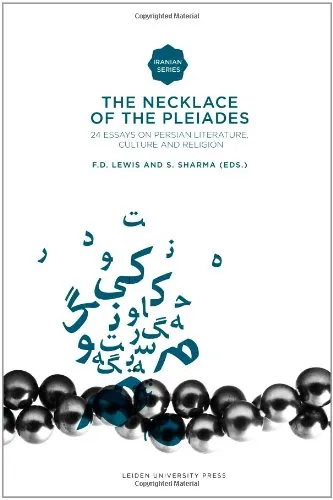
The Necklace of the Pleiades: 24 Essays on Persian Literature, Culture and Religion (Iranian Studies Series)
Franklin LewisandSunil Sharma (Editors)
2010
View book
Book guide and evaluation
Edited by Peter Avery, Gavin HamblyandCharles Melville
0 reviews
Published
pages
views
The Cambridge History of Iran Vol. 7: From Nadir Shah to the Islamic Republic Modern Iranian history, Middle Eastern political transformations Authoritative chronicle of The Cambridge History of Iran Vol. 7: From Nadir Shah to the Islamic Republic. Analytical Summary
Before you read
The Cambridge History of Iran Vol. 7: From Nadir Shah to the Islamic Republic offers an exhaustive and scholarly narrative that spans almost two and a half centuries of Iran’s turbulent history. Edited by Peter Avery, Gavin Hambly, and Charles Melville, this volume captures the complexities of political power struggles, shifting dynasties, ideological revolutions, and socio-economic transformations from the mid-18th century rise of Nadir Shah to the formation and evolution of the Islamic Republic.
The work stands out for its integration of political history with cultural and intellectual developments, situating Iran within both regional and global contexts. It presents a careful synthesis of research from leading historians, ensuring accuracy, depth, and balance. While serving as an essential academic resource, the narrative remains accessible to dedicated non-specialist readers with an interest in Middle Eastern history.
The chronological progression—from the military genius and eventual downfall of Nadir Shah, through the Qajar dynasty, the Pahlavi monarchy, and the seismic shift brought about by the 1979 Islamic Revolution—allows readers to grasp the interplay between internal dynamics and external pressures. This structure makes the book not only a scholarly reference but also an enduring guide for understanding Iran’s rich and often turbulent modern history.
This volume is packed with carefully researched insights that serve historians, political scientists, and regional experts alike. The Cambridge History of Iran Vol. 7: From Nadir Shah to the Islamic Republic offers a concise yet comprehensive set of lessons on leadership, resilience, and transformation in the modern Iranian context.
It highlights the enduring significance of Iran’s geographic position and how it shaped foreign relations. It reveals the importance of economic reforms and modernization attempts, especially under the Pahlavis. The book also emphasizes the cultural renaissance in literature, art, and music, even amid political unrest.
The scholarly approach ensures that historical narratives are supported by evidence, with clear distinctions between contested interpretations and well-established facts. Readers gain a nuanced understanding of Iran’s internal debates on identity, governance, and modernization, making this volume a cornerstone for serious study.
"The history of Iran is not simply a chain of rulers, but a tapestry woven from its people's resilience and aspirations."Unknown
"From Nadir Shah’s ambitions to the ideological fervor of 1979, Iran’s path reflects the complex dance between tradition and change."Unknown
For academics, policymakers, and informed readers, this book is more than a historical account—it is a framework for comprehending Iran’s role in world affairs. By connecting political milestones to cultural and social developments, The Cambridge History of Iran Vol. 7: From Nadir Shah to the Islamic Republic bridges disciplinary divides and encourages multidimensional analysis.
Its relevance continues today, as debates on governance, reform, and cultural identity in Iran remain deeply rooted in the historical processes covered in its pages. This makes the book indispensable for those seeking informed perspectives on current events in the Middle East.
The Cambridge History of Iran Vol. 7: From Nadir Shah to the Islamic Republic stands as a monumental contribution to the understanding of Iran’s modern trajectory. Its richly detailed chapters invite readers into the lived realities of rulers, reformers, patriots, and ordinary citizens, offering a panoramic view of the nation’s transformation.
Whether used as a teaching resource, a scholarly reference, or a personal exploration of Iranian history, it encourages meaningful engagement and informed discourse. Readers are urged to delve into its pages, share its insights, and discuss its implications in academic and professional circles, ensuring that the lessons and legacies it preserves remain central to our understanding of Iran and its place in the world.
Your question is answered in the context of this title and author. Each answer uses 2 points.
0 reviews, 4.7 average out of 5
Sign in to publish a review.
Ask a focused question and learn from the community.
Related references that continue this learning path.
Franklin LewisandSunil Sharma (Editors)

Guan Heng Yeoh,Kwok Kit Yuen