

Book guide and evaluation
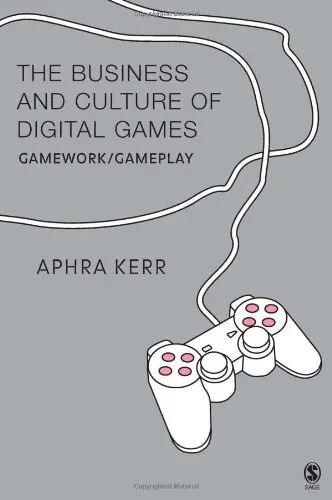
The Business and Culture of Digital Games: Gamework and Gameplay
Aphra Kerr
English
Beginner
Art
4.6 / 5
0 reviews
2006
Published
188
pages
216
views
Introduction to 'The Business and Culture of Digital Games: Gamework and Gameplay' Welcome to an enlightening exploration of one of the most dynamic and rapidly evolving industries of our time: digital games. In 'The Business and Culture of Digital Games: Gamework and Game
Before you read
What will you get from this book?
Introduction to 'The Business and Culture of Digital Games: Gamework and Gameplay'
Welcome to an enlightening exploration of one of the most dynamic and rapidly evolving industries of our time: digital games. In 'The Business and Culture of Digital Games: Gamework and Gameplay', I, Aphra Kerr, dive deep into the intricate interplay between the business mechanics, cultural aspects, and everyday practices that shape the digital games industry. This book offers a holistic perspective that bridges the gap between game studies, industry practices, and player communities, making it an essential resource for anyone intrigued by the digital gaming phenomenon.
The book is designed not only for scholars and students of media, cultural studies, and business but also for avid gamers, industry professionals, and anyone curious about the profound impact of digital games on our cultural and economic landscapes.
Detailed Summary of the Book
The book is structured to provide readers with a comprehensive understanding of the digital gaming ecosystem. It begins by tracing the evolution of the games industry, highlighting crucial turning points that have shaped its current structure. From the early days of arcade games to the rise of home consoles and the advent of mobile gaming, the book examines the technological advancements, market strategies, and cultural shifts that have driven the industry forward.
Subsequent chapters delve into the “gamework” – the production processes, labor practices, and business models underlying game creation. The book sheds light on how developers, publishers, and even independent creators navigate a global industry marked by fierce competition and innovation. It also highlights the challenges of creativity and labor conditions in an industry often caught between artistic vision and commercial demands.
On the cultural side, the concept of “gameplay” is explored, focusing on the players themselves. Who are they? How do they engage with games? The book investigates the ways in which games become part of our everyday lives, affecting identity, relationships, and cultural norms. From massively multiplayer online games (MMOs) to casual mobile games, the exploration seeks to understand the motivations, pleasures, and even frustrations of digital play.
Lastly, the book provides a critical lens on the power dynamics of the gaming industry. It considers issues of representation, diversity, and inclusivity, highlighting the voices of underrepresented groups in both the production and the consumption of games. The book also discusses the growing importance of regulation, intellectual property, and ethical dilemmas, such as monetization practices and their impact on players.
Key Takeaways
- Digital games are a product of both cultural and economic forces, shaped by a complex interplay between technology, creativity, and commerce.
- The labor involved in game production often bridges artistic vision with commercial requirements, making it a unique form of creative work.
- Players are not just consumers but active participants who interpret, modify, and derive social meaning from games.
- Representations in games influence cultural norms, but the industry still faces challenges related to diversity and inclusivity.
- The field of digital games requires a multidisciplinary approach, combining insights from business, cultural studies, and media studies.
Famous Quotes from the Book
"Digital games are both a product and a process, a reflection of cultural dynamics and a medium that shapes them in turn."
"To understand digital games, we must look beyond the screens and controllers – to the people, industries, and cultures that create and consume them."
"Representation matters, not just in the stories and characters of games but in the voices behind their creation."
Why This Book Matters
Digital games are no longer mere forms of entertainment; they are cultural artifacts that influence society, politics, and individual identities. Understanding this medium requires an interdisciplinary approach, and this book provides precisely that. By combining insights into the business models, production practices, and cultural impact of games, it serves as a valuable resource for anyone interested in this transformative industry.
In the world of academia, this book fills a critical gap between scholarly research and practical insights. For industry professionals, it offers a thoughtful perspective on the broader implications of their work. For players, it encourages a deeper reflection on the games they play and love. In essence, this book is for everyone who wishes to navigate and critically engage with the vibrant world of digital games.
Ask this book
Your question is answered in the context of this title and author. Each answer uses 2 points.
Sign in to ask the book assistant.
Reader reviews
0 reviews, 4.6 average out of 5
No reviews yet
If you have read this book, help the next reader with your experience.
Write a review
Sign in to publish a review.
Reader questions and answers
Ask a focused question and learn from the community.
Sign in to ask or answer a question.
No questions yet
Be the first to ask a clear, useful question.
What to read next
Related references that continue this learning path.



Modern Computer Vision with PyTorch: A Practical Roadmap From Deep Learning Fundamentals to Advanced Applications and Generative AI, 2nd Edition
V Kishore Ayyadevara,Yeshwanth Reddy
2023
View book