Book guide and evaluation
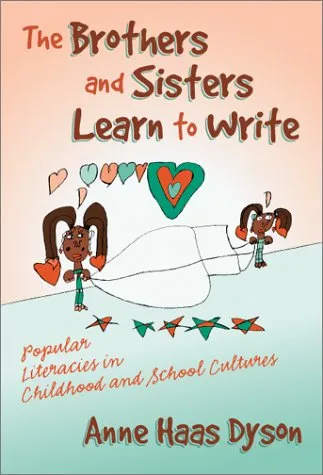
The Brothers and Sisters Learn to Write: Popular Literacies in Childhood and School Cultures
Anne Haas Dyson
English
Intermediate
novel
4.0 / 5
0 reviews
2003
Published
265
pages
567
views
Introduction to "The Brothers and Sisters Learn to Write: Popular Literacies in Childhood and School Cultures" In "The Brothers and Sisters Learn to Write," Anne Haas Dyson intricately weaves the narratives of young children as they navigate the complex realms
Before you read
What will you get from this book?
Introduction to "The Brothers and Sisters Learn to Write: Popular Literacies in Childhood and School Cultures"
In "The Brothers and Sisters Learn to Write," Anne Haas Dyson intricately weaves the narratives of young children as they navigate the complex realms of literacy both within and outside the classroom setting. Employing a blend of ethnography and critical analysis, Dyson illuminates how popular cultural influences such as television, video games, and music form a significant part of children's literacy development. By presenting a nuanced exploration of these literacy practices, Dyson challenges traditional educational perspectives and offers a fresh look at how schools can genuinely embrace the cultural literacies that children bring with them.
Detailed Summary
Dyson’s work is a window into the diverse literacies that children engage with. The book is based on extensive research in a primary school classroom where Dyson observed the interactions and written productions of a group of children referred to as "The Brothers and Sisters." Through these observations, Dyson reveals how children incorporate elements of the pop culture they consume into their written compositions. This demonstrates not only their engagement with writing but also how they negotiate and make sense of the world around them.
Dyson explores how these young learners blend storylines from TV shows, superhero narratives, and social interactions into their writing. She argues that these forms of literacies, enriched by diverse media inputs, hold as much importance as conventional academic literacies promoted by the school curriculum. Ultimately, Dyson advocates for educators to recognize and integrate these popular literacies to make education more inclusive and reflective of children’s real-life experiences.
Key Takeaways
- Recognition of the value of popular culture in children's literacy development.
- An argument for the integration of diverse literacy practices in educational settings.
- Critique of the traditional separation between in-school and out-of-school literacies.
- Engagement with the idea that children’s writing reflects their broader cultural and social experiences.
- Enrichment of educational practices through the acknowledgment of children’s voices and agency.
Famous Quotes
"Children are not empty vessels to be filled with school knowledge; they are active constructors of meaning."
"Writing becomes a cultural act when children infuse their texts with familiar voices from the media and their lived worlds."
Why This Book Matters
The book is a crucial contribution to the fields of literacy, education, and cultural studies, providing educators, researchers, and policymakers with an expanded understanding of literacy that transcends traditional educational frameworks. Dyson’s insights encourage a shift towards embracing the multiplicity of literacies children possess, which is essential for fostering inclusive and adaptive learning environments.
As society continues to evolve in an increasingly media-saturated world, "The Brothers and Sisters Learn to Write" challenges educators to rethink what constitutes literacy and how it is taught. By validating the everyday literacies that children bring to school, Dyson pushes for educational practices that cater to a more holistic understanding of literacy development in childhood, thereby preparing students for a more interconnected and culturally diverse world.
Ask this book
Your question is answered in the context of this title and author. Each answer uses 2 points.
Sign in to ask the book assistant.
Reader reviews
0 reviews, 4.0 average out of 5
No reviews yet
If you have read this book, help the next reader with your experience.
Write a review
Sign in to publish a review.
Reader questions and answers
Ask a focused question and learn from the community.
Sign in to ask or answer a question.
No questions yet
Be the first to ask a clear, useful question.
What to read next
Related references that continue this learning path.
The Well-Educated Mind: A Guide to the Classical Education You Never Had
Susan Wise Bauer
2003
View book