
The 7 habits of highly effective people: restoring the character ethic
Stephen R. Covey
2004
View book
Book guide and evaluation
T. H. Aston,C. H. E. Philpin
0 reviews
Published
pages
views
Welcome to the comprehensive introduction to "The Brenner Debate: Agrarian Class Structure and Economic Development in Pre-industrial Europe," a seminal work edited by T. H. Aston and C. H. E. Philpin. This influential book is an in-depth exploration of the historical
Before you read
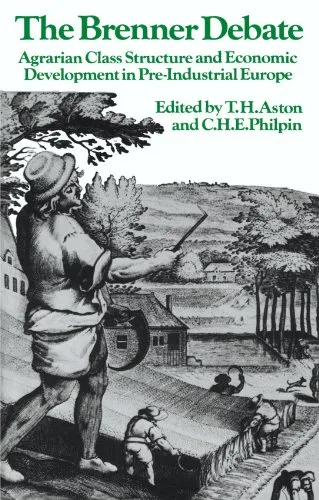
Welcome to the comprehensive introduction to "The Brenner Debate: Agrarian Class Structure and Economic Development in Pre-industrial Europe," a seminal work edited by T. H. Aston and C. H. E. Philpin. This influential book is an in-depth exploration of the historical dynamics between agrarian class structures and economic developments in Europe before the Industrial Revolution. The text engages with the critical discussions sparked by Robert Brenner's groundbreaking contributions to the understanding of economic and social transformations during this pivotal era.
"The Brenner Debate" explores the intersection of agrarian class structures and economic development across pre-industrial Europe. As the title suggests, the book originates from the debates introduced by historian Robert Brenner regarding the diverse pathways of European economies. Brenner's thesis challenges long-held beliefs, proposing that differences in agrarian structures played a central role in shaping varied economic outcomes across regions.
The book is structured around compelling essays contributed by several renowned historians, who argue and expand on Brenner's propositions. They delve into comparative histories from England, France, and other European regions, each highlighting how local agrarian societies influenced their respective economic trajectories. The contributors examine the impact of serfdom, landlord-power dynamics, and peasant agency, providing a multifaceted view into historical socioeconomic frameworks.
The book is rich with insightful quotations that capture the essence of the agrarian debates. Here are a few highlights:
"The transformation of social-property relations is central to explaining economic change."
"A revolution in property relations was necessary for the expansion of productive forces."
"The Brenner Debate" is not merely a historical account; it represents a critical academic discourse that altered the trajectory of social and economic history research. Brenner's challenge to existing paradigms forced scholars to reconsider simplistic narratives of economic development and recognize the complexity of historical processes.
By engaging with this book, readers gain insights into the nuanced relationships between economic systems and societal structures. It emphasizes an analytical approach to history, urging scholars and students alike to probe deeper into the forces shaping economic environments.
Ultimately, the insights gleaned from this discourse hold relevance for understanding contemporary economic disparities and reproducing scholarly engagement with past societal interactions.
Your question is answered in the context of this title and author. Each answer uses 2 points.
0 reviews, 4.0 average out of 5
Sign in to publish a review.
Ask a focused question and learn from the community.
Related references that continue this learning path.
Stephen R. Covey