
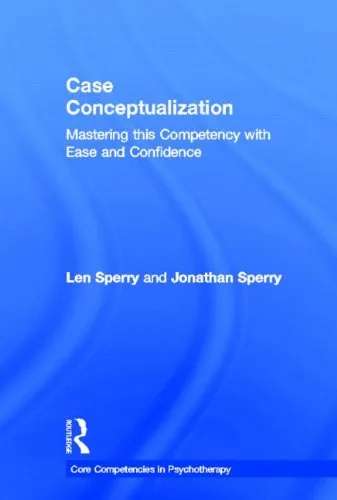
Case Conceptualization: Mastering this Competency with Ease and Confidence
Len Sperry,Jonathan Sperry
2012
View book

Book guide and evaluation
Simone Alter Muri
0 reviews
Published
pages
views
The Arts in Psychotherapypp.331—339 art therapy, psychotherapeutic practice Insightful exploration of The Arts in Psychotherapypp.331—339, connecting creative expression with therapeutic growth. Analytical Summary The section titled The Arts in Psychotherapypp.331—339 offer
Before you read
The section titled The Arts in Psychotherapypp.331—339 offers an in-depth discourse on the intersection of creative modalities and therapeutic processes. As part of a broader professional text, these pages weave a narrative that draws from clinical observation, theoretical frameworks, and interpretive analysis to highlight the ways in which art can be integrated into psychotherapeutic work.
This analysis focuses on how visual arts, music, and movement-based practices can serve as non-verbal channels for self-expression, enabling clients to access deeper layers of consciousness that talk-based therapy alone may not reach. By exploring concrete case studies, the chapter demonstrates the versatility of art therapy within diverse clinical settings and populations. Information unavailable on the exact publication year prevents situating the work within a precise historical moment, although its content remains timeless in relevance.
Written with an authoritative understanding of both artistic process and psychological theory, these pages bridge the gap between disciplines, ensuring that practitioners can both appreciate the aesthetic dimension and grasp the therapeutic mechanisms at play. The analytical tone is balanced by an empathic sensitivity toward client experiences, making the section valuable for academics, clinicians, and art therapists alike.
The content distilled from The Arts in Psychotherapypp.331—339 underscores several essential insights for both the therapist and the researcher.
First, creative engagement acts as a catalyst for emotional release and cognitive reframing. Second, art therapy is a potent tool for those who may resist or struggle with conventional verbal disclosure. Third, imagery and metaphor generated in the artistic process can reveal unconscious material, offering new pathways for intervention. The pages emphasize ethical considerations, such as respecting client autonomy and ensuring the therapeutic space fosters safety and trust. Finally, the chapter invites professionals to expand their repertoire with interdisciplinary practices that integrate art and psychology.
"Art speaks where words fail, opening new channels for the soul to communicate." Unknown
"In the act of creation lies the potential for profound transformation." Unknown
"Therapeutic art-making is less about the final product and more about the journey of self-discovery." Unknown
The Arts in Psychotherapypp.331—339 occupies a critical niche in professional literature by presenting a nuanced, evidence-informed view of art’s role in healing.
It invites an interdisciplinary dialogue that enriches both the theory and practice of psychotherapy. For educators, these pages offer frameworks that can be incorporated into curricula to prepare new generations of therapists. For clinicians, they provide practical tools and reflective questions that guide ethical and effective integration of art forms into treatment plans. The emphasis on both process and outcome ensures the content remains relevant amidst evolving therapeutic models.
Engaging with The Arts in Psychotherapypp.331—339 is an invitation to view therapeutic practice through a broader, more creative lens.
It urges professionals to remain open to the transformative potential of the arts and to see each session not only as an exchange of words but as an opportunity for creative exploration. This perspective can invigorate practice, enrich client outcomes, and inspire ongoing professional growth. Readers are encouraged to delve into this section, share its insights with colleagues, and discuss its implications in supervision groups or academic circles. In doing so, the principles embedded in The Arts in Psychotherapypp.331—339 can continue to foster healing, innovation, and connection across the psychotherapeutic field.
Your question is answered in the context of this title and author. Each answer uses 2 points.
0 reviews, 4.6 average out of 5
Sign in to publish a review.
Ask a focused question and learn from the community.
Related references that continue this learning path.
Len Sperry,Jonathan Sperry
Sheldon Travin M.D.,Barry Protter Ph.D. (auth.)

Peter K. Smith,Craig H. Hart
Jannini, Emmanuele A.;Siracusano, Alberto