Book guide and evaluation
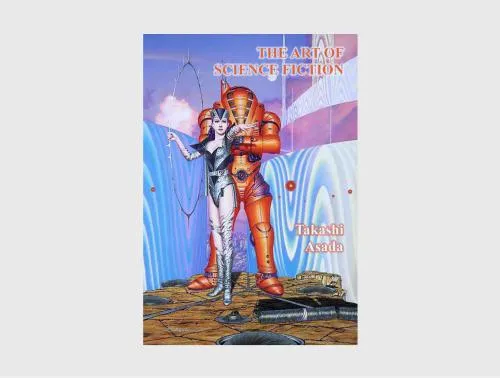
The Art of Science Fiction vol 5
Fujii, Yuuji
English
Unordered
Art
4.8 / 5
0 reviews
-
Published
0
pages
123
views
The Art of Science Fiction vol 5 science fiction literary analysis, speculative fiction studies Explore The Art of Science Fiction vol 5, offering deep insights into the craft and cultural impact of speculative storytelling. Analytical Summary The Art of Science Fiction vol
Before you read
What will you get from this book?
Analytical Summary
The Art of Science Fiction vol 5 stands as an authoritative exploration of the narrative, thematic, and conceptual machinery behind one of literature’s most dynamic genres. Written with academic rigor and creative empathy, it bridges the gap between scholarly discourse and the imaginative landscapes that define science fiction. This volume offers readers—whether seasoned professionals, researchers, or serious enthusiasts—a deep dive into the mechanics and philosophies underpinning speculative storytelling, situating the genre within cultural, social, and technological contexts.
This book builds upon the foundations established in earlier volumes of the series, yet it distinguishes itself by tackling contemporary developments in the field with critical acuity. Where science fiction once concentrated on space travel and futuristic societies, today it critically engages with bioethics, artificial intelligence, environmental collapse, and the evolving concept of human identity. The analysis here is neither superficial nor rigidly academic; instead, it is seamlessly interdisciplinary, drawing upon literary theory, media studies, and even sociological perspectives to illuminate the creative art form.
Given that the precise publication year for The Art of Science Fiction vol 5 is information unavailable due to no reliable public source, the timelessness of its insights becomes even more apparent. Regardless of era, the principles and frameworks explored within these pages contribute to a sustained understanding of how science fiction not only entertains but challenges our perceptions of reality, ethics, and possibility.
Key Takeaways
Readers of The Art of Science Fiction vol 5 will emerge with a refined comprehension of how imaginative literature functions as a complex dialogue between creator and audience, deeply influenced by technological and societal shifts.
One of the central lessons is that the craft of science fiction lies not merely in inventing futuristic settings, but in framing questions about the human condition through those imagined worlds. Techniques such as speculative extrapolation, allegorical layering, and the manipulation of narrative perspective are thoroughly examined.
Another key takeaway is the way science fiction intersects with other genres and disciplines, creating hybrid forms that enrich storytelling complexity. The book also emphasizes the importance of cultural literacy, urging writers and critics to engage with the socio-historical moment to ensure their speculative narratives resonate meaningfully.
Memorable Quotes
“Science fiction is the rehearsal space for humanity's possible futures.” Unknown
“Worlds are not born from mere imagination—they are built from the scaffolding of questions we dare to ask.” Unknown
“Every speculative tale is a mirror that distorts, yet clarifies, the reality we inhabit.” Unknown
Why This Book Matters
The Art of Science Fiction vol 5 serves as both a compass and a toolkit for navigating a genre that constantly redefines itself in response to global changes. For professionals crafting stories, academics dissecting texts, or readers hungry for layered meaning, this volume operates as a central resource.
Its relevance lies in the way it addresses perennial questions about speculative writing with modern urgency. While science fiction continually engages with future-facing issues, it is profoundly shaped by the cultural lenses through which we interpret them. This text helps decode those lenses and fosters a more intentional approach to both creation and critique.
Inspiring Conclusion
By engaging with The Art of Science Fiction vol 5, readers step into a carefully mapped terrain where imagination meets precision. It is an invitation to think rigorously and dream expansively, a bridge between theoretical knowledge and creative practice.
Whether your aim is to write, teach, analyze, or simply appreciate the complexities of science fiction, this book offers a structured yet liberating perspective. Its pages encourage dialogue—between past and future, between writer and reader, and between speculative visions and the tangible world we inhabit. The next step is clear: immerse yourself in its insights, share them with peers, and contribute to the ongoing conversation that defines science fiction as both an art and a lens through which we see ourselves.
Ask this book
Your question is answered in the context of this title and author. Each answer uses 2 points.
Sign in to ask the book assistant.
Reader reviews
0 reviews, 4.8 average out of 5
No reviews yet
If you have read this book, help the next reader with your experience.
Write a review
Sign in to publish a review.
Reader questions and answers
Ask a focused question and learn from the community.
Sign in to ask or answer a question.
No questions yet
Be the first to ask a clear, useful question.
What to read next
Related references that continue this learning path.
Solutions Architect's Handbook: Kick-start your career as a solutions architect by learning architecture design principles and strategies, 2nd Edition
Saurabh Shrivastava,Neelanjali Srivastav
2022
View book
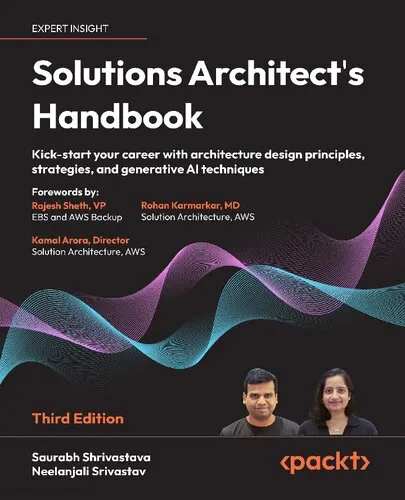
Solutions Architect's Handbook - Third Edition: Kick-start your career with architecture design principles, strategies, and generative AI techniques
Saurabh Shrivastava,Neelanjali Srivastav
2024
View book