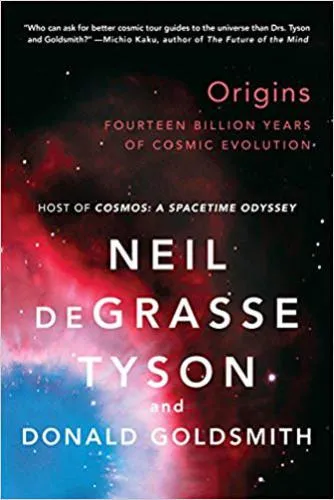
Origins: Fourteen Billion Years of Cosmic Evolution
Goldsmith, Donald;Tyson, Neil deGrasse
2005
View book
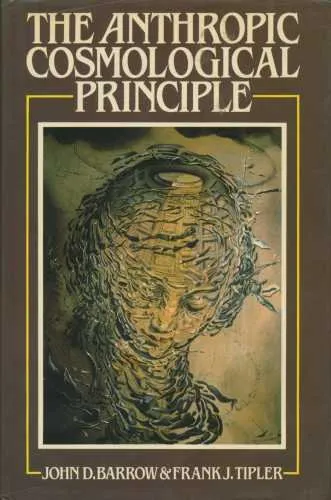
Book guide and evaluation
John D. Barrow;Frank J. Tipler;John A. Wheeler
0 reviews
Published
pages
views
Introduction to 'The Anthropic Cosmological Principle' Written by John D. Barrow and Frank J. Tipler, with contributions from John A. Wheeler, The Anthropic Cosmological Principle is a groundbreaking work that dives deep into the intersection of cosmology, philosop
Before you read
Written by John D. Barrow and Frank J. Tipler, with contributions from John A. Wheeler, The Anthropic Cosmological Principle is a groundbreaking work that dives deep into the intersection of cosmology, philosophy, and the implications of intelligent existence. The book, published in 1986, centers around what is known as the "Anthropic Principle," an idea that suggests that the universe must be compatible with the development of intelligent life, such as humans, that observe it. By connecting cosmology with the fundamental underpinnings of life, this book profoundly reshapes how we approach science and meaning in the universe.
With rigorous analysis and attention to historical, philosophical, and scientific detail, Barrow and Tipler delve into one of the most important questions ever asked: why is the universe the way it is, and what role does human consciousness play in understanding it? The book explores various formulations of the Anthropic Principle and relates them to discussions about the nature of the cosmos, the laws of physics, and humanity’s existence. The integration of cutting-edge science with profound philosophical thought makes it an essential read for those intrigued by our place in the universe.
The core of The Anthropic Cosmological Principle lies in its exploration of the Anthropic Principle from both scientific and philosophical perspectives. The authors introduce different versions of the principle, ranging from the Weak Anthropic Principle (WAP), which observes that the universe's basic conditions are necessary for the existence of life, to the Strong Anthropic Principle (SAP), which more ambitiously suggests that the universe must have properties that allow life to exist at some stage.
As the book progresses, the authors examine the historical development of thought about the universe and its fundamental laws. They analyze how early scientific pioneers and philosophers grappled with questions of existence and life's emergence. This historical perspective provides readers with an appreciation of how ideas about cosmology and the Anthropic Principle have matured throughout human history.
The second half of the book delves into modern scientific theories, including quantum mechanics and cosmology, to explore whether the Anthropic Principle provides a satisfactory framework for explaining the universe's intricacies. Topics such as the fine-tuning of physical constants, the nature of the multiverse, and the role of observation in quantum mechanics are scrutinized. The authors raise thought-provoking questions: Did the universe inevitably give rise to conscious beings, or is our existence a mere accident?
The book culminates in an exploration of the far-reaching implications of the Anthropic Principle. Drawing parallels between physics, biology, and even metaphysical ideas, Barrow and Tipler argue that comprehending the universe’s design might guide humanity to a deeper understanding of its purpose and cosmic destiny.
"The possibility that some event in the remote future might exert an influence on what events occur in the universe today is an inescapable consequence of the Strong Anthropic Principle."
"The universe is the way it is, at least in part, because if it were different no beings could exist to observe it."
"The ultimate significance of intelligence and life in the cosmos lies in their ability to bring the universe’s structure to consciousness."
The significance of The Anthropic Cosmological Principle lies in its ability to bridge the gap between science and philosophy in highly creative ways. It does not merely present facts about the universe; it challenges readers to think deeply about how and why the universe exists in its current form. The careful balance between empirical evidence and speculative reasoning inspires readers to critically assess humanity's role in the cosmos.
This book has influenced numerous scientific and philosophical debates, particularly in fields related to cosmology, the philosophy of science, and the origin of life. It has led to ongoing discussions about the fine-tuning problem, the existence of a multiverse, and the relationship between observation and reality. Its legacy lies in its capacity to reveal the profound interconnectedness of scientific inquiry and human existence.
Your question is answered in the context of this title and author. Each answer uses 2 points.
0 reviews, 4.0 average out of 5
Sign in to publish a review.
Ask a focused question and learn from the community.
Related references that continue this learning path.
Goldsmith, Donald;Tyson, Neil deGrasse