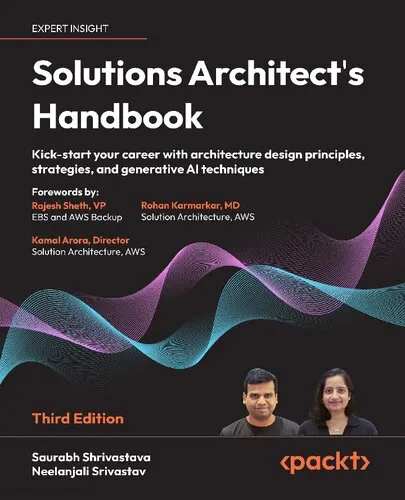
Solutions Architect's Handbook - Third Edition: Kick-start your career with architecture design principles, strategies, and generative AI techniques
Saurabh Shrivastava,Neelanjali Srivastav
2024
View book
Book guide and evaluation
Suzette Glasner-Edwards
0 reviews
Published
pages
views
Introduction Welcome to "The Addiction Recovery Skills Workbook: Changing Addictive Behaviors Using CBT, Mindfulness, and Motivational Interviewing Techniques", a powerful, evidence-based guide designed to help individuals break free from addictive behaviors and regain c
Before you read
Welcome to "The Addiction Recovery Skills Workbook: Changing Addictive Behaviors Using CBT, Mindfulness, and Motivational Interviewing Techniques", a powerful, evidence-based guide designed to help individuals break free from addictive behaviors and regain control of their lives. In this book, we combine clinically proven therapeutic approaches such as Cognitive Behavioral Therapy (CBT), mindfulness practices, and motivational interviewing to provide you with practical tools for sustained recovery.
Recovery from addiction is not a linear journey, but a deeply personal experience that requires patience, self-compassion, and consistent effort. This workbook is crafted to empower you to take proactive steps in your recovery process, offering practical action plans, reflective exercises, and valuable insights for overcoming common challenges. Whether you're struggling with substance use, behavioral addictions, or simply seeking healthier coping mechanisms, this book is your compassionate companion on the path to personal growth and resilience.
This workbook encapsulates the following key components:
Cognitive Behavioral Therapy (CBT): Learn scientifically validated techniques to identify and change negative thought patterns that contribute to addictive behaviors. Through practical exercises, you’ll gain awareness of how your thoughts influence your emotions and actions, and how to replace harmful cycles with healthier alternatives.
Mindfulness Practices: Discover mindfulness as a tool for grounding yourself in the present moment. This section emphasizes staying aware of your emotional and physical states—without judgment—to build resilience against triggers and relapse.
Motivational Interviewing (MI): Understand how to explore your intrinsic motivation to change. The MI methodologies presented in this book foster a sense of empowerment, helping you identify personal values and craft a roadmap for your recovery.
The workbook unfolds in a step-by-step format, progressively guiding you from self-awareness to goal-setting and practical applications. With real-life examples and interactive sections, this book facilitates your journey to clarity, self-control, and sustainable recovery.
These takeaways serve as a foundation for any individual seeking to build a life free of addiction, enabling you to replace self-destructive habits with positive, fulfilling ones.
"Recovery is not about perfection; it’s about progress."
"The goal of mindfulness is not to suppress our urges but to understand them. Addiction loses its power when met with awareness."
"The motivation to change lies within you—but learning to access that motivation is the first step toward freedom."
These quotes reinforce the book's core philosophy of hope, empowerment, and the importance of self-awareness throughout the recovery journey.
Addiction is one of the most significant health, psychological, and social challenges of our time. However, it is a challenge that can be overcome, especially when approached with the right tools and mindset. "The Addiction Recovery Skills Workbook" stands apart by integrating three powerful therapeutic approaches, addressing the multi-dimensional aspects of addiction. It is a practical and accessible resource for individuals, therapists, or anyone supporting loved ones through recovery.
What makes this book invaluable is its emphasis on actionable techniques and self-compassion. It does not demand perfectionism or guarantee an instant fix; instead, it provides the structure, tools, and emotional support necessary for meaningful and sustained change. In addition, it actively empowers readers to take ownership of their journey, placing the focus on building skills that they can use daily to achieve their recovery goals.
By blending science with a compassionate and user-friendly approach, this workbook has the potential to transform lives, one mindful and motivated step at a time.
Your question is answered in the context of this title and author. Each answer uses 2 points.
0 reviews, 4.6 average out of 5
Sign in to publish a review.
Ask a focused question and learn from the community.
Related references that continue this learning path.
Saurabh Shrivastava,Neelanjali Srivastav
Mark Williams,Danny Penman