
Book guide and evaluation
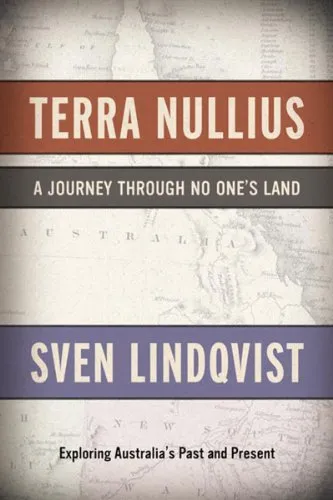
Terra Nullius: A Journey Through No One's Land : Exploring Australia's Past and Present
Sven Lindqvist
English
Unordered
Economics
4.4 / 5
0 reviews
2007
Published
249
pages
446
views
Terra Nullius: A Journey Through No One's Land : Exploring Australia's Past and Present colonial history of Australia, indigenous perspectives on land An in-depth exploration of Terra Nullius: A Journey Through No One's Land : Exploring Australia's Past and Present and
Before you read
What will you get from this book?
Analytical Summary
“Terra Nullius: A Journey Through No One's Land : Exploring Australia's Past and Present” is a deeply reflective work that traverses the contested landscapes of Australia’s colonial narrative. Written by Sven Lindqvist, the book offers a layered investigation into the historical and cultural concept of “Terra Nullius” – the legal fiction that the land was empty and uninhabited prior to European settlement – and its repercussions for the First Nations peoples.
Through meticulous research and incisive commentary, Lindqvist situates the reader in the intersection of historical truth, legal doctrine, and human experience. The text blends travel reportage with historical analysis, allowing the reader to journey both geographically across Australia and intellectually through centuries of colonial policy. The book scrutinizes how the notion of land without ownership became a tool for dispossession, framing not only Australia's past but also its present socio-political reality.
The narrative is authoritative yet accessible, making it valuable to scholars of history, anthropology, law, and postcolonial studies, while remaining engaging for general readers with an interest in Australia’s complex heritage. It confronts uncomfortable truths in a manner that encourages dialogue rather than ideological entrenchment, positioning itself as a catalyst for informed discussion.
Key Takeaways
This work distills pressing lessons about history, identity, and justice, prompting a reassessment of widely held beliefs about Australia’s past.
Firstly, Lindqvist underscores that “Terra Nullius” was not merely a legal quirk but a purposeful narrative enabling dispossession. The analysis reveals how this fiction erased indigenous perspectives on land, culture, and sovereignty, shaping the enduring legacy of colonialism.
Secondly, the book challenges the reader to engage with historical evidence and oral traditions that defy the colonial archive, appreciating the resilience of Aboriginal peoples amid systemic displacement. Lastly, it connects historical injustices to present-day political debates over land rights and reconciliation, bridging scholarship with social consciousness.
Memorable Quotes
The truth cannot be buried forever; it surfaces, demanding acknowledgment.Unknown
Land was never empty—it was taken, and in taking it stories were silenced.Unknown
To journey through Australia is to journey through a past that refuses to be forgotten.Unknown
Why This Book Matters
By dissecting the “Terra Nullius” doctrine, Lindqvist is engaging with one of the most pivotal constructs in Australia’s colonial history.
This book matters because it addresses the historical roots of contemporary debates about reconciliation, sovereignty, and cultural identity. It makes visible the narratives and experiences of Aboriginal peoples that were marginalized or erased by official histories. Such visibility is crucial for creating equitable policy and fostering mutual respect between communities.
For academics, it offers a well-sourced case study in how language and law intertwine to justify systemic injustices. For professionals in law, governance, and education, it provides a compelling backdrop for understanding and dismantling the ideological remnants of colonial legal fictions.
Inspiring Conclusion
“Terra Nullius: A Journey Through No One's Land : Exploring Australia's Past and Present” is not just a journey through history—it is a call to engage with the truths we inherit.
By integrating travel, historical inquiry, and moral reflection, Sven Lindqvist invites readers to examine the foundations on which nations are built. Whether you approach the text as an academic, a policymaker, or a curious citizen, this exploration offers both knowledge and responsibility. The narratives within its pages are as relevant today as they were during the first colonial encounters.
Now is the time to read, share, and discuss this work. By doing so, you participate in the larger project of acknowledging the past, healing divisions, and envisioning a more just future.
Ask this book
Your question is answered in the context of this title and author. Each answer uses 2 points.
Sign in to ask the book assistant.
Reader reviews
0 reviews, 4.4 average out of 5
No reviews yet
If you have read this book, help the next reader with your experience.
Write a review
Sign in to publish a review.
Reader questions and answers
Ask a focused question and learn from the community.
Sign in to ask or answer a question.
No questions yet
Be the first to ask a clear, useful question.
What to read next
Related references that continue this learning path.
Transactions and Creations: Property Debates and The Stimulus of Melanesia
Eric Hirsch (Editor),Marilyn Strathern (Editor)
2004
View book

International Sales Law: A Guide to the CISG
Ingeborg Schwenzer;Christiana Fountoulakis;Mariel Dimsey
2019
View book
The Law of Damages in International Sales: The CISG and Other International Instruments
Djakhongir Saidov
2021
View book