
Book guide and evaluation
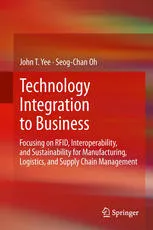
Technology Integration to Business: Focusing on RFID, Interoperability, and Sustainability for Manufacturing, Logistics, and Supply Chain Management
John T. Yee,Seog-Chan Oh (auth.)
English
Beginner
Economics
4.4 / 5
0 reviews
2013
Published
334
pages
148
views
Introduction to 'Technology Integration to Business' The modern business landscape is rapidly evolving, with technological advancements driving transformation across industries. "Technology Integration to Business: Focusing on RFID, Interoperability, and Sustainability
Before you read
What will you get from this book?
Introduction to 'Technology Integration to Business'
The modern business landscape is rapidly evolving, with technological advancements driving transformation across industries. "Technology Integration to Business: Focusing on RFID, Interoperability, and Sustainability for Manufacturing, Logistics, and Supply Chain Management" serves as a comprehensive guide for organizations aiming to thrive in this digital era. This book delves into the intricacies of adopting cutting-edge technologies like Radio Frequency Identification (RFID), achieving operational interoperability, and fostering sustainability to redefine manufacturing, logistics, and supply chain operations.
The convergence of technology and business processes has become a critical determinant of success. Yet, with increasing complexity comes the challenge of integration, scalability, and collaboration for organizations aiming to innovate without losing sight of long-term ecological and operational goals. This book not only addresses these challenges but also provides actionable insights, best practices, and real-world applications that equip professionals with the knowledge they need to stay competitive.
Summary of the Book
"Technology Integration to Business" captures the necessity of merging advanced tools and systems into everyday business operations. Divided into distinct sections, the book walks readers through the foundational technologies shaping industries today, such as RFID, which revolutionizes tracking, asset identification, and real-time visibility. The book highlights how such technologies improve efficiency while reducing manual errors in manufacturing and logistics.
A significant emphasis is placed on interoperability—ensuring that different systems, organizations, and devices can seamlessly share data and work collaboratively. By enabling interconnected ecosystems, companies can achieve streamlined workflows and higher productivity. Additionally, the book underscores the pivotal role of sustainability by discussing how environmentally conscious practices can be incorporated into the broader supply chain network without sacrificing profitability.
Furthermore, this book connects theory with practice through case studies, success stories, and innovative strategies. From understanding the principles of supply chain management to mastering the integration of sustainable practices, this book is a must-read for professionals and academics alike.
Key Takeaways
- A detailed overview of RFID technology and how it transforms manufacturing and logistics operations.
- Strategies for achieving interoperability across diverse systems and platforms.
- Insights into embedding sustainability into business processes while maintaining operational efficiency.
- Actionable frameworks for supply chain optimization based on real-world examples.
- Comprehensive guidelines on leveraging technology for competitive advantage in a dynamic market.
Famous Quotes from the Book
"The future of business lies at the intersection of technology, collaboration, and sustainability—where innovation meets responsibility."
"Interoperability isn’t just a technical challenge; it’s a fundamental enabler for businesses to think and act globally while remaining locally relevant."
"Sustainability is no longer a choice in the supply chain—it is an imperative for growth and survival in the competitive marketplace."
Why This Book Matters
In an age where digital transformation is no longer optional but essential, "Technology Integration to Business" provides clarity amidst the noise of emerging technologies. This book addresses key issues faced by business leaders, such as bridging the gap between traditional operations and modern technologies, ensuring seamless collaboration between systems, and aligning business objectives with sustainability goals.
The relevance of technologies like RFID, the growing need for global interoperability, and the demand for eco-conscious business practices cannot be overstated. This book serves as a roadmap for businesses seeking to enhance efficiency, reduce costs, and remain in compliance with environmental regulations while adapting to ever-changing customer expectations.
Whether you are a business executive, a supply chain professional, a manufacturing manager, or an academic interested in these transformative trends, this book empowers you with the strategic insights and practical tools necessary to shape the future of your industry.
As technology continues to disrupt and redefine the competitive landscape, this book underscores the importance of proactive adaptation and offers a pathway to achieving long-term success.
Ask this book
Your question is answered in the context of this title and author. Each answer uses 2 points.
Sign in to ask the book assistant.
Reader reviews
0 reviews, 4.4 average out of 5
No reviews yet
If you have read this book, help the next reader with your experience.
Write a review
Sign in to publish a review.
Reader questions and answers
Ask a focused question and learn from the community.
Sign in to ask or answer a question.
No questions yet
Be the first to ask a clear, useful question.
What to read next
Related references that continue this learning path.

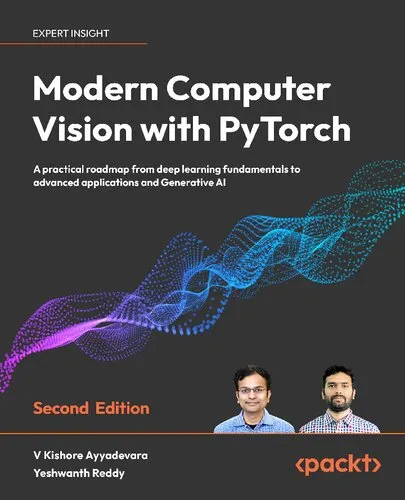
Modern Computer Vision with PyTorch: A Practical Roadmap From Deep Learning Fundamentals to Advanced Applications and Generative AI, 2nd Edition
V Kishore Ayyadevara,Yeshwanth Reddy
2023
View book