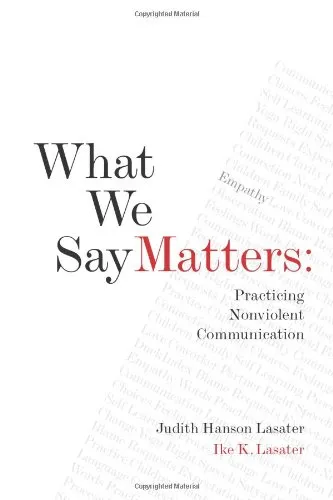
What We Say Matters: Practicing Nonviolent Communication
P.T. Judith Hanson Lasater Ph.D.,Ike K. Lasater
2009
View book
Book guide and evaluation
Ur Penny.
0 reviews
Published
pages
views
Introduction to Teaching Listening Comprehension Listening is often the most overlooked yet fundamentally important skill in language learning. In Teaching Listening Comprehension, I explore practical techniques and theoretical insights that equip educators and learners with t
Before you read
Listening is often the most overlooked yet fundamentally important skill in language learning. In Teaching Listening Comprehension, I explore practical techniques and theoretical insights that equip educators and learners with the tools to improve listening proficiency, an essential component of effective communication. This book delves into the complexities of listening as an active process, offering strategies that engage learners and foster long-term development, making it a cornerstone resource for language trainers and teachers alike.
Teaching listening comprehension is a multifaceted challenge because listening involves far more than simply hearing sounds. This book breaks down the process of listening into its constituent parts, while also situating it within the broader context of language acquisition. The introduction highlights the critical role of listening in communication, while subsequent chapters explore how learners' cultural background, context, and motivation influence their ability to comprehend spoken language.
Central to the book is the concept of active listening—the idea that listeners are not passive recipients of information but actively engage with the input to extract meaning. I discuss approaches to scaffold listening skills, ranging from pre-listening activities that build context to post-listening reflections that encourage analysis and critical thinking. Additionally, practical exercises, sample lesson plans, and tips for assessing listening comprehension make the theoretical concepts easy to apply in real-world classrooms.
The book also delves into challenges such as dealing with different accents, decoding fast speech, and understanding context-dependent language. A special focus is given to how teachers can harness modern tools and technologies to enhance listening practices and create an engaging learning atmosphere. Ultimately, the book aims to empower educators with strategies that foster learners' confidence and competence in this essential skill.
"Listening is not hearing; listening is the active process of deciphering and constructing meaning from the sounds that reach our ears."
"The key to improving listening comprehension lies in preparing learners to approach spoken language with purpose, curiosity, and structured strategies."
Listening is the foundation of effective communication, yet it often receives less attention in language classrooms compared to speaking, reading, and writing. This book addresses that imbalance by offering a deep dive into how listening works and how it can be taught effectively. By equipping teachers with actionable strategies, Teaching Listening Comprehension directly confronts common obstacles faced by language learners, such as understanding different accents and decoding rapid speech.
In a globally connected world where cross-cultural communication is increasingly important, the ability to listen effectively has never been more vital. This book bridges theoretical understanding and practical application, ensuring that educators and trainers are well-prepared to help learners navigate the complexities of spoken language. Whether you're an experienced teacher seeking to refine your methods or a novice looking for a comprehensive guide, this book will be an invaluable addition to your professional library.
Your question is answered in the context of this title and author. Each answer uses 2 points.
0 reviews, 4.6 average out of 5
Sign in to publish a review.
Ask a focused question and learn from the community.
Related references that continue this learning path.
P.T. Judith Hanson Lasater Ph.D.,Ike K. Lasater
Harold Hillman;Alex Waddell
Radu Popescu-Zeletin,Ilja Radusch,Mihai Adrian Rigani (auth.)