
Book guide and evaluation
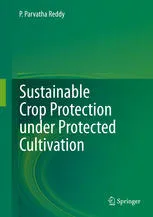
Sustainable Crop Protection under Protected Cultivation
P. Parvatha Reddy (auth.)
English
Unordered
Engineering
4.9 / 5
0 reviews
2016
Published
451
pages
444
views
This book focuses on pests (insect and mite) and diseases (fungal, bacterial, viral and nematode) in protected horticulture (fruits, vegetables and ornamentals) using physical, cultural, chemical, biological, host resistance, and integrated methods. It opens with chapters describ
Before you read
What will you get from this book?
This book focuses on pests (insect and mite) and diseases (fungal, bacterial, viral and nematode) in protected horticulture (fruits, vegetables and ornamentals) using physical, cultural, chemical, biological, host resistance, and integrated methods. It opens with chapters describing the setting in which integrated pest and disease control operates, i.e., the greenhouse and its environment. Subsequent chapters present the basic strategies and tactics of different control methods including integrated control, with special reference to greenhouse crops. Further chapters include the different facets of biological pest and disease control – its scientific bases, its development in practice, its commercialization and quality control. The concluding chapters of the book highlight the present status of integrated pest and disease control for the most important greenhouse crops (fruits, vegetables and flower crops) worldwide. The book’s final chapter explores future challenges for researchers assigned to identify non-pesticide methods and integrate sustainable pest management technologies that can contribute to increased productivity, such as breeding for durable resistance, biological control and devising integrated methods that will have minimal adverse environmental and social impacts. Among productivity-enhancing technologies, protected cultivation has a tremendous potential to increase the yield of vegetables and flower cro ps by several fold. Pests and diseases are one of the major challenges to protected cultivation. Year-round warm temperatures and relatively high humidity together with abundant food make the protected environment of greenhouses highly attractive to pests and diseases. Nevertheless, very little attention has been paid to the manipulation of greenhouse environments expressly to avoid disease epidemics and insect infestations, which together can easily account for 30% of crop losses. This book will be of immense value to all members of the scientific community involved in teaching, research and extension activities on protected horticulture. It also offers a useful reference guide for policymakers and practicing farmers, and can be used as a textbook for postgraduate courses.
Ask this book
Your question is answered in the context of this title and author. Each answer uses 2 points.
Sign in to ask the book assistant.
Reader reviews
0 reviews, 4.9 average out of 5
No reviews yet
If you have read this book, help the next reader with your experience.
Write a review
Sign in to publish a review.
Reader questions and answers
Ask a focused question and learn from the community.
Sign in to ask or answer a question.
No questions yet
Be the first to ask a clear, useful question.
What to read next
Related references that continue this learning path.
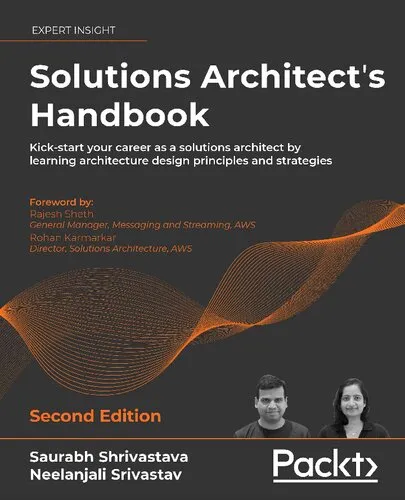
Solutions Architect's Handbook: Kick-start your career as a solutions architect by learning architecture design principles and strategies, 2nd Edition
Saurabh Shrivastava,Neelanjali Srivastav
2022
View book

Solutions Architect's Handbook - Third Edition: Kick-start your career with architecture design principles, strategies, and generative AI techniques
Saurabh Shrivastava,Neelanjali Srivastav
2024
View book