
Book guide and evaluation
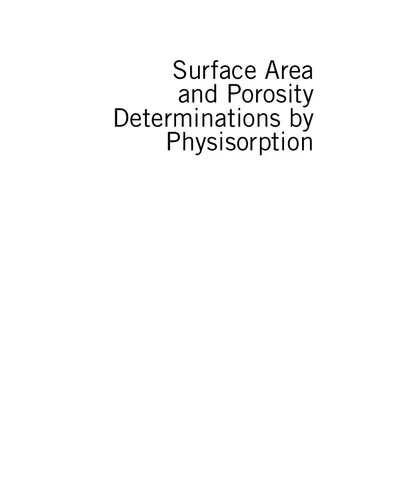
Surface Area and Porosity Determinations by Physisorption: Measurement, Classical Theories and Quantum Theory
James B. Condon
English
Beginner
Quantum Mechanics
4.8 / 5
0 reviews
2019
Published
437
pages
525
views
Introduction "Surface Area and Porosity Determinations by Physisorption: Measurement, Classical Theories and Quantum Theory" is an authoritative resource designed for professionals and academics involved in the study of material surfaces and their properties. This
Before you read
What will you get from this book?
Introduction
"Surface Area and Porosity Determinations by Physisorption: Measurement, Classical Theories and Quantum Theory" is an authoritative resource designed for professionals and academics involved in the study of material surfaces and their properties. This book combines comprehensive insights into physisorption measurement techniques, offering a unique perspective intertwining classical theories and advanced quantum theory.
This work is pivotal as it significantly enhances the understanding of adsorption processes and contributes to advancements in various scientific fields, including chemistry, physics, and materials science. The book meticulously discusses the measurement methods for determining surface area and porosity, guiding readers through traditional practices and cutting-edge quantum mechanical approaches.
Detailed Summary of the Book
Focusing on the critical aspects of physisorption, the book is structured to provide a thorough review of the techniques used to measure surface areas and porosities of materials. It opens with an exploration of the fundamental principles underlying physisorption and quickly delves into the experimental methods commonly used. Each section is dedicated to a specific measurement technique, providing clear guidance on executing these methods accurately.
As it progresses, the book scrutinizes classical theories, such as the Brunauer-Emmett-Teller (BET) theory, offering insights into their applications and limitations. The discussion doesn't stop at classical theories; it seamlessly transitions into the realm of quantum theory, which provides a more nuanced understanding of molecular interactions on material surfaces.
The integration of classical theories with quantum mechanics in surface analysis makes this book not only a reference but also an advancement in scientific interpretation. The author expertly elaborates on how quantum mechanical models can refine surface area and porosity determinations, presenting cutting-edge research that challenges traditional methodologies.
Key Takeaways
- Detailed understanding of physisorption measurement techniques for surface area and porosity determination.
- Insight into classical theories of adsorption and their practical applications.
- Introduction and exploration of quantum theory applications in adsorption analysis.
- A comprehensive comparison and critique of classical and modern approaches to physisorption.
- Valuable guidance for laboratory and material research applications in surface science.
Famous Quotes from the Book
"The challenge of measuring what we cannot see—our aspiration grows with the evolution of theoretical frameworks and precision."
"Bridging classical methodologies with quantum insights offers an unparalleled lens through which to explore the unseen surfaces of matter."
Why This Book Matters
This book is a cornerstone in the realm of material science and chemical physics. Its importance lies in its methodical approach to elucidating both the established and the emergent methodologies in determining surface characteristics. By embracing quantum theories alongside classical ones, the book provides a broad-spectrum analysis vital for academic inquiry and practical applications.
In a world increasingly reliant on nanotechnology and materials innovation, understanding the subtleties of surface area and porosity can lead to breakthroughs in product development, pharmaceuticals, catalysis, and sustainable materials. "Surface Area and Porosity Determinations by Physisorption" not only serves as an educational guide but also inspires ongoing research and development, making it an essential addition to any scientific library.
Ask this book
Your question is answered in the context of this title and author. Each answer uses 2 points.
Sign in to ask the book assistant.
Reader reviews
0 reviews, 4.8 average out of 5
No reviews yet
If you have read this book, help the next reader with your experience.
Write a review
Sign in to publish a review.
Reader questions and answers
Ask a focused question and learn from the community.
Sign in to ask or answer a question.
No questions yet
Be the first to ask a clear, useful question.
What to read next
Related references that continue this learning path.
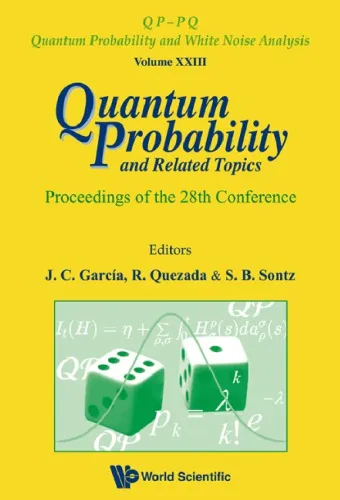
Quantum probability and related topics: Proceedings Guanajuato, 2007 28th Conference
Garcia J.C.,Quezada R.,Sontz S.B. (eds.)
2008
View book
Quantum Mechanics Volume 1 2nd Edition
Claude Cohen-Tannoudji,Bernard Diu,Frank Laloë
2019
View book