
Book guide and evaluation
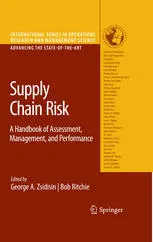
Supply Chain Risk: A Handbook of Assessment, Management & Performance (International Series in Operations Research & Management Science)
George A. Zsidisin,Bob Ritchie
English
Beginner
Economics
4.5 / 5
0 reviews
2008
Published
347
pages
206
views
Introduction to "Supply Chain Risk: A Handbook of Assessment, Management & Performance" Supply chains are central to the operation of modern global economies. However, with their increasing complexity and interdependency, supply chains are also becoming more vulnerable t
Before you read
What will you get from this book?
Introduction to "Supply Chain Risk: A Handbook of Assessment, Management & Performance"
Supply chains are central to the operation of modern global economies. However, with their increasing complexity and interdependency, supply chains are also becoming more vulnerable to risks of various forms. "Supply Chain Risk: A Handbook of Assessment, Management & Performance," authored by George A. Zsidisin and Bob Ritchie, is a definitive resource for understanding, assessing, and mitigating the risks that threaten the efficiency, reliability, and performance of supply chain systems.
This handbook explores the intricacies of supply chain risk management (SCRM) through an accessible, research-backed lens. It provides readers with a structured framework to identify, analyze, and respond to risks while maintaining managerial control and operational efficiency. With contributions from leading academics, experienced practitioners, and experts in supply chain management, this book bridges the gap between theory and practical application of SCRM across various industries.
Detailed Summary of the Book
This book delves deeply into the multifaceted components of supply chain risk, categorizing and exploring issues such as demand uncertainty, supply disruptions, natural disasters, cyber-security breaches, and geopolitical risks. It builds upon established theories of risk assessment and management, offering robust methodologies to evaluate vulnerabilities and implement contingency measures. Each chapter contributes unique perspectives and practical insights to enrich the reader's understanding.
The book is divided into three core parts:
- 1. **Assessment**: The initial chapters focus on methods to identify and assess risks within and beyond the supply chain. Topics include creating risk detection mechanisms, scenario analysis, and predictive analytics models.
- 2. **Management**: The middle sections explore strategies for mitigating and managing risks, such as multi-tier supplier strategies, inventory management techniques, and leveraging technology such as blockchain for transparency.
- 3. **Performance**: The latter chapters evaluate the impact of risk management on supply chain performance. An emphasis is placed on measuring outcomes and maintaining balance between risk avoidance and operational efficiency.
Overall, the authors provide a holistic view of supply chain risk and its management, supported by real-world case studies, practical tools, and frameworks for implementation.
Key Takeaways
Here are some of the most valuable lessons readers can expect from this book:
- 1. Risk management is not a reactive process; it must be proactively embedded into supply chain decision-making.
- 2. Understanding the interconnectedness of supply networks is essential for identifying cascading risks before they escalate.
- 3. Continuous monitoring, innovation, and adaptation are crucial to mitigating supply chain disruptions effectively.
- 4. A well-managed supply chain can become a competitive advantage, especially under uncertain economic conditions.
- 5. Collaboration between organizations across the supply chain is a cornerstone of effective risk management.
Famous Quotes from the Book
"Supply chain risk is not just a threat; it is an opportunity to build resilience and innovation into your organization."
"The best supply chain managers think beyond efficiency and focus on adaptability, responsiveness, and reliability."
"Risk is inevitable, but the ability to predict and prepare for it is what separates high-performing supply chains from the rest."
Why This Book Matters
In today’s volatile business environment, supply chains face unprecedented challenges. Disruptions such as pandemics, trade wars, cyber threats, and climate change have redefined the supply chain risk landscape. This book addresses these challenges by equipping supply chain professionals, academics, and policymakers with the tools and knowledge to navigate uncertainty effectively.
What sets "Supply Chain Risk: A Handbook of Assessment, Management & Performance" apart is its rigorous balance between academic scholarship and real-world practice. It builds a framework that is both conceptual and actionable, making it equally valuable for students and practitioners. By adopting a multidisciplinary approach, the book considers economic, technological, and socio-political dimensions of supply chain risk, making it a comprehensive reference point for anyone aiming to master SCRM.
Ultimately, this book matters because it empowers organizations to transform risk into an opportunity. By applying the principles and strategies outlined in this handbook, organizations can create agile, resilient, and high-performing supply chains that drive sustainable growth even in uncertain times.
Ask this book
Your question is answered in the context of this title and author. Each answer uses 2 points.
Sign in to ask the book assistant.
Reader reviews
0 reviews, 4.5 average out of 5
No reviews yet
If you have read this book, help the next reader with your experience.
Write a review
Sign in to publish a review.
Reader questions and answers
Ask a focused question and learn from the community.
Sign in to ask or answer a question.
No questions yet
Be the first to ask a clear, useful question.
What to read next
Related references that continue this learning path.

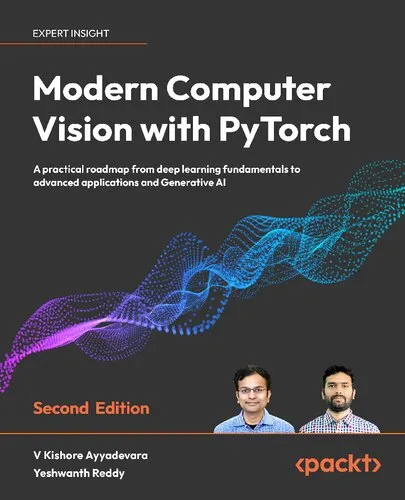
Modern Computer Vision with PyTorch: A Practical Roadmap From Deep Learning Fundamentals to Advanced Applications and Generative AI, 2nd Edition
V Kishore Ayyadevara,Yeshwanth Reddy
2023
View book