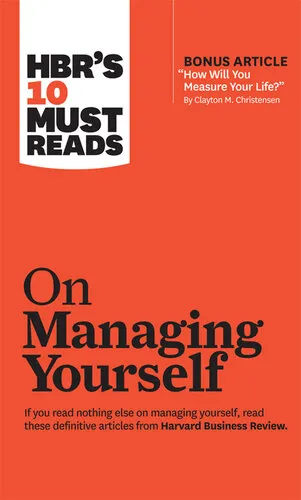
HBR's 10 Must Reads on Managing Yourself (with bonus article "How Will You Measure Your Life?" by Clayton M. Christensen)
Harvard Business Review,Peter F. Drucker,Clayton M. Christensen,Daniel Goleman
2011
View book
Book guide and evaluation
Instaread (Firm)
0 reviews
Published
pages
views
Introduction The book "Summary of Ego is the Enemy by Ryan Holiday: includes Analysis" offers readers a concise yet comprehensive overview of Ryan Holiday's renowned work, "Ego is the Enemy." This summary distills the essence of the book and presents it in a format that is
Before you read
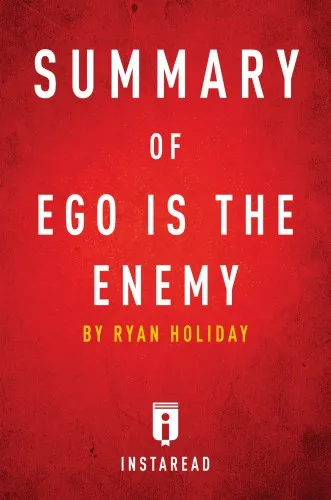
The book "Summary of Ego is the Enemy by Ryan Holiday: includes Analysis" offers readers a concise yet comprehensive overview of Ryan Holiday's renowned work, "Ego is the Enemy." This summary distills the essence of the book and presents it in a format that is accessible to those seeking to understand the profound impacts of ego on personal and professional life.
In "Ego is the Enemy," Ryan Holiday dives deep into the human psyche, arguing that ego is not simply a facet of ambition but often the very obstacle standing in the way of our progress, success, and fulfillment. His teachings are rooted in historical anecdotes, philosophical insights, and practical advice, making the original book a rich source of wisdom for anyone seeking to lead a more meaningful and productive life.
The essence of "Ego is the Enemy" lies in understanding how our self-perception often exacerbates our struggles. Ryan Holiday divides the book into three parts, each focusing on a critical phase of life: Aspiration, Success, and Failure.
During the Aspiration phase, Holiday explores how ego can cloud our judgment and diminish our determination to pursue worthy goals. He emphasizes the importance of humility and continuous learning, advocating for a mindset that is open to growth rather than preoccupied with immediate recognition.
In the Success phase, the book details how ego can sabotage our accomplishments. Holiday argues that success should be a stepping stone rather than a pedestal. The overinflated sense of self, which success often breeds, can lead individuals to become complacent, less empathetic, and ultimately, less effective.
Finally, the Failure phase of the book describes how ego poorly manages setbacks, causing individuals to either internalize failures in a destructive manner or externalize blame inappropriately. Holiday stresses the power of resilience and the need to maintain perspective to overcome failures robustly.
“Ego is the enemy of what you want and of what you have: of mastering a craft, of real creative insight, of working well with others, of building loyalty and support.”
“At any given time in life, people find themselves aspiring to something: an unquestioned belief that they should be achieving greatness. They just don’t have enough time to study history to see how others might have done it, or what paths failed.”
"Ego is the Enemy" is an essential read because it challenges the traditional perception of ego, which is often mistakenly seen as a prerequisite for success. Instead, Holiday argues that it is self-awareness and humility which truly drive long-term achievement and happiness. The book’s lessons transcend personal development, offering practical insights for leaders, entrepreneurs, and anyone interested in fostering healthier relationships both in and out of work.
This summary serves to enlighten readers who want to grasp these concepts quickly, offering them a stepping stone to delve deeper into Ryan Holiday’s full work or apply its core principles in their own lives. By presenting clear and actionable insights, the book invites reflection and encourages a shift in mindset that can lead to profound self-improvement.
Your question is answered in the context of this title and author. Each answer uses 2 points.
0 reviews, 3.5 average out of 5
Sign in to publish a review.
Ask a focused question and learn from the community.
Related references that continue this learning path.
Harvard Business Review,Peter F. Drucker,Clayton M. Christensen,Daniel Goleman