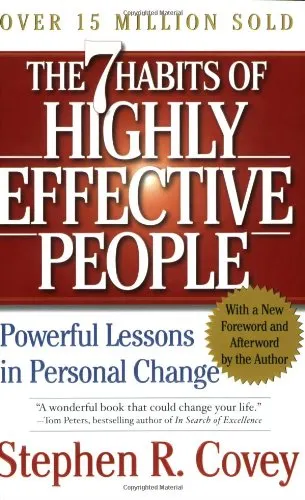
The 7 habits of highly effective people: restoring the character ethic
Stephen R. Covey
2004
View book
Book guide and evaluation
SpeedyReads
0 reviews
Published
pages
views
Introduction Jordan B. Peterson's "12 Rules for Life: An Antidote to Chaos" is more than just a self-help book; it’s a philosophical guide grounded in psychology, mythology, religion, and human history. This book presents twelve profound rules that serve as ant
Before you read
Jordan B. Peterson's "12 Rules for Life: An Antidote to Chaos" is more than just a self-help book; it’s a philosophical guide grounded in psychology, mythology, religion, and human history. This book presents twelve profound rules that serve as antidotes to the modern chaos engulfing our existential and psychological lives. SpeedyReads' summary distills Peterson's dense, thought-provoking work into comprehensible nuggets that provide a clear understanding of the book’s core concepts.
Each rule is conceptualized as a practical piece of advice, derived from a combination of personal anecdotes, historical references, and scholarly psychology. They are rooted in Peterson's own experience as a psychologist and cultural critic. His ability to weave together insights from a diverse array of disciplines creates a rich tapestry of advice that is both timeless and deeply relevant to contemporary issues. This summary aims to encapsulate the essence of Peterson's narrative, presenting his transformative rules in an easily digestible format.
Peterson’s rules are founded on the premise that chaos and order are the two most fundamental forces in life. Too much rigidity can lead to deadening culture, yet excessive chaos can drive societies into turmoil. The 12 rules provided by Peterson aim to strike a balance between these forces, grounding individuals in purpose, meaning, and resilience.
Some rules emphasize personal responsibility and discipline, such as "Stand up straight with your shoulders back," which discusses the importance of posture as a metaphor for strength and confidence. Others address social relationships and ethical behavior, like "Assume that the person you are listening to might know something you don't," highlighting the importance of open-mindedness and humility.
Peterson also delves into deeper existential themes. For instance, "Treat yourself like someone you are responsible for helping" encourages self-care and self-respect, recognizing one’s value in the broader tapestry of human existence. Throughout, he draws on a blend of Jungian psychology, Christian theology, and teachings from classic literature to support his points, crafting an engaging exploration of what it means to live well amidst chaos.
"To stand up straight with your shoulders back is to accept the terrible responsibility of life, with eyes wide open."
"Compare yourself to who you were yesterday, not to who someone else is today."
"Pursue what is meaningful, not what is expedient."
"12 Rules for Life" matters because it addresses the underlying chaos in modern life with practical wisdom derived from centuries-old traditions and modern psychological research. In an era marked by rapid change, social unrest, and individual anxiety, Peterson provides stability through comprehensive yet practical advice. His methodical approach offers readers tools to navigate personal and societal challenges, encouraging them to seek order and meaning amid uncertainty.
Furthermore, the book fosters introspection and growth, urging readers to take control of their lives, face challenges head-on, and contribute positively to society. It's a timely reminder of the values that underpin healthy, fulfilling lives—discipline, responsibility, and the courage to act with integrity in the face of adversity.
Your question is answered in the context of this title and author. Each answer uses 2 points.
0 reviews, 3.0 average out of 5
Sign in to publish a review.
Ask a focused question and learn from the community.
Related references that continue this learning path.
Stephen R. Covey