

Book guide and evaluation
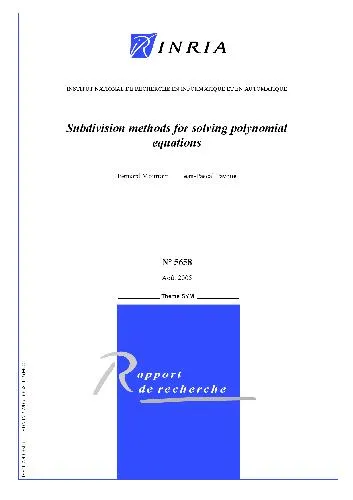
Subdivision methods for solving polynomial equations
Mourrain B.,Pavone J.-P.
English
Beginner
Algebra
4.6 / 5
0 reviews
2005
Published
23
pages
529
views
Welcome to Subdivision Methods for Solving Polynomial Equations, an insightful exploration into the world of mathematical problem-solving techniques. In this comprehensive book, authors Mourrain B. and Pavone J.-P. delve into the realm of polynomial equations, showcasing inno
Before you read
What will you get from this book?
Welcome to Subdivision Methods for Solving Polynomial Equations, an insightful exploration into the world of mathematical problem-solving techniques. In this comprehensive book, authors Mourrain B. and Pavone J.-P. delve into the realm of polynomial equations, showcasing innovative strategies for tackling one of mathematics' most challenging puzzles. This publication serves not only as an educational resource but also as a testament to the authors' profound expertise in the field.
Detailed Summary of the Book
Understanding and solving polynomial equations lies at the heart of various scientific and engineering disciplines. This book stands out as a beacon for those keen to grasp intricate mathematical concepts through a structured approach. Subdivision Methods for Solving Polynomial Equations is essentially a guide that presents effective strategies and techniques for solving polynomial equations through subdivision methods.
The book is meticulously structured, starting with a foundational introduction to polynomial equations and the importance of solving them using advanced methodologies. The authors highlight the significance of subdivision methods, which are vital for breaking down complex problems into simpler, more manageable units. As readers progress through the chapters, they are introduced to a variety of techniques such as bisection methods, Newton’s method, and other iterative methods that converge to the roots of polynomial equations efficiently.
Throughout the narrative, the authors ensure that each concept is elucidated with clarity, using numerous examples to illustrate the practical application of theoretical concepts. The authors also dive into the computational aspects of solving polynomial equations, emphasizing the importance of algorithms and numerical methods that enhance the accuracy and speed of solutions.
Key Takeaways
- A thorough understanding of subdivision methods as a powerful tool for solving polynomials.
- Insights into iterative techniques such as the bisection method and Newton’s method.
- An appreciation of computational approaches and algorithms that simplify complex polynomial problems.
- Practical examples and exercises that enhance problem-solving skills and mathematical dexterity.
Famous Quotes from the Book
"The elegance of mathematics lies not only in abstract theories but in the beauty of real-world solutions."
"Every complex problem can be tackled by breaking it down into its foundational components."
Why This Book Matters
In an era where mathematics drives advancements in technology, engineering, and science, understanding the fundamentals of solving polynomial equations is crucial. Subdivision Methods for Solving Polynomial Equations matters because it empowers learners, educators, and professionals alike with deep insights into solving equations that form the backbone of numerous applications across various domains.
This book bridges the gap between theoretical mathematics and practical application. By emphasizing subdivision methods and providing rich, detailed explanations combined with practical exercises, the authors have created a valuable resource that fosters the development of analytical and critical thinking skills in its readers.
Moreover, the focus on computational methods and algorithms resonates with the needs of modern industries, ensuring the book's relevance in a technologically-oriented world. It is a must-read for anyone looking to deepen their understanding of mathematical methodologies and improve their problem-solving abilities in complex scenarios.
Ask this book
Your question is answered in the context of this title and author. Each answer uses 2 points.
Sign in to ask the book assistant.
Reader reviews
0 reviews, 4.6 average out of 5
No reviews yet
If you have read this book, help the next reader with your experience.
Write a review
Sign in to publish a review.
Reader questions and answers
Ask a focused question and learn from the community.
Sign in to ask or answer a question.
No questions yet
Be the first to ask a clear, useful question.
What to read next
Related references that continue this learning path.
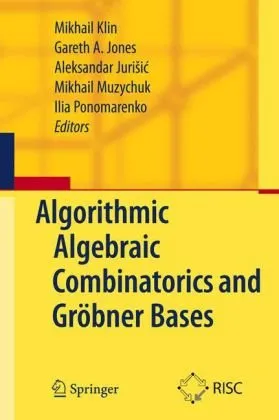
Algorithmic algebraic combinatorics and Grobner bases
Aiso Heinze,Mikhail Klin (auth.),Mikhail Klin,Gareth A. Jones,Aleksandar Jurišić,Mikhail Muzychuk,Ilia Ponomarenko (eds.)
2009
View book
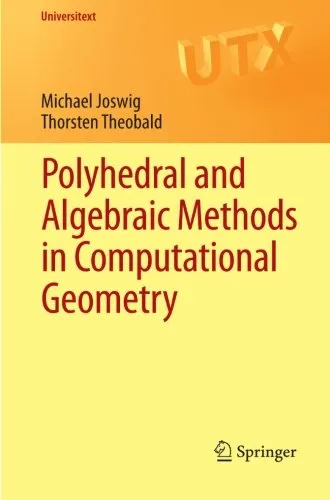
Polyhedral and Algebraic Methods in Computational Geometry
Michael Joswig,Thorsten Theobald
2013
View book