Book guide and evaluation
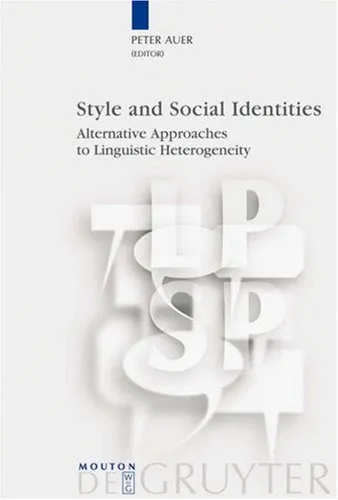
Style and Social Identities: Alternative Approaches to Linguistic Heterogeneity (LPSP 18) (Language, Power and Social Process)
Peter Auer (Editor)
English
Beginner
Essays
5.0 / 5
0 reviews
2007
Published
521
pages
366
views
Style and Social Identities: Alternative Approaches to Linguistic Heterogeneity (LPSP 18) (Language, Power and Social Process) Linguistic diversity, sociolinguistic style variation Explore Style and Social Identities: Alternative Approaches to Linguistic Heterogeneity f
Before you read
What will you get from this book?
Analytical Summary
"Style and Social Identities: Alternative Approaches to Linguistic Heterogeneity" is a scholarly work that interrogates the deep connections between language use, social positioning, and identity construction. As part of the Language, Power and Social Process (LPSP) series, this volume engages with the complexities of stylistic variation in communication, challenging conventional paradigms in sociolinguistics and opening new pathways for research.
Edited by Peter Auer, the text collates contributions from leading linguists and social scientists who collectively examine how linguistic heterogeneity is both a product and a marker of social identities. The book moves beyond traditional variationist approaches, focusing on interactional and pragmatic dimensions of style. This makes it a pivotal resource for researchers seeking multi-dimensional interpretations of language in use.
Rather than treating linguistic variation as a static phenomenon tied solely to demographic categories, the essays within this volume present style as a dynamic and socially embedded construct. Through detailed case studies and theoretical expositions, the contributors highlight how speakers actively negotiate stylistic choices to align with, resist, or redefine social identities. The work is situated within broader discourses of power, ideology, and cultural exchange.
Key Takeaways
From this book, readers gain an enriched understanding of linguistic diversity and the multiple functions of style in social interaction. The takeaways stretch across theoretical, methodological, and applied domains.
First, style should be seen not merely as linguistic ornamentation, but as a central mechanism through which individuals perform identities in context.
Second, the volume emphasizes methodological pluralism—advocating for the integration of conversational analysis, ethnographic observation, and discourse analysis to capture the subtleties of style-shifting.
Third, it underscores the interplay between micro-level linguistic choices and macro-level sociocultural structures, demonstrating that stylistic variation is both reflective and constitutive of social realities.
Finally, the book invites academics and practitioners to revisit assumptions about language homogeneity, promoting an appreciation for the inherent variability and adaptability of human communication systems.
Memorable Quotes
Style is an ever-shifting social resource through which individuals align themselves within the cultural fabric.Unknown
Linguistic heterogeneity is not noise in the system; it is the system in motion.Unknown
To speak is to position oneself—stylistically, socially, and ideologically.Unknown
Why This Book Matters
In a globalized world where linguistic diversity is on full display, understanding stylistic variation has never been more critical. This book situates style as a nexus point between individual agency and societal structures, making it relevant for discourse analysts, educators, policy-makers, and intercultural communication specialists.
It reshapes how we perceive "normalcy" in communication by reframing linguistic variety as a fundamental feature of human interaction, rather than a deviation to be corrected. The focus on alternative approaches makes it particularly important for challenging monolithic views of language and embracing multiplicity.
For academics and professionals, the text offers analytical tools that are applicable in both research and practice, from classroom pedagogy to corporate communication strategies.
Inspiring Conclusion
Engaging with "Style and Social Identities: Alternative Approaches to Linguistic Heterogeneity (LPSP 18) (Language, Power and Social Process)" is an invitation to rethink how language functions as a social tool, a marker of belonging, and a site of transformation.
For serious readers, academics, and professionals, the book offers not just theoretical insight but practical relevance. By integrating diverse analytical perspectives, it equips its audience to navigate and interpret the intricate ways in which style shapes social identities. Information unavailable on awards or recognition, as no reliable public source confirms such details.
Whether you are a researcher in sociolinguistics, a practitioner in communication, or an engaged reader curious about the interrelation between style and identity, this volume calls you to read, share, and discuss its ideas—ultimately transforming how we approach linguistic heterogeneity in everyday encounters.
Ask this book
Your question is answered in the context of this title and author. Each answer uses 2 points.
Sign in to ask the book assistant.
Reader reviews
0 reviews, 5.0 average out of 5
No reviews yet
If you have read this book, help the next reader with your experience.
Write a review
Sign in to publish a review.
Reader questions and answers
Ask a focused question and learn from the community.
Sign in to ask or answer a question.
No questions yet
Be the first to ask a clear, useful question.
What to read next
Related references that continue this learning path.