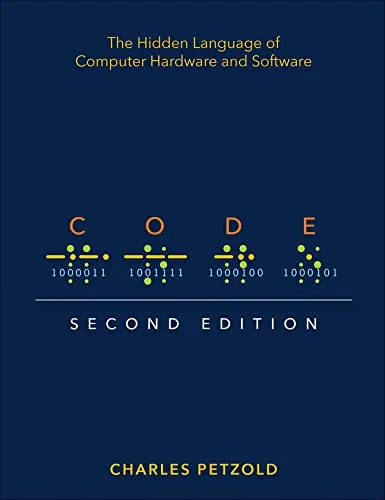
Code: The Hidden Language of Computer Hardware and Software - 2nd Edition
Charles Petzold
2022
View book
Book guide and evaluation
Andrew S. Tanenbaum
0 reviews
Published
pages
views
Welcome to the comprehensive guide on 'Structured Computer Organization: United States Edition', authored by Andrew S. Tanenbaum. This book is an essential resource for both students and professionals seeking to understand the fundamental concepts that underpin computer archite
Before you read
Welcome to the comprehensive guide on 'Structured Computer Organization: United States Edition', authored by Andrew S. Tanenbaum. This book is an essential resource for both students and professionals seeking to understand the fundamental concepts that underpin computer architecture and design. Its detailed and systematic approach demystifies complex topics, making them accessible and engaging.
In 'Structured Computer Organization', Andrew S. Tanenbaum provides a robust framework for understanding the core concepts of computer organization and architecture. The book delves into the layered approach to computer design, offering insights into hardware and software layers. With a clear and concise writing style, Tanenbaum explores how computers execute instructions and manage data, covering critical topics from machine language and assembly to high-level languages.
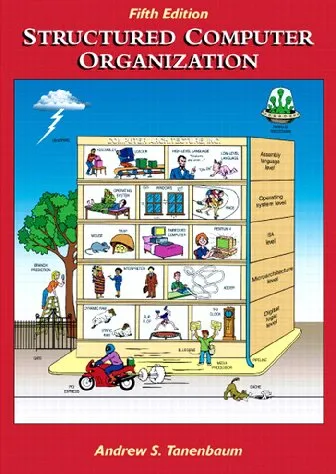
This comprehensive text introduces the five-level model of computer systems, starting from digital logic level, microarchitecture, instruction set architecture, operating systems, and all the way up to high-level languages. This structured approach allows readers to appreciate the complex interplay between various components of computer systems and understand how they contribute to a computer's overall operation and performance.
“In the ideal computer, all layers work seamlessly to create a complex but coherent system capable of executing both simple and complex operations.”
“Structured computer organization is not just about understanding how a computer works, but understanding why it works that way.”
Andrew S. Tanenbaum's 'Structured Computer Organization' plays a critical role in education and professional development within the field of computer science. It serves as a foundational text that equips readers with the tools needed to navigate the increasingly complex world of computer technology. By presenting a well-organized overview of computer architecture, this book has become a staple in academic courses, helping to shape the understanding of countless students worldwide.
The book's ability to break down sophisticated concepts into manageable parts makes it invaluable for both self-learners and those in a formal educational setting. Its structured approach not only fosters a deep comprehension of material but also encourages critical thinking and problem-solving skills, which are vital in the technology industry.
Your question is answered in the context of this title and author. Each answer uses 2 points.
0 reviews, 4.5 average out of 5
Sign in to publish a review.
Ask a focused question and learn from the community.
Related references that continue this learning path.
Charles Petzold