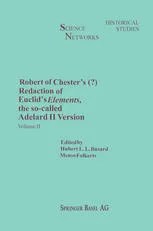
Robert of Chester’s (?) Redaction of Euclid’s Elements, the so-called Adelard II Version: Volume II
Dr. Hubert L. L. Busard,Prof. Dr. Menso Folkerts (auth.)
1992
View book
Book guide and evaluation
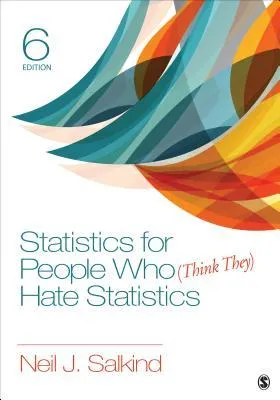
Neil J. Salkind
0 reviews
Published
pages
views
Welcome to the introduction of one of the most accessible and engaging statistics books ever written—Statistics for People Who (Think They) Hate Statistics. Whether you're a beginner intimidated by numbers or a professional seeking an enjoyable refresher, this book will change
Before you read
Welcome to the introduction of one of the most accessible and engaging statistics books ever written—Statistics for People Who (Think They) Hate Statistics. Whether you're a beginner intimidated by numbers or a professional seeking an enjoyable refresher, this book will change the way you feel about statistics forever. Let's dive into what this book offers and why it truly matters.
At its core, Statistics for People Who (Think They) Hate Statistics is a friendly, approachable guide to understanding the fundamentals of statistics. The book is designed for those who are not mathematically inclined or who may feel overwhelmed by traditional statistical methods. It breaks down intimidating concepts into bite-sized pieces using humor, relatable examples, and practical applications. Whether you're a student diving into statistics for the first time or an educator seeking a way to connect with your students, this book speaks your language.
The content spans everything from basics like understanding descriptive statistics and probability to more complex topics such as correlation, regression, t-tests, and data interpretation. Each chapter builds upon the last, fostering a cumulative learning experience and empowering readers to solve statistical problems with confidence. What sets it apart is the emphasis on clarity and engagement—no dry, complex jargon or overwhelming equations here!
Interactive exercises, real-world examples, and quirky anecdotes are woven throughout, making learning enjoyable. Additionally, the book integrates SPSS (a popular statistical software) to help readers practice their skills with practical tools. By the end, readers walk away not just with insights into numbers but with a sense of empowerment, realizing that statistics aren't as intimidating as they might have thought.
In a world increasingly driven by data, the ability to interpret statistical information is more critical than ever. From business decisions to scientific discoveries, statistics is the backbone of understanding trends, making predictions, and solving real-world problems. This book matters because it demystifies the subject for those who may feel excluded due to math anxiety or lack of formal training. It bridges the gap between statistical theory and practical application by making statistics accessible, relevant, and enjoyable.
More importantly, it empowers individuals from all walks of life to engage meaningfully with the data around them. Whether you're a student, professional, researcher, or simply a curious individual, this book will equip you with the tools you need to make sense of the numbers and tell compelling stories with data. By making statistics fun and approachable, it fosters a sense of confidence that transcends the discipline itself, encouraging readers to embrace challenges and see the value in lifelong learning.
In short, Statistics for People Who (Think They) Hate Statistics has redefined statistical education by proving that even the most complex concepts can be understood—and even loved—with the right approach.
Your question is answered in the context of this title and author. Each answer uses 2 points.
0 reviews, 4.5 average out of 5
Sign in to publish a review.
Ask a focused question and learn from the community.
Related references that continue this learning path.
Dr. Hubert L. L. Busard,Prof. Dr. Menso Folkerts (auth.)