An Elementary Introduction to the Theory of Probability
B. V. Gnedenko,A. Ya. Khinchin
2013
View book
Book guide and evaluation
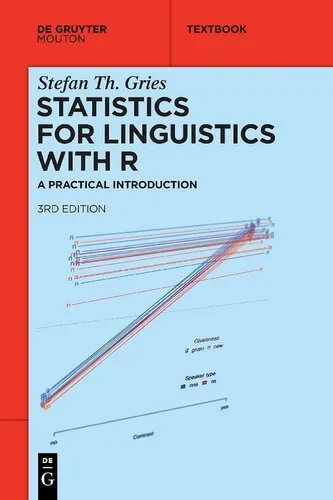
Stefan Th. Gries
0 reviews
Published
pages
views
Introduction to "Statistics for Linguistics with R: A Practical Introduction" "Statistics for Linguistics with R: A Practical Introduction" is a highly regarded textbook that combines the essential principles of linguistics and statistics with a practical hands-on approach
Before you read
"Statistics for Linguistics with R: A Practical Introduction" is a highly regarded textbook that combines the essential principles of linguistics and statistics with a practical hands-on approach using R, a powerful programming language specifically designed for data analysis. Authored by Stefan Th. Gries, this book caters both to beginners in the field of linguistics and seasoned researchers who wish to strengthen their statistical base while leveraging R to analyze linguistic data effectively.
The textbook bridges the gap between statistical concepts and their practical application in linguistics, enabling readers to apply these concepts to their own research. Written in clear, accessible language, the book is specifically structured to make difficult concepts more approachable while offering practical exercises that reinforce learning. This introduction provides an overview of the book’s key sections, notable insights, and its importance for the linguistics and data analysis communities.
The book is divided into well-structured chapters, each serving a specific purpose in bringing the reader closer to mastering the application of statistics in linguistics using R. Gries begins with a foundation of statistical basics, ensuring that even readers without prior statistical knowledge can follow along. Topics such as descriptive statistics, probability theory, hypothesis testing, and ANOVA (Analysis of Variance) are discussed thoughtfully and in detail.
What sets this book apart is the integration of the R programming language in every chapter. Readers are not only introduced to theoretical concepts but also shown step-by-step instructions on how to implement these concepts in R. This dual approach allows readers to gain practical skills, which can then be transferred to their own linguistic datasets.
As the book progresses, Gries delves into more advanced topics including regression analysis, correlations, and multifactorial designs. Beyond the technical aspects, the author addresses common pitfalls in statistical analysis, empowering readers to critically evaluate data and research findings. By the end of the book, readers will have developed a robust understanding of how to approach quantitative linguistic research and communicate their results effectively.
"Statistics is not about numbers; it’s about understanding patterns, probabilities, and making informed decisions from data."
"Linguistics is one of the most data-rich fields one can work in; yet, few disciplines have as much to gain from the thoughtful application of statistics."
"The beauty of R lies in its flexibility: once you understand the basics, you can adapt it to virtually any data-driven problem."
For linguistics students and professionals, understanding statistical methods is becoming increasingly indispensable. Modern linguistic research demands rigorous data analysis, and insights gained from quantitative research often have significant theoretical and applied implications. "Statistics for Linguistics with R" not only fills a gap in accessible educational resources for linguistic statistics but also empowers researchers to independently analyze their datasets using R.
In a world where data-oriented research is growing in prominence, this book equips readers with the practical tools they need to keep up with trends and conduct scientifically sound analyses. Furthermore, it challenges the notion that statistics is an intimidating or inaccessible domain, demonstrating instead that, with the right guidance and tools, anyone can master statistical methods.
Finally, by focusing on linguistics-specific datasets and scenarios, Gries ensures that readers can relate to the problems discussed, making the learning process much more engaging and relevant. Whether you are an undergraduate student, a seasoned linguist, or a professional researcher, this book is a valuable resource that will significantly enhance your research abilities and understanding of quantitative linguistics.
Your question is answered in the context of this title and author. Each answer uses 2 points.
0 reviews, 4.5 average out of 5
Sign in to publish a review.
Ask a focused question and learn from the community.
Related references that continue this learning path.
B. V. Gnedenko,A. Ya. Khinchin