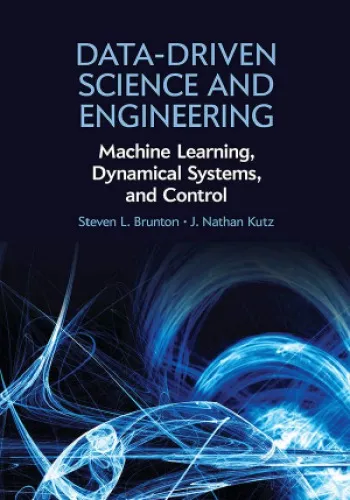
Data-Driven Science and Engineering: Machine Learning, Dynamical Systems, and Control
Steven L. Brunton,J. Nathan Kutz
2019
View book
Book guide and evaluation
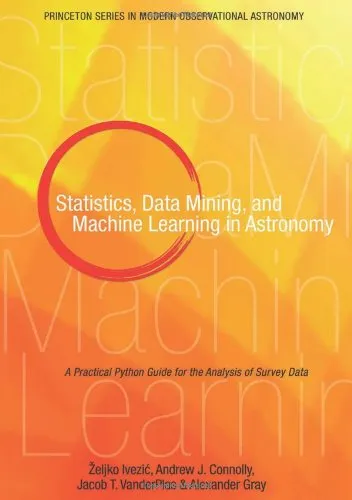
Zeljko Ivezic,Andrew J. Connolly,Jacob T VanderPlas,Alexander Gray
0 reviews
Published
pages
views
Introduction to 'Statistics, Data Mining, and Machine Learning in Astronomy' Welcome to 'Statistics, Data Mining, and Machine Learning in Astronomy: A Practical Python Guide for the Analysis of Survey Data.' This comprehensive book blends the realms of astronomy and data scien
Before you read
Welcome to 'Statistics, Data Mining, and Machine Learning in Astronomy: A Practical Python Guide for the Analysis of Survey Data.' This comprehensive book blends the realms of astronomy and data science, offering an essential guide for astronomers looking to harness the power of computational techniques.
This book is crafted to provide readers with a practical guide to implementing data-intensive techniques to better analyze and interpret astronomical survey data. With the rapid growth in data collections over the past decade, astronomers and researchers face new challenges and opportunities that computational methods can address. The aim of this book is to empower its audience with the knowledge to make meaningful discoveries through data analysis.
'Statistics, Data Mining, and Machine Learning in Astronomy' is an interdisciplinary book that serves as a bridge between complex statistical methods and their real-world applications in the field of astronomy.
The book starts with a foundational overview of the astronomical landscape and the nature of survey data that researchers encounter. It delves into the statistics that are vital for interpreting this data, moving from basic to more sophisticated statistical techniques. Following this, the book explores data mining and machine learning techniques, providing a detailed approach to applying these methods in the field of astronomy.
Readers will find rich practical examples and Python code snippets to help them grasp complex concepts and apply them to real datasets. The book's logical progression from basic statistics to advanced machine learning ensures that learners at various skill levels can follow along and build upon their understanding.
Throughout, the authors strive to maintain a balance between theory and application, ensuring that the readers understand not just the 'how' but also the 'why' behind each method covered.
What will you learn from this essential guide?
"In the era of big data, the ability to extract meaningful information from vast collections of survey data is as essential as the telescope itself."
"The line between discovery and data is increasingly blurred. The key lies in our statistical approach and computational tools."
In a rapidly evolving field, this book stands as a cornerstone text at the intersection of astronomy and data science.
The importance of 'Statistics, Data Mining, and Machine Learning in Astronomy' is in its pragmatic approach to educating professionals and academics in both the nuances of astronomy and the techniques of data analysis. By equipping astronomers with the tools of data science, this book aids in breaking down complex data sets into comprehensible segments, allowing researchers to visualize, interrogate, and derive insights from them.
This book is particularly well-suited for those who not only wish to comprehend the current state of data-driven astronomy but also seek to contribute to the advancement and innovation within this exciting field. As traditional methods in astronomy become complemented by computational strategies, the insights provided here become not only relevant but imperative.
Your question is answered in the context of this title and author. Each answer uses 2 points.
0 reviews, 4.5 average out of 5
Sign in to publish a review.
Ask a focused question and learn from the community.
Related references that continue this learning path.
Steven L. Brunton,J. Nathan Kutz
Bharath Ramsundar,Peter Eastman,Patrick Walters,Vijay Pande