
Book guide and evaluation
Statistical Physics, Part 1 (Course of Theoretical Physics, )
L. D. Landau
English
Beginner
Condensed Matter
4.7 / 5
0 reviews
1969
Published
562
pages
710
views
Introduction to Statistical Physics, Part 1 "Statistical Physics, Part 1 (Course of Theoretical Physics, Vol. 5)" is a seminal work by L. D. Landau and his collaborator E. M. Lifshitz. This book is an integral part of the Course of Theoretical Physics series, renowned for
Before you read
What will you get from this book?
Introduction to Statistical Physics, Part 1
"Statistical Physics, Part 1 (Course of Theoretical Physics, Vol. 5)" is a seminal work by L. D. Landau and his collaborator E. M. Lifshitz. This book is an integral part of the Course of Theoretical Physics series, renowned for its deep insights and comprehensive coverage of various physical phenomena. As the field of statistical physics is fundamental in explaining the thermodynamic behavior of macroscopic systems, this book stands out for its rigorous treatment and pedagogical clarity.
Summary of the Book
Statistical Physics, Part 1 delves into the profound connection between the macroscopic and microscopic worlds, providing a cohesive framework to understand phenomena observed in large ensembles of particles. The book meticulously covers topics from the foundational principles of statistical mechanics to the intricate analyses of thermodynamic properties. It discusses classical statistical mechanics, quantum statistical mechanics, and various ideal systems like the ideal gas. The book also elucidates phase transitions, critical phenomena, and the behavior of systems in thermal equilibrium.
The authors present these complex ideas with precision and clarity, using mathematical rigor combined with physical intuition. Each chapter builds upon the previous, enabling readers to develop a deep understanding of statistical methods and their application in theoretical physics. This book not only explains the established theories but also sheds light on unresolved questions and directions for future research.
Key Takeaways
By studying "Statistical Physics, Part 1," readers gain several key insights:
- Understanding of the fundamental principles of statistical physics and how they relate to thermodynamics.
- Ability to apply statistical methods to solve complex problems involving large ensembles of particles.
- Insight into the behavior of various phases of matter and the nature of phase transitions.
- Comprehension of both classical and quantum statistical mechanics, expanding the ability to analyze real-world systems.
Famous Quotes from the Book
"Statistical physics reveals the inherent uncertainty in physical systems as a powerful tool rather than a limitation."
"The elegance of statistical mechanics lies in its ability to describe macroscopic phenomena through microscopic laws."
"Temperature is not just a measure of heat, but a manifestation of underlying molecular motion."
Why This Book Matters
The importance of "Statistical Physics, Part 1" extends beyond its role as an academic textbook. It provides a profound understanding of how statistical principles underpin much of what we observe in the natural world. The book is pivotal for students and researchers in physics and engineering due to its detailed exposition of statistical mechanics, which is essential for fields ranging from condensed matter physics to materials science and beyond.
Its influence is significant because it reshapes how we think about systems with many degrees of freedom. By bridging the gap between microscopic laws and macroscopic phenomena, this work encourages a holistic approach to problem-solving in physics. The meticulous presentation and enduring insights make it a timeless classic in the literature of theoretical physics.
Ask this book
Your question is answered in the context of this title and author. Each answer uses 2 points.
Sign in to ask the book assistant.
Reader reviews
0 reviews, 4.7 average out of 5
No reviews yet
If you have read this book, help the next reader with your experience.
Write a review
Sign in to publish a review.
Reader questions and answers
Ask a focused question and learn from the community.
Sign in to ask or answer a question.
No questions yet
Be the first to ask a clear, useful question.
What to read next
Related references that continue this learning path.
Modern Many-Particle Physics: Atomic Gases, Quantum Dots and Quantum Fluids
Enrico Lipparini
2004
View book
Quantum Field Theory : Feynman Path Integrals and Diagrammatic Techniques in Condensed Matter
Fai,Lukong Cornelius
2020
View book
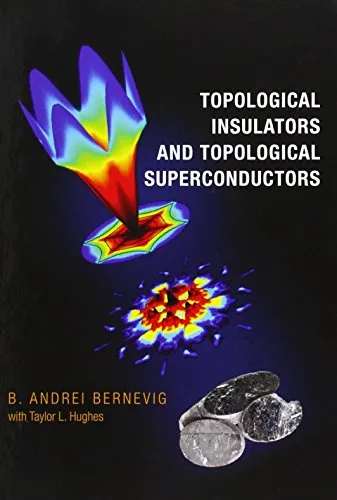
Topological Insulators and Topological Superconductors
B. Andrei Bernevig,Taylor L. Hughes
2013
View book