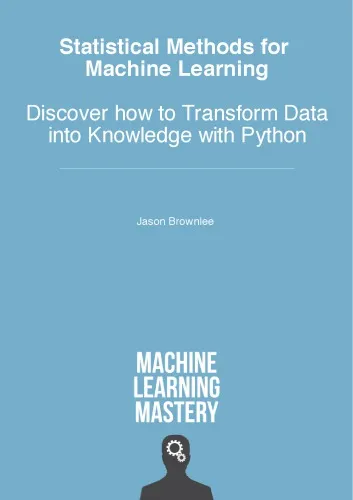
Introduction to 'Statistical Methods for Machine Learning'
Understanding the statistical principles and methods behind machine learning is critical for designing, evaluating, and fine-tuning models. The book 'Statistical Methods for Machine Learning' was written to demystify these concepts, making them accessible to machine learning practitioners across all skill levels. This introduction will provide you with everything you need to know about this comprehensive guide, why it matters, and the valuable insights it delivers.
A Detailed Summary of the Book
'Statistical Methods for Machine Learning' is a step-by-step guide to understanding and applying statistical techniques within machine learning workflows. The book bridges the often-perceived gap between statistical knowledge and machine learning practice, providing a cohesive framework to learn, evaluate, and deploy models confidently. It covers a wide range of topics, including how to assess data distributions, interpret statistical tests, employ feature selection methods, evaluate model performance, and improve predictions.
This book is written in a practical, hands-on style, providing in-depth worked examples and code snippets for common machine learning tasks. Each chapter introduces a core statistical concept and demonstrates its importance in the context of building machine learning models. By aligning traditional statistical methods with modern machine learning practices, the book equips readers with advanced techniques such as hypothesis testing, non-parametric methods, and resampling techniques like bootstrapping and permutation tests.
Whether you are a data scientist, software engineer, or machine learning enthusiast, this book ensures that statistical principles do not remain abstract concepts but become essential tools in your workflow. By the end of the book, you'll have not only the knowledge to enhance your models but also the confidence to handle data rigorously and interpret results effectively.
Key Takeaways
- 1. Understanding Statistics for Machine Learning: Learn foundational statistical techniques and their applications in real-world machine learning projects.
- 2. Model Evaluation: Discover various approaches to accurately assess your models, from cross-validation to improving interpretability using statistical methods.
- 3. Hands-On Learning: Engage with practical Python code for statistical tests, resampling techniques, and feature evaluation methods.
- 4. Data-Centric Thinking: Develop a rigorous data-first approach, ensuring clean inputs for well-performing machine learning models.
- 5. Empowered Decision-Making: Leverage statistical tools to confidently navigate and interpret complex model outputs.
Famous Quotes from the Book
"The power of machine learning lies not in its complexity, but in its ability to blend statistical insights with meaningful predictions."
"Data is the foundation of machine learning, and statistics is the language it speaks."
"To master machine learning, you don't just need algorithms; you need a firm grasp on the principles of data and statistical rigor."
Why This Book Matters
Machine learning has rapidly evolved to become a cornerstone of modern technology, and its success is rooted in robust statistical methodologies. However, many practitioners find it challenging to fully harness these techniques due to a lack of clear guidance tailored to this domain. 'Statistical Methods for Machine Learning' fills this crucial gap by presenting statistics as an actionable tool for anyone working with machine learning models.
The book distinguishes itself by not only teaching statistical concepts but also demonstrating their direct relevance to machine learning workflows. It empowers readers to rethink how they preprocess data, select features, and evaluate models—leading to more trustworthy and effective outcomes. Moreover, its accessible writing style and practical examples ensure that it is suitable for both beginners and seasoned professionals.
In a world increasingly driven by data-driven decision-making, this book serves as an essential guide for building better models, avoiding common pitfalls, and accelerating professional growth.