
Book guide and evaluation
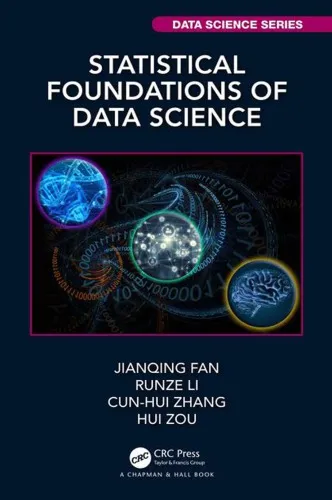
Statistical Foundations Of Data Science
Jianqing Fan,Runze Li,Cun-Hui Zhang,Hui Zou
English
Beginner
Mathematics
4.7 / 5
0 reviews
2020
Published
775
pages
290
views
Introduction to "Statistical Foundations of Data Science" The field of data science has emerged as a critical and transformative discipline in the modern age, blending techniques from statistics, machine learning, and computational science to extract actionable insights from d
Before you read
What will you get from this book?
Introduction to "Statistical Foundations of Data Science"
The field of data science has emerged as a critical and transformative discipline in the modern age, blending techniques from statistics, machine learning, and computational science to extract actionable insights from data. In their book "Statistical Foundations of Data Science," authors Jianqing Fan, Runze Li, Cun-Hui Zhang, and Hui Zou delve deep into the mathematical and conceptual foundations of this vibrant field, presenting readers with an unparalleled resource for understanding the statistical principles that underpin modern data science. With a lucid writing style and comprehensive coverage of topics, this book is poised to become a seminal work for both beginners and experienced practitioners in data science.
A Detailed Summary of the Book
The book "Statistical Foundations of Data Science" provides a thorough exploration of the statistical underpinnings of data science methodology. It systematically introduces key topics including probability theory, high-dimensional data analysis, optimization techniques, and machine learning algorithms. The authors emphasize the synergy between statistical reasoning and computational efficiency, showcasing how rigorous statistical approaches can significantly enhance algorithmic performance.
The narrative begins with an in-depth discussion of classical statistical concepts such as regression, hypothesis testing, and Bayesian inference, laying the groundwork for more advanced methodologies. The book gradually builds upon these fundamentals to explore topics like sparsity in high-dimensional data, penalized regression techniques (e.g., LASSO and elastic net), and scalable machine learning algorithms. Additionally, it provides real-world applications to bolster theoretical concepts, ensuring readers gain practical insights along with mathematical rigor.
The authors also address emerging themes like data ethics, causal inference, and reproducibility in data science. The seamless integration of theory, practice, and contemporary challenges positions this book as a comprehensive reference for anyone seeking to master the core principles of statistical methods in data science.
Key Takeaways
- A robust understanding of statistical principles, including probability, hypothesis testing, and estimation techniques, essential for data analysis and modeling.
- Practical insights into handling high-dimensional datasets, including methods such as variable selection, penalized regression, and dimensionality reduction techniques.
- A balanced focus on both theory and implementation, featuring real-world examples and computational approaches for scalability.
- Comprehensive treatment of machine learning algorithms with a statistical perspective, from supervised learning to unsupervised clustering methods.
- Discussions on modern-day challenges in data science, including data privacy, algorithmic fairness, and the reproducibility crisis.
Famous Quotes from the Book
"Data science is not a mere intersection of statistics and computer science; it is a confluence of thought, where statistical inference meets computational feasibility to address real-world problems."
"High-dimensional data does not mean high uncertainty; with statistical rigor, we can uncover patterns that would otherwise remain hidden in noise."
"The essence of data science lies in balancing predictive accuracy with interpretability, ensuring that models not only perform well but also provide actionable insights."
Why This Book Matters
As data science continues to revolutionize industries, the need for a solid understanding of its statistical roots has never been more pressing. "Statistical Foundations of Data Science" stands out as a foundational text, bridging theoretical depth with practical applications. Unlike traditional textbooks that either focus solely on mathematical rigor or practical implementation, this book skillfully balances the two, offering readers a holistic understanding of the concepts and tools required in a data-driven world.
What truly sets this book apart is its relevance across various audiences. For statisticians, the book provides a clear path to understanding the computational challenges of modern data analysis. For computer scientists, it introduces the statistical principles necessary to design robust algorithms. For professionals and researchers, it offers actionable insights into solving real-world data problems effectively. Furthermore, the authors have succeeded in addressing critical ethical issues in data science, offering guidance on responsible data usage and interpretation.
Whether you are a student aspiring to enter the data science domain or a seasoned professional looking to solidify your statistical knowledge, this book will serve as an invaluable resource. Offering a combination of timeless principles and cutting-edge techniques, "Statistical Foundations of Data Science" is guaranteed to leave a lasting impact on its readers.
Ask this book
Your question is answered in the context of this title and author. Each answer uses 2 points.
Sign in to ask the book assistant.
Reader reviews
0 reviews, 4.7 average out of 5
No reviews yet
If you have read this book, help the next reader with your experience.
Write a review
Sign in to publish a review.
Reader questions and answers
Ask a focused question and learn from the community.
Sign in to ask or answer a question.
No questions yet
Be the first to ask a clear, useful question.
What to read next
Related references that continue this learning path.

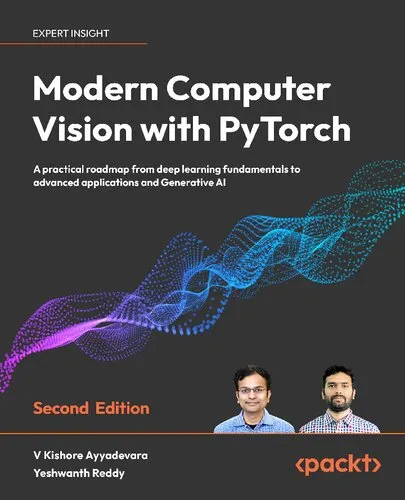
Modern Computer Vision with PyTorch: A Practical Roadmap From Deep Learning Fundamentals to Advanced Applications and Generative AI, 2nd Edition
V Kishore Ayyadevara,Yeshwanth Reddy
2023
View book