Amazonian Dark Earths: Origin, Properties, Management
Johannes Lehmann,Dirse C. Kern,Bruno Glaser,William I. Woods
2004
View book
Book guide and evaluation
Charles E. Lance,Robert J. Vandenberg
0 reviews
Published
pages
views
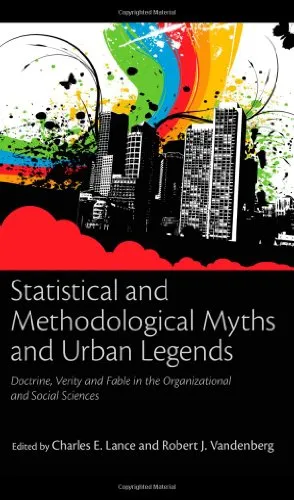
Introduction to "Statistical and Methodological Myths and Urban Legends" In the constantly evolving landscape of organizational and social sciences, researchers, analysts, and scholars rely heavily on statistical and methodological practices to draw accurate insights and c
Before you read
In the constantly evolving landscape of organizational and social sciences, researchers, analysts, and scholars rely heavily on statistical and methodological practices to draw accurate insights and conclusions. Yet, despite advancements in technology and methods, numerous misconceptions persist that can distort these processes. "Statistical and Methodological Myths and Urban Legends: Doctrine, Verity and Fable in the Organizational and Social Sciences," authored by Charles E. Lance and Robert J. Vandenberg, boldly addresses these prevalent myths, urging readers to rethink widely accepted practices and examine their foundations critically. The book serves as both a guide and a challenge to those invested in rigorous research and statistical methods, aiming to debunk popular yet erroneous narratives within the field.
This groundbreaking work is organized around exploring and dissecting the myths and "urban legends" that plague modern organizational and social sciences. The authors take an evidence-based approach to uncovering where many of these misconceptions arise, whether from repeated misinterpretation, oversimplification of complex ideas, or the sheer inertia of tradition in scientific practice. These myths range from over-reliance on conventional methodologies to unwarranted certainty about statistical rules that often go unquestioned.
Through its chapters, the book clarifies how some popular statistical practices, like the dichotomous use of correlation versus causation, can lead to misinterpretations of empirical findings. It presents case studies and real-world examples to challenge such assumptions. Moreover, Lance and Vandenberg delve into the use of SEM (Structural Equation Modeling), path analysis, and confirmatory factor analysis, addressing misunderstanding and misuse that hinder the progress of scientific inquiry. The book isn't merely theoretical—it offers practical guidelines for avoiding common errors, making it indispensable for experienced and novice researchers alike.
"What seems like solid doctrine today can quickly become tomorrow’s myth, unless challenged by evidence and critical reasoning."
"The road to scientific truth is often paved with discredited ideas that, once discarded, make space for genuine progress."
"Only through relentless questioning and adaptive thinking can researchers avoid falling victim to intellectual inertia."
"Statistical and Methodological Myths and Urban Legends" is more than just a reference guide; it is a manifesto for improved research practices in organizational and social sciences. At a time when the credibility of scientific studies is often undermined by poor methodologies or entrenched misconceptions, this book serves as a reminder to question the fundamentals and tread judiciously. Its relevance extends beyond academia, benefiting anyone involved in statistical reasoning—from policy makers to business leaders—to make better-informed decisions based on sound practices.
The authors emphasize the importance of clarity and rigor, offering tools and perspectives that empower researchers to rethink the status quo. By addressing pervasive myths and urban legends, they stimulate discussions that can lead to significant advancements across various domains. Whether you are seeking to sharpen your analytical skills or are simply curious about the intricacies of research in organizational and social sciences, this book is an invaluable resource for fostering intellectual growth and methodological precision.
Your question is answered in the context of this title and author. Each answer uses 2 points.
0 reviews, 4.5 average out of 5
Sign in to publish a review.
Ask a focused question and learn from the community.
Related references that continue this learning path.
Johannes Lehmann,Dirse C. Kern,Bruno Glaser,William I. Woods