Karen
2025/11/09
5 / 5
nice explanation of base SQL concepts
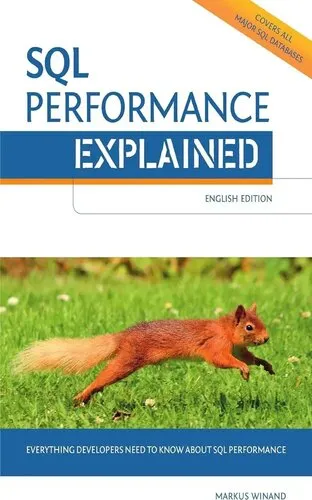
Book guide and evaluation
Markus Winand
1 reviews
Published
pages
views
Introduction to "SQL Performance Explained: Everything Developers Need to Know about SQL Performance" "SQL Performance Explained" is a practical yet comprehensive guide designed to empower developers, database administrators, and IT professionals with the knowledge and tools n
Before you read
"SQL Performance Explained" is a practical yet comprehensive guide designed to empower developers, database administrators, and IT professionals with the knowledge and tools needed to optimize the performance of SQL queries. Written by Markus Winand, this book bridges the gap between theoretical database concepts and real-world application, ensuring that every developer can create high-performing, scalable applications.
As databases play a crucial role in modern software development, understanding how to make SQL queries efficient is not just a skill—it’s an essential requirement. However, tackling performance issues can be a daunting task when you're unsure of where to start. This book is your roadmap to mastering the intricacies of SQL performance tuning with clear explanations and actionable insights.
Let’s delve deeper into what this book offers, the lessons you'll take away, and why it's indispensable for your professional toolkit.
Optimizing SQL performance is both an art and a science. "SQL Performance Explained" begins by explaining the fundamental importance of understanding how a relational database management system (RDBMS) processes queries under the hood. The book methodically teaches readers how to analyze and improve queries by highlighting the concepts of indexing, execution plans, filtering, joins, and transactions.
The book is structured in logical steps, taking readers from basic SQL constructs to advanced techniques. Topics include:
One of the highlights of the book is its vendor-agnostic approach. It demonstrates techniques applicable to multiple database systems, including MySQL, PostgreSQL, Oracle, and SQL Server. Every explanation is paired with practical examples, illustrations, and step-by-step walkthroughs, making the content accessible even for beginners.
By the end of the book, you’ll not only be able to identify and resolve performance bottlenecks but also anticipate and design systems that prevent them from occurring in the first place.
"Indexes are not only the foundation of fast queries; they also form the backbone of your optimization efforts."
"SQL tuning is not about trying random techniques—it's about understanding the problem and the tools your database provides."
"Reading an execution plan is like reading a map; it tells you exactly where your SQL is taking a detour."
In the world of software development, applications are only as performant as the underlying database queries. A slow query can cascade through an entire system, leading to poor user experiences, increased costs, and operational headaches. This is why developers and database administrators must understand SQL performance from a fundamental and practical perspective.
What makes "SQL Performance Explained" uniquely valuable is its clarity and focus on the things that truly matter in the performance tuning process. Instead of overwhelming readers with obscure database internals, Markus Winand highlights the core principles that drive efficiency in every database system. The book's vendor-neutral approach ensures its lessons remain relevant regardless of the specific database in use.
Whether you're a developer just starting to work with databases or a seasoned DBA looking to refine your skills, this book is an invaluable resource. In an age where "big data" and cloud computing dominate discussions, this book reminds us that the basics—not the buzzwords—are the true foundation of database performance.
"SQL Performance Explained" is more than just a technical book; it's a professional development tool that can elevate your career and your applications to new heights.
Your question is answered in the context of this title and author. Each answer uses 2 points.
1 reviews, 5.0 average out of 5
2025/11/09
5 / 5
nice explanation of base SQL concepts
Sign in to publish a review.
Ask a focused question and learn from the community.
Related references that continue this learning path.
Arunjith Aravindan,Jeyaram Ayyalusamy
Baron Schwartz,Peter Zaitsev,Vadim Tkachenko,Jeremy Zawodny D.,Arjen Lentz,Derek J. Balling