

Book guide and evaluation
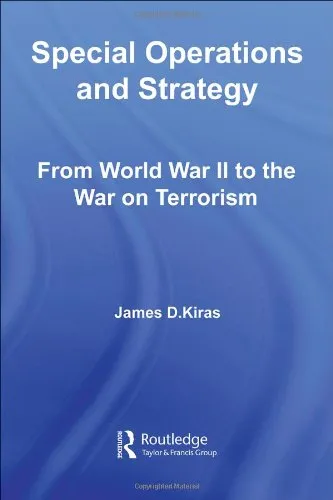
Special Operations and the Nature of Strategy: From World War II to the War on Terrorism (Cass Series--Strategy and History)
James Kiras
English
Beginner
Historical
4.2 / 5
0 reviews
2006
Published
257
pages
137
views
Introduction to "Special Operations and the Nature of Strategy: From World War II to the War on Terrorism" Modern conflict, from the mid-20th century to the present day, has been deeply shaped by the role of special operations and their ability to influence broader strategic o
Before you read
What will you get from this book?
Introduction to "Special Operations and the Nature of Strategy: From World War II to the War on Terrorism"
Modern conflict, from the mid-20th century to the present day, has been deeply shaped by the role of special operations and their ability to influence broader strategic outcomes. In my book, Special Operations and the Nature of Strategy: From World War II to the War on Terrorism, I explore the often misunderstood and mischaracterized realm of special operations, dissecting how they interact with strategy at large and whether they can truly bring about significant strategic effect on their own.
Focusing on both historical context and theoretical insights, this book seeks to serve as a foundational discussion of special operations in warfare. From analyzing famous missions during World War II to evaluating their evolution during the War on Terrorism, this work provides a comprehensive exploration of how small, precise, and unconventional actions fit—or sometimes fail to fit—within the broader strategic framework of war. Written primarily for experts and enthusiasts of military history and strategy, the insights here also contribute to our understanding of contemporary conflict dynamics and decision-making.
Detailed Summary of the Book
The book delves into the history of special operations forces (SOFs), uncovering their roots during World War II by analyzing missions such as the British SAS operations behind enemy lines and the U.S. Army Ranger assaults. By tracing their effectiveness, shortcomings, and evolution, I highlight key lessons learned from their successes and failures.
Fast-forwarding to the post-World War II period, the narrative shifts to how SOFs adapted to the challenges of the Cold War. Operations in diverse theaters, such as Vietnam and the Falklands War, provide a rich foundation for exploring the effectiveness of special operations in both direct action missions and broader psychological and unconventional warfare.
In the modern era, the book focuses heavily on the operational revolution that occurred post-9/11. The War on Terrorism posed new challenges, forcing a redefinition of what special operations forces could and could not achieve. Missions like the raid to eliminate Osama Bin Laden are examined not just for their tactical brilliance but also for the strategic ramifications that followed, demonstrating how such operations shaped public perception, military strategy, and global geopolitics.
Ultimately, the book weaves a cohesive argument: while special operations have the potential for profound tactical benefits, they rarely substitute for comprehensive, well-coordinated strategic efforts. Instead, their true utility lies in their ability to complement and amplify broader efforts, a nuance that often goes unnoticed in popular accounts of military success.
Key Takeaways
- Special operations are not standalone strategic solutions; they must be integrated within a larger framework.
- Historical case studies reveal that SOFs often thrive when precision, speed, and surprise are critical, but they fail without proper strategic alignment.
- The psychological and symbolic dimension of special operations often outweighs their physical outcomes.
- The War on Terrorism showcased the adaptability and limitations of modern-day special operations forces.
Famous Quotes from the Book
"In warfare, small actions can carry an outsized weight, but only when guided by the steady hand of a comprehensive strategic plan."
"The fascination with special operations lies not in their size, but in their ability to defy conventional expectations of military power."
"For all their tactical brilliance, special operations forces are not the hammer that solves every nail of war."
Why This Book Matters
Understanding the role of special operations in war is not merely a historical exercise; it is a critical component of making informed strategic decisions in modern conflict. With the rapid evolution of military technology, asymmetric threats, and unconventional tactics, understanding the principles behind special operations is more relevant than ever. My book strives to illuminate the delicate relationship between tactics and strategy, challenging both military professionals and civilians to look beyond the surface of these often-romanticized missions.
By combining historical depth, analytical rigor, and a forward-looking perspective, Special Operations and the Nature of Strategy becomes a crucial resource for understanding how small, elite units contribute to—or fall short of—shaping the grand narrative of war. In a world increasingly defined by unconventional conflict, this exploration serves as a cornerstone for grasping how strategy and special operations intertwine.
Ask this book
Your question is answered in the context of this title and author. Each answer uses 2 points.
Sign in to ask the book assistant.
Reader reviews
0 reviews, 4.2 average out of 5
No reviews yet
If you have read this book, help the next reader with your experience.
Write a review
Sign in to publish a review.
Reader questions and answers
Ask a focused question and learn from the community.
Sign in to ask or answer a question.
No questions yet
Be the first to ask a clear, useful question.
What to read next
Related references that continue this learning path.



Modern Computer Vision with PyTorch: A Practical Roadmap From Deep Learning Fundamentals to Advanced Applications and Generative AI, 2nd Edition
V Kishore Ayyadevara,Yeshwanth Reddy
2023
View book