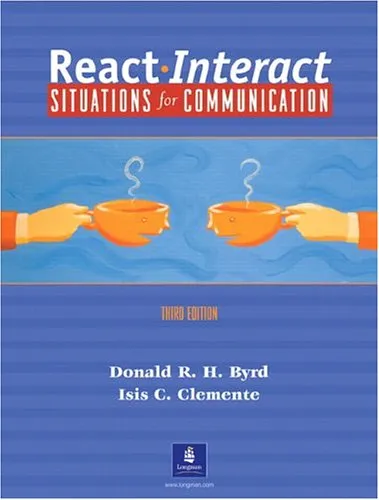
React Interact: Situations for Communication, Third Edition
Donald R. H. Byrd,Isis C. Clemente
2001
View book
Book guide and evaluation
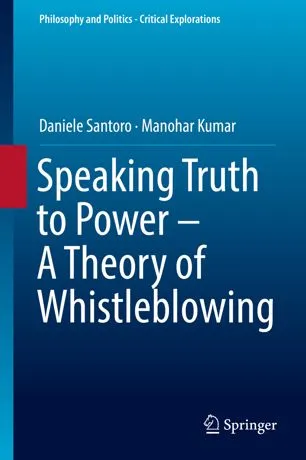
Daniele Santoro,Manohar Kumar
0 reviews
Published
pages
views
Introduction to "Speaking Truth to Power: A Theory of Whistleblowing" Whistleblowing is an act of courage, moral conviction, and oftentimes perilous consequence. In the world of complex systems—ranging from government institutions to multinational corporations—truth has th
Before you read
Whistleblowing is an act of courage, moral conviction, and oftentimes perilous consequence. In the world of complex systems—ranging from government institutions to multinational corporations—truth has the power to unsettle and disrupt even the most entrenched structures. Speaking Truth to Power: A Theory of Whistleblowing by Daniele Santoro and Manohar Kumar investigates the intricate dynamics of whistleblowing, exploring its ethical foundations, societal implications, and enduring relevance in fostering transparency.
In this book, we strive to understand whistleblowing not just as an isolated act of exposing wrongdoing but as an essential part of democratic accountability and institutional integrity. By delving into the philosophical, legal, and ethical implications of whistleblowing, the text offers a groundbreaking framework for comprehending why individuals blow the whistle, the systemic resistance they encounter, and the broader moral and political stakes.
Who is this book for? Whether you’re an academic researching ethics, a policymaker working on whistleblower protection laws, or a general reader seeking to understand a topic that touches on justice, responsibility, and power, this book offers rich insights to deepen your understanding.
At its core, the book serves as a comprehensive analysis of whistleblowing as a practice embedded in socio-political dynamics. The authors unravel the ethical dilemmas faced by whistleblowers who often must choose between personal risk and duty to the truth. Drawing upon case studies and real-world incidents, the book situates whistleblowing within a framework of distributive ethics—highlighting how responsibility for wrongdoing should ideally be shared across individuals and the institutions they represent.
Beyond its theoretical exploration, the book dissects the procedural aspects of whistleblowing: how evidence is presented, the role of public opinion, the responsibilities of the media, and the legal standards designed to protect whistleblowers from retaliation. Special attention is given to the psychological and emotional impact on whistleblowers, as well as the transformative power their actions can have on institutions and societies.
The authors argue that whistleblowers play a unique role in democracies by acting as sentinels who illuminate power imbalances and prevent abuse. Through interdisciplinary analysis, the book bridges philosophy, politics, law, and ethics, offering a unified perspective on whistleblowing and its implications for modern governance.
"Whistleblowing is not merely a matter of exposing corruption; it is an act of resistance against the normalization of complicity."
"Justice must not only favor the brave who speak out but also challenge the injustices that necessitate whistleblowing to begin with."
In an era characterized by the large-scale capture of power by political and corporate elites, whistleblowers serve as the conscience of society. Despite the risks of retaliation, isolation, and career jeopardy, individuals continue to step forward to reveal uncomfortable truths. Their courage demands recognition, and their role in enabling institutional reforms should not be understated. This book matters because it offers a carefully reasoned defense of whistleblowers as agents of moral and political progress.
By equipping readers with a robust theoretical framework, Speaking Truth to Power: A Theory of Whistleblowing not only educates but also inspires action. It reminds us of the enduring importance of truth, justice, and accountability while spotlighting the urgent need for societal change to empower those who dare to challenge systemic wrongdoing.
Your question is answered in the context of this title and author. Each answer uses 2 points.
0 reviews, 4.5 average out of 5
Sign in to publish a review.
Ask a focused question and learn from the community.
Related references that continue this learning path.
Donald R. H. Byrd,Isis C. Clemente