
Building Better Minds: Artificial General Intelligence via the CogPrime Architecture
Ben Goertzel;Cassio Pennachin;Nil Geisweiller;OpenCog Team
2012
View book
Book guide and evaluation
S. O. Nuallain
0 reviews
Published
pages
views
Welcome to the sophisticated exploration of spatial cognition, a fascinating domain within cognitive science that investigates how we perceive, process, and understand spatial information. This book, "Spatial Cognition: Foundations and Applications," is a collection of insightf
Before you read
Welcome to the sophisticated exploration of spatial cognition, a fascinating domain within cognitive science that investigates how we perceive, process, and understand spatial information. This book, "Spatial Cognition: Foundations and Applications," is a collection of insightful papers presented at the Mind III Annual Conference, curated to probe the intricacies of human spatial awareness, explore its foundational elements, and examine its various applications.
Spatial cognition involves the cognitive processes and representations involved in understanding and manipulating spatial environments. This book delves into the intersection of space and cognition by illustrating theories, empirical studies, and applications that advance our knowledge in this area. From exploring the neural underpinnings of spatial awareness to discussing the implications of spatial cognition in design and artificial intelligence, this volume offers a comprehensive overview of the field.
It presents seminal papers discussing how mental schemas and maps are constructed and utilized by the brain to navigate complex environments and how such mechanisms can inspire computational models in AI. The selected papers provide insights into topics such as spatial memory, perception, the role of language in spatial reasoning, and the cognitive processes involved in navigation tasks.
“Our cognitive maps are not merely passive reflections of space, but active constructions that both shape and are shaped by our interactions with the physical world.”
“Spatial cognition is fundamental to our understanding of ourselves as agents in a three-dimensional world. Its study unveils the delicate balance between perception and action.”
This book is significant for several reasons. First, it serves as a bridge between cognitive theories and practical applications, allowing readers to appreciate the multidisciplinary nature of spatial cognition. The papers compiled here extend beyond theoretical discussions, offering practical insights relevant to fields such as urban planning, robotics, virtual reality, and more. Secondly, by bringing together contributions from eminent scholars and researchers in cognitive science, it provides readers with access to diverse perspectives and groundbreaking research. Lastly, in an age where technology continues to reshape the way we interact with space through augmented and virtual realities, this book offers vital understandings that could inform future innovations.
In essence, "Spatial Cognition: Foundations and Applications" is not just a collection of academic papers; it is a testament to the dynamic interplay between cognition and the spaces we inhabit, underscoring the importance of this interaction in both theoretical and applied contexts. Scholars, students, and practitioners alike will find this book a valuable resource for expanding their understanding of how we comprehend and navigate the spatial dimensions of our world.
Your question is answered in the context of this title and author. Each answer uses 2 points.
0 reviews, 4.3 average out of 5
Sign in to publish a review.
Ask a focused question and learn from the community.
Related references that continue this learning path.
Ben Goertzel;Cassio Pennachin;Nil Geisweiller;OpenCog Team
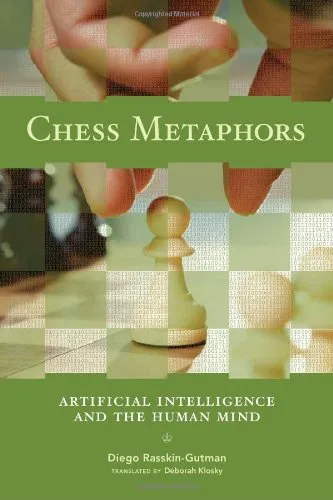
Diego Rasskin-Gutman,Deborah Klosky (transl.)