


Book guide and evaluation
Sound and the Aesthetics of Play: A Musical Ontology of Constructed Emotions
Justin Christensen (auth.)
English
Beginner
Data Science
4.8 / 5
0 reviews
2018
Published
133
pages
179
views
Introduction to "Sound and the Aesthetics of Play: A Musical Ontology of Constructed Emotions" "Sound and the Aesthetics of Play: A Musical Ontology of Constructed Emotions" offers a refreshing exploration of how sound, music, and play intersect to create profoun
Before you read
What will you get from this book?
Introduction to "Sound and the Aesthetics of Play: A Musical Ontology of Constructed Emotions"
"Sound and the Aesthetics of Play: A Musical Ontology of Constructed Emotions" offers a refreshing exploration of how sound, music, and play intersect to create profound emotional and intellectual experiences. This book ventures into the philosophical and practical underpinnings of sound as a medium and the role it plays in constructing human emotions. Examining the topic from diverse perspectives—ranging from conceptual discussions on play to concrete applications in musical composition—it argues that sound is not merely a passive medium of entertainment but an active, dynamic force that shapes how we experience and even construct our emotions.
Written with equal parts scholarly rigor and artistic insight, this book is a compelling read both for academics seeking to deepen their understanding of musical ontology and for practitioners in the arts keen on expanding their aesthetic sensitivity. It critically engages with how we perceive, process, and enact emotions, reconfiguring traditional notions of sound and its impact on the human condition. By doing so, it invites readers into a world where music, play, and emotions coalesce in a vibrant interplay.
Detailed Summary
The book begins by laying out its central premise: emotions are not pre-determined, static entities; they are constructed, mediated through the interactive dynamics of sound and play. The early chapters delve into foundational theoretical concepts such as the semiotics of sound, aesthetic theory, and the psychology of play. By introducing readers to how sound operates on both perceptual and cognitive levels, the groundwork is laid for understanding how sonic expressions can evoke, manipulate, and even create emotional experiences.
In subsequent chapters, the discussion moves beyond general theory to more concrete applications. For instance, it examines how musical compositions intentionally employ principles of play to elicit emotional responses. These sections explore key elements such as rhythm, timbre, melody, repetition, and unpredictability, articulating how their interplay generates dynamic, multifaceted emotional resonances.
Later chapters pivot to contemporary questions, including those related to artificial intelligence and emotion modeling. The role technology plays in deepening our understanding of sound and emotional interaction is examined within this broader framework. Ultimately, the book closes by addressing pressing cultural and ethical questions tied to sound’s impact in digital media, entertainment, and modern art. This makes it a timely contribution to discussions around the intersections of technology, society, and creativity.
Key Takeaways
- Sound and music are not just aesthetic forms but are deeply enmeshed in the human act of emotional construction and perception.
- The concept of "play" is an essential framework for understanding how sound operates, allowing spontaneity, experimentation, and emotional fluidity.
- Our emotional responses to music are rooted in cultural, cognitive, and physical dimensions that are far more fluid than previously thought.
- The process of creating music offers a microcosmic view of how humans experiment and evolve emotionally in broader contexts.
- Technological advances, including AI, challenge longstanding ideas about creativity and emotional authenticity in music and sound design.
Famous Quotes from the Book
"Sound, when paired with play, becomes more than mere expression; it becomes the architecture of how emotions are constructed, felt, and reimagined."
"Music is not simply a manipulation of pitch and rhythm but a lived experience, mediated by the enduring yet fleeting nature of our constructed emotions."
"Understanding an emotion is not about dissecting it but about playing with its resonances, its possibilities, and its meanings."
Why This Book Matters
"Sound and the Aesthetics of Play" is a pivotal work for understanding the transformative power of sound in shaping the human experience. At its core, this book challenges conventional narratives about emotions, emphasizing their fluidity and complexity. By framing sound and music as active participants in this process, it offers new insights for fields ranging from philosophy and psychology to art and technology. For musicians, it provides an enriched understanding of their craft, encouraging playful engagement with sound to deepen its emotional impact. For scholars, it opens up fertile ground for inquiry into the intersection of sound, emotion, and creativity.
At a time when digital technologies are dramatically reshaping our auditory landscapes, the book’s nuanced exploration of sound’s role in constructing emotions feels especially relevant. It calls on readers to reimagine their relationship with sound—not merely as something passively consumed but as something actively engaged, experimented with, and played through.
Ask this book
Your question is answered in the context of this title and author. Each answer uses 2 points.
Sign in to ask the book assistant.
Reader reviews
0 reviews, 4.8 average out of 5
No reviews yet
If you have read this book, help the next reader with your experience.
Write a review
Sign in to publish a review.
Reader questions and answers
Ask a focused question and learn from the community.
Sign in to ask or answer a question.
No questions yet
Be the first to ask a clear, useful question.
What to read next
Related references that continue this learning path.


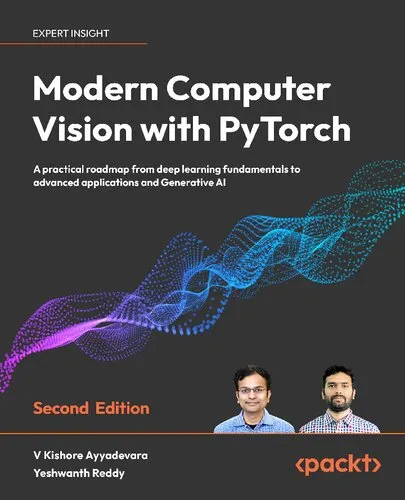
Modern Computer Vision with PyTorch: A Practical Roadmap From Deep Learning Fundamentals to Advanced Applications and Generative AI, 2nd Edition
V Kishore Ayyadevara,Yeshwanth Reddy
2023
View book