
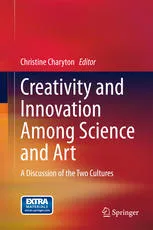
Creativity and Innovation Among Science and Art: A Discussion of the Two Cultures
Christine Charyton (eds.)
2015
View book

Book guide and evaluation
Harald Ibach,Hans Lüth (auth.)
0 reviews
Published
pages
views
Welcome to an exploration of the inherent principles of materials science through the lens of solid-state physics. In 'Solid-State Physics: An Introduction to Principles of Materials Science,' readers are taken on a journey through the fundamental aspects that make up the world
Before you read
Welcome to an exploration of the inherent principles of materials science through the lens of solid-state physics. In 'Solid-State Physics: An Introduction to Principles of Materials Science,' readers are taken on a journey through the fundamental aspects that make up the world of solid materials. This book is meticulously crafted to cater to both students beginning their journey in materials science and seasoned professionals seeking to enrich their understanding.
This comprehensive book delves into the scientific principles that underpin the study of solid-state physics. Starting with the foundational principles, the book explores the structural, electronic, and dynamic properties of materials. It is structured to facilitate interaction through detailed explanations that span from the atomic scale to larger material properties. It provides a robust framework for the understanding of crystallography, quantum mechanics applications in solid-state physics, thermal properties, and electronic properties. Throughout the book, readers will find a seamless integration of fundamental physics with real-world materials science applications. It addresses topics such as superconductivity, magnetism, and semiconductor physics, offering insights into how these phenomena occur and are utilized in modern technology.
"Solid-state physics forms the bedrock of modern materials science, bridging the gap between fundamental physics and engineering applications."
As our world continues to evolve, so too does the technology that drives it. 'Solid-State Physics: An Introduction to Principles of Materials Science' stands out as a critical educational resource aligning foundational scientific theory with tangible technological advancements. Today's technological innovations, from semiconductors to advanced magnetic materials, all stem from the principles discussed in solid-state physics. This book is a vital tool for any student or professional in physics, engineering, or materials science fields, facilitating a thorough understanding of the complex interactions within materials. By bridging theoretical understanding and practical implications, it empowers readers to not only comprehend but also innovate in their respective fields.
Your question is answered in the context of this title and author. Each answer uses 2 points.
0 reviews, 4.5 average out of 5
Sign in to publish a review.
Ask a focused question and learn from the community.
Related references that continue this learning path.
Christine Charyton (eds.)


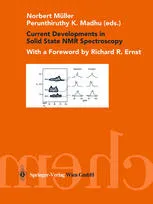
Alexej Jerschow (auth.),Dr. Norbert Müller,Dr. Perunthiruthy K. Madhu (eds.)