
Book guide and evaluation
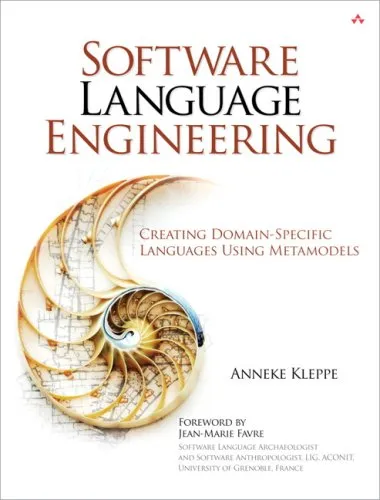
Software Language Engineering: Creating Domain-Specific Languages Using Metamodels
Anneke Kleppe
English
Beginner
Software Testing
5.0 / 5
0 reviews
2008
Published
201
pages
492
views
Software practitioners are rapidly discovering the immense value of Domain-Specific Languages (DSLs) in solving problems within clearly definable problem domains. Developers are applying DSLs to improve productivity and quality in a wide range of areas, such as finance, combat si
Before you read
What will you get from this book?
Software practitioners are rapidly discovering the immense value of Domain-Specific Languages (DSLs) in solving problems within clearly definable problem domains. Developers are applying DSLs to improve productivity and quality in a wide range of areas, such as finance, combat simulation, macro scripting, image generation, and more. But until now, there have been few practical resources that explain how DSLs work and how to construct them for optimal use. Software Language Engineering fills that need. Written by expert DSL consultant Anneke Kleppe, this is the first comprehensive guide to successful DSL design. Kleppe systematically introduces and explains every ingredient of an effective language specification, including its description of concepts, how those concepts are denoted, and what those concepts mean in relation to the problem domain. Kleppe carefully illuminates good design strategy, showing how to maximize the flexibility of the languages you create. She also demonstrates powerful techniques for creating new DSLs that cooperate well with general-purpose languages and leverage their power. Completely tool-independent, this book can serve as the primary resource for readers using Microsoft DSL tools, the Eclipse Modeling Framework, openArchitectureWare, or any other DSL toolset. It contains multiple examples, an illustrative running case study, and insights and background information drawn from Kleppe’s leading-edge work as a DSL researcher. Specific topics covered include Discovering the types of problems that DSLs can solve, and when to use them Comparing DSLs with general-purpose languages, frameworks, APIs, and other approaches Understanding the roles and tools available to language users and engineers Creating each component of a DSL specification Modeling both concrete and abstract syntax Understanding and describing language semantics Defining textual and visual languages based on object-oriented metamodeling and graph transformations Using metamodels and associated tools to generate grammars Integrating object-oriented modeling with graph theory Building code generators for new languages Supporting multilanguage models and programs This book provides software engineers with all the guidance they need to create DSLs that solve real problems more rapidly, and with higher-quality code.
Ask this book
Your question is answered in the context of this title and author. Each answer uses 2 points.
Sign in to ask the book assistant.
Reader reviews
0 reviews, 5.0 average out of 5
No reviews yet
If you have read this book, help the next reader with your experience.
Write a review
Sign in to publish a review.
Reader questions and answers
Ask a focused question and learn from the community.
Sign in to ask or answer a question.
No questions yet
Be the first to ask a clear, useful question.
What to read next
Related references that continue this learning path.
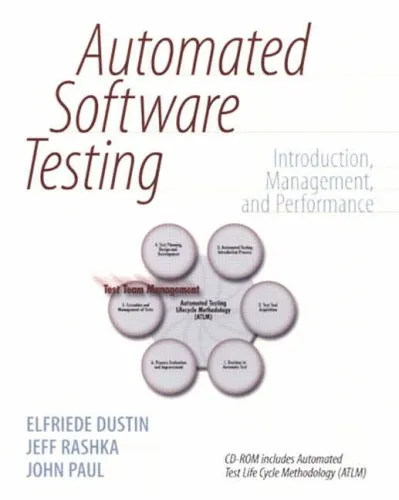
Automated Software Testing: Introduction, Management, and Performance
Elfriede Dustin,Jeff Rashka,John Paul
1999
View book
Model-Driven Software Engineering in Practice: Second Edition
Marco Brambilla,Jordi Cabot,Manuel Wimmer
2017
View book