
Conflict and Compromise: The Strategy, Politics and Diplomacy of the French Blockade, 1914–1918
Marjorie Milbank Farrar (auth.)
1974
View book
Book guide and evaluation
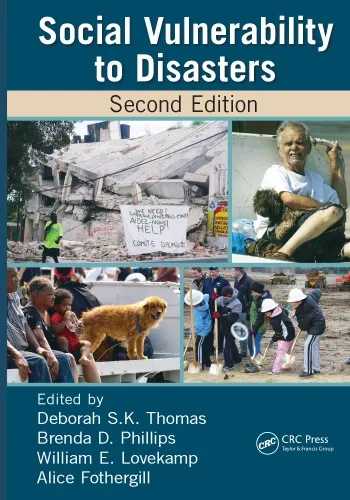
Thomas, Deborah S.K.;Phillips, Brenda D.;Lovekamp, William E.;Fothergill, Alice
0 reviews
Published
pages
views
Introduction to "Social Vulnerability to Disasters" Disasters—whether natural, technological, or human-induced—strike indiscriminately, but their impacts often highlight existing inequities within society. “Social Vulnerability to Disasters,” written by Thomas, Deborah S
Before you read
Disasters—whether natural, technological, or human-induced—strike indiscriminately, but their impacts often highlight existing inequities within society. “Social Vulnerability to Disasters,” written by Thomas, Deborah S.K., Phillips, Brenda D., Lovekamp, William E., and Fothergill, Alice, delves into this complex interplay between disasters and social vulnerabilities. This comprehensive resource serves as a cornerstone for understanding how factors such as race, gender, socioeconomic status, age, disability, and other social determinants influence disaster preparedness, response, recovery, and mitigation. By tackling these pressing issues, the book aims to equip students, scholars, practitioners, and policymakers with actionable insights to build more resilient communities.
Through critical analysis, in-depth case studies, and practical strategies, this book offers a robust framework for assessing and addressing social vulnerability in disaster management systems. It underscores the importance of equity and justice in reducing the disparities apparent during disasters, thus advocating for a more inclusive and compassionate approach to disaster preparedness and recovery. This introduction explores the central themes and essential takeaways from the book, emphasizing its value as a vital resource in the field.
“Social Vulnerability to Disasters” provides informed perspectives on the intersection of social structures and disaster management. It introduces the concept of "social vulnerability," which refers to the unique challenges certain populations face before, during, and after disasters due to systemic inequalities. Across its chapters, the book examines key themes such as how poverty affects disaster recovery, the disproportionate risks faced by women and children, and the struggles endured by marginalized populations, such as indigenous groups, seniors, and people with disabilities.
Using interdisciplinary research, the authors highlight why some groups suffer more during disasters, both due to pre-existing societal inequities and institutional failures in disaster relief systems. The book also asserts that an equitable approach to disaster management must include engagement with and tailored support for vulnerable populations. Case studies from around the globe illustrate these issues, from Hurricane Katrina to international events such as the Indian Ocean Tsunami, emphasizing that social vulnerability is a universal concern that transcends borders.
Beyond simply identifying issues, the book calls for systemic reforms in disaster planning processes. It urges organizations and governments alike to prioritize social justice, seek diverse perspectives, and ensure the voices of vulnerable populations are included at every stage of disaster preparedness and recovery. This makes the book not just an academic exploration but a tool for meaningful change in both policy and practice.
"A disaster is not just a singular event; it is a light shone on existing societal inequities and vulnerabilities."
"Resilience cannot be achieved without recognizing and addressing the root causes of vulnerability."
"Effective disaster management is people-centered, equity-driven, and attentive to the diverse needs of all communities."
Disasters, while often seen as moments of chaos, are also moments of revelation. They expose the fractures and fault lines in our social systems, disproportionately impacting those who are already the most vulnerable. “Social Vulnerability to Disasters” stands out as an essential contribution to the literature on disaster management because it goes beyond technical solutions and takes a deeply humanistic approach. By examining the social and structural barriers that perpetuate vulnerability, the book challenges us to rethink how we approach disasters from the ground up.
This book matters because it addresses the pressing need for equity and justice in disaster management, providing both a theoretical foundation and practical frameworks for transformation. Whether you are a student looking to explore the concepts of vulnerability and resilience or a policymaker striving to implement more inclusive and effective disaster policies, this book is an invaluable tool. It calls us to action, reminding readers that addressing social vulnerability is not just a task for governments or aid organizations—it is a moral imperative for everyone involved in disaster management.
Your question is answered in the context of this title and author. Each answer uses 2 points.
0 reviews, 4.5 average out of 5
Sign in to publish a review.
Ask a focused question and learn from the community.
Related references that continue this learning path.
Marjorie Milbank Farrar (auth.)


Friedel Bolle,Marco Lehmann-Waffenschmidt (auth.),Professor Dr. Friedel Bolle,Professor Dr. Marco Lehmann-Waffenschmidt (eds.)