

Conflict and Compromise: The Strategy, Politics and Diplomacy of the French Blockade, 1914–1918
Marjorie Milbank Farrar (auth.)
1974
View book
Book guide and evaluation
Igor Khripunov
0 reviews
Published
pages
views
Introduction Radiological terrorism, a form of attack that involves the malicious use of radioactive materials to create devastating psychological, social, and physical consequences, poses a distinct and growing threat in our modern era. In response to this critica
Before you read
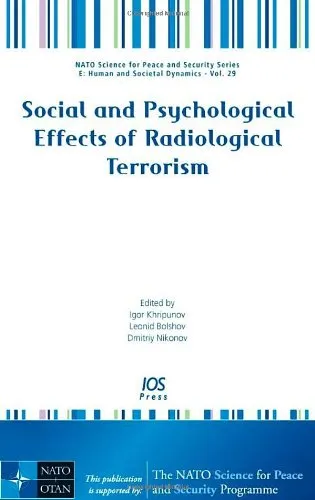
Radiological terrorism, a form of attack that involves the malicious use of radioactive materials to create devastating psychological, social, and physical consequences, poses a distinct and growing threat in our modern era. In response to this critical global issue, "Social and Psychological Effects of Radiological Terrorism" provides a comprehensive exploration of the profound psychological and societal implications of such attacks. As Volume 29 of the NATO Science for Peace and Security Series, this book serves as a cornerstone for understanding the human and social dynamics associated with the consequences of radiological terrorism, offering insights and strategies for preparedness, response, and resilience.
This work combines interdisciplinary research, real-world case studies, and expert perspectives to address topics ranging from the fear and stigma associated with radioactive exposure to the essential frameworks required for government and community preparedness. It investigates the broader consequences of radiological attacks—not just the physical harm—but the cascading effects on societal trust, mental health, governance, and institutional effectiveness. Authored by leading researchers, security experts, and psychologists, the book bridges the gap between technical analysis and human impact, making it an invaluable resource for policymakers, emergency managers, and scholars in various fields.
The book opens with an overview of the rise of radiological terrorism, delving into the evolving security landscape and the advances in radioactive material accessibility that make these attacks both plausible and catastrophic. It lays the conceptual groundwork for understanding radiological terrorism not just as a physical threat but as a psychological weapon aimed at instilling pervasive fear and uncertainty.
Subsequent chapters analyze the psychological effects of radiological exposure on individuals, communities, and societal institutions. Using data from historical nuclear events—such as Hiroshima, Chernobyl, and Fukushima—the book extrapolates lessons regarding public perception, stigma, and the far-reaching emotional toll of radiation-related incidents. Through detailed discussion, it emphasizes the role of social structures in mitigating or amplifying public anxiety and distrust.
The latter sections of the book focus on crisis communication and post-attack recovery strategies. Practical frameworks for risk communication, mental health support, and community resilience are examined, offering actionable insights for emergency responders and stakeholders. Furthermore, the book underscores the importance of international collaboration in combating the proliferation of radiological threats and establishing global best practices for preparedness and response.
In an era where asymmetrical threats continue to evolve, "Social and Psychological Effects of Radiological Terrorism" is a timely and crucial contribution to the fields of security studies, emergency management, and psychology. Its multidisciplinary approach ensures that the psychological and social dimensions of radiological attacks are not overlooked, bridging the gap between technical expertise and human-centered strategies. This book not only equips readers with an understanding of radiological terrorism but also empowers them to build systems and communities capable of withstanding and recovering from such crises.
For policymakers, the book offers actionable tools to design effective preparedness plans and policy frameworks that prioritize human well-being. For psychologists and social scientists, it highlights the intricate interplay between trauma, fear, and societal dynamics in the context of radiological events. And for the general reader, it illuminates an often-understudied, yet profoundly impactful, dimension of modern security challenges. By addressing this critical topic through a combination of science and empathy, this book stands as a beacon of knowledge and a call to action for all those concerned with building resilience in an increasingly uncertain world.
Your question is answered in the context of this title and author. Each answer uses 2 points.
0 reviews, 4.0 average out of 5
Sign in to publish a review.
Ask a focused question and learn from the community.
Related references that continue this learning path.
Marjorie Milbank Farrar (auth.)

Friedel Bolle,Marco Lehmann-Waffenschmidt (auth.),Professor Dr. Friedel Bolle,Professor Dr. Marco Lehmann-Waffenschmidt (eds.)
Michael J Fagel