Book guide and evaluation
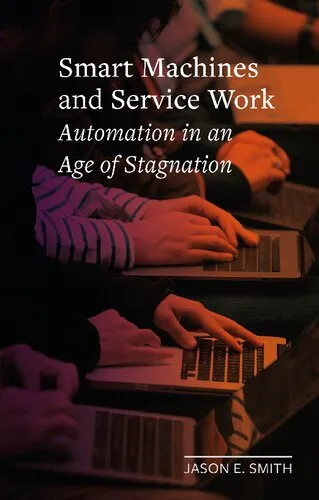
Smart Machines and Service Work: Automation in an Age of Stagnation
Jason E. Smith
English
Beginner
Artificial Intelligence (AI)
4.1 / 5
0 reviews
2020
Published
161
pages
585
views
Introduction Welcome to an era where smart machines and technology redefine the dynamics of service and labor. In "Smart Machines and Service Work: Automation in an Age of Stagnation," Jason E. Smith delves deep into the intersection of automation, labor markets, and econo
Before you read
What will you get from this book?
Introduction
Welcome to an era where smart machines and technology redefine the dynamics of service and labor. In "Smart Machines and Service Work: Automation in an Age of Stagnation," Jason E. Smith delves deep into the intersection of automation, labor markets, and economic stagnation. This book invites readers to explore the impacts and implications of emerging AI technologies on employment and how it reshapes our understanding of productivity and economic value in modern society.
Detailed Summary of the Book
The phenomenon of automation is not new; however, its rapid advancement in recent years has brought unprecedented changes to various sectors, especially in service work. At the heart of the book lies a critical examination of how smart machines are transforming industries and the workforce. Jason E. Smith argues that automation is occurring during a period of broader economic stagnation, complicating the prospects for job growth and quality work.
Through a blend of theoretical insights and empirical analysis, Smith dissects how automation impacts service industries, which are typically less affected by technological change compared to manufacturing sectors. The book raises questions about whether these advancements genuinely lead to prosperity or if they exacerbate economic disparities. Smith also examines the role of policy in managing the transition towards an automated economy, emphasizing the need for an ethical framework to guide this change.
Key Takeaways
- Transformation of Labor: Automation is reshaping job roles, necessitating a shift in skills and education to keep pace with technology.
- Economic Stagnation: Contrary to popular belief, smart machines may not lead to economic boom but rather exist alongside prolonged periods of stagnation.
- Socio-Economic Disparities: Automation could widen the gap between different socio-economic classes unless proactive measures are taken.
- Policy and Regulation: There is a critical need for strong policy frameworks to ensure equitable distribution of the benefits derived from automation.
Famous Quotes from the Book
“The age of automation doesn’t promise more jobs or wealth distribution but rather a redefining of human work itself.”
“Without strategic intervention, smart machines might deepen the cycles of economic stagnation.”
Why This Book Matters
In the age of rapid technological advancement, understanding the influence of automation on service work is crucial. "Smart Machines and Service Work" provides a comprehensive exploration of these changes, making it a pivotal read for policymakers, economists, and anyone interested in the future of work. With its insightful analysis, the book challenges preconceived notions about progress and prosperity linked with technology, urging readers to rethink the social contract in an automated world.
The book’s relevance cannot be overstated as it parallels ongoing debates about AI ethics, job displacement, and economic inequality. As societies grapple with these issues, Jason E. Smith’s work offers a thought-provoking roadmap for navigating the complexities of service work in the automation age.
Ask this book
Your question is answered in the context of this title and author. Each answer uses 2 points.
Sign in to ask the book assistant.
Reader reviews
0 reviews, 4.1 average out of 5
No reviews yet
If you have read this book, help the next reader with your experience.
Write a review
Sign in to publish a review.
Reader questions and answers
Ask a focused question and learn from the community.
Sign in to ask or answer a question.
No questions yet
Be the first to ask a clear, useful question.
What to read next
Related references that continue this learning path.
How to Compete in the Age of Artificial Intelligence: Implementing a Collaborative Human-Machine Strategy for Your Business
Soumendra Mohanty,Sachin Vyas
2018
View book

The Measure of All Minds: Evaluating Natural and Artificial Intelligence
José Hernández-Orallo
2017
View book