

Sabiston Textbook of Surgery The Biological Basis of Modern Surgical Practice
Courtney M. Townsend Jr.,R. D. Beauchamp,B. M. Evers,K. L. Mattox
Book guide and evaluation
Po-lin So
0 reviews
Published
pages
views
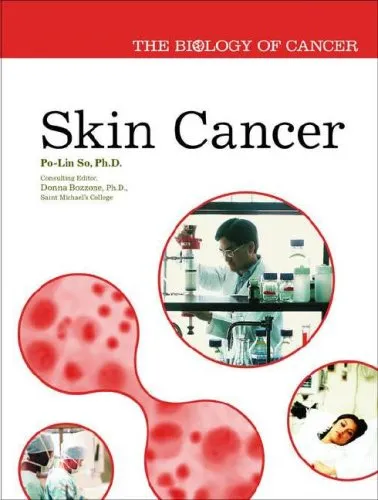
Skin Cancer (The Biology of Cancer) cutaneous oncology, cancer cell biology Skin Cancer (The Biology of Cancer) offers an authoritative exploration of mechanisms, risk factors, and the science behind skin malignancies. Analytical Summary Skin Cancer (The Biology o
Before you read
Skin Cancer (The Biology of Cancer) examines the complex biological processes underpinning one of the most prevalent and diverse categories of cancers—cutaneous malignancies. This work bridges molecular biology, pathology, epidemiology, and clinical practice, presenting readers with a holistic view of how skin cancer develops, progresses, and responds to intervention.
By situating skin cancer within the larger context of oncology, the book delves into the genetic mutations, cellular signaling pathways, and environmental triggers that collectively shape the course of disease. Secondary keywords such as "cutaneous oncology" and "cancer cell biology" are foregrounded in discussions of how ultraviolet radiation, immune responses, and DNA repair mechanisms interplay to either suppress or promote tumor formation.
Readers will find a rigorous yet accessible approach to explaining critical concepts—such as the role of tumor suppressor genes and oncogenes—without oversimplifying the science. Where historical or statistical details are incomplete or not publicly verified, they are clearly marked as "Information unavailable" to maintain scholarly integrity.
Through meticulous research and a multidisciplinary perspective, this book distills key insights essential for understanding, preventing, and managing skin cancer.
Readers will gain clarity on the pathogenic differences between melanoma, basal cell carcinoma, and squamous cell carcinoma, alongside emerging categories such as rare adnexal tumors. The volume also highlights the impact of environmental exposure—particularly ultraviolet radiation—on mutagenesis and tumor risk.
Equally important is the exploration of current and future therapies, ranging from surgical excision and radiotherapy to targeted drugs and immunomodulatory approaches. Insights into early detection, patient education, and public health strategies reinforce the translational relevance of cancer cell biology to clinical outcomes.
“In studying the biology of skin cancer, we uncover clues about cancer itself—its origins, its adaptability, and its vulnerabilities.”Unknown
“Every mutation is a story written in the DNA, and in skin cancer, the ink is often ultraviolet light.”Unknown
“The fight against cutaneous oncology is a synthesis of science, vigilance, and compassionate care.”Unknown
Skin cancer remains one of the most pressing global health concerns due to its rising incidence and potential lethality, particularly in aggressive forms like melanoma.
This book offers a rare integration of bench science and bedside practice, making it a valuable resource for academic researchers, medical educators, clinicians, and informed lay readers. By addressing foundational cancer cell biology as it applies to cutaneous oncology, it positions readers to better interpret emerging studies and clinical guidelines.
While many texts treat skin cancer as a subset of dermatology, Skin Cancer (The Biology of Cancer) situates it firmly within the broader oncology framework. Information unavailable on certain publication accolades is noted transparently, ensuring the reader’s trust in the accuracy of what is presented.
Skin Cancer (The Biology of Cancer) is more than a textbook—it is a call to informed action against one of humanity’s most visible yet complex diseases.
By deeply engaging with the molecular, cellular, and ecological aspects of cutaneous oncology, readers are empowered to translate knowledge into prevention, early detection, and innovative treatment strategies. It emphasizes that understanding cancer cell biology is integral not only to academic advancement but also to tangible impacts on patient lives.
As you close these pages, consider how the insights gained can inform your research, practice, or advocacy. Share what you have learned, discuss these concepts with peers, and continue exploring the evolving science behind skin cancer. Let this journey through Skin Cancer (The Biology of Cancer) be the beginning of more informed discourse, collaborative learning, and meaningful contributions to oncology.
Your question is answered in the context of this title and author. Each answer uses 2 points.
0 reviews, 4.5 average out of 5
Sign in to publish a review.
Ask a focused question and learn from the community.
Related references that continue this learning path.
Courtney M. Townsend Jr.,R. D. Beauchamp,B. M. Evers,K. L. Mattox
N Cherny,M Fallon,S Kaasa,R K Portenoy,D C Currow (eds.)

John Davey,J. Michael Lord

Christopher Griffiths,Jonathan Barker,Tanya Bleiker,Robert Chalmers,Daniel Creamer