
Book guide and evaluation
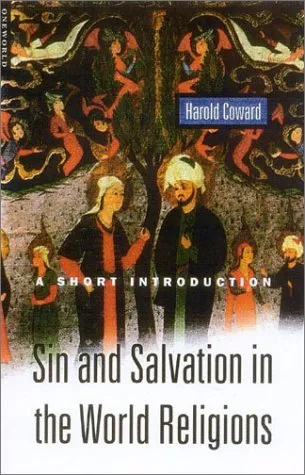
Sin and Salvation in the World Religions: A Short Introduction
Harold Coward
English
Intermediate
novel
4.5 / 5
0 reviews
2003
Published
209
pages
540
views
Welcome to the exploration of one of the most profound themes in the tapestry of world religions: sin and salvation. My book, "Sin and Salvation in the World Religions: A Short Introduction," navigates through these intricate concepts across different religious traditions. It a
Before you read
What will you get from this book?
Welcome to the exploration of one of the most profound themes in the tapestry of world religions: sin and salvation. My book, "Sin and Salvation in the World Religions: A Short Introduction," navigates through these intricate concepts across different religious traditions. It aims to offer readers a comparative and insightful understanding of how diverse cultures interpret these eternal themes.
Detailed Summary of the Book
In "Sin and Salvation in the World Religions," we delve into how major world religions comprehend and articulate the concepts of sin and salvation. The book embarks on a journey through Hinduism, Buddhism, Judaism, Christianity, and Islam, examining the distinct ways in which each views human wrongdoing and redemption.
Hinduism introduces us to karma and dharma as guiding principles, where sin is tied to actions that contravene one's duty and disrupt cosmic order. In Buddhism, sin relates more to ignorance and craving, which bind individuals to the cycle of rebirth, offering salvation through enlightenment, or Nirvana.
Judaism focuses on sin as a deviation from God's law, with salvation achieved through repentance and turning back to the covenant with God. Christianity uniquely emphasizes sin through the doctrine of original sin and presents salvation as a gift of grace through Christ's sacrifice.
Islam presents sin as a forgetfulness of God’s will, with salvation attainable through submission (Islam) and righteous living. This exploration invites readers to appreciate the plurality of religious experiences while understanding a universal quest for meaning and redemption.
Key Takeaways
- The concepts of sin and salvation are universally present but interpreted differently across religions.
- Understanding these concepts requires delving into the cultural, historical, and theological contexts of each religion.
- Each religion offers a unique path to address human moral and spiritual shortcomings, whether it's through action, enlightenment, law, grace, or submission.
- Comparative study enhances mutual respect and a deeper appreciation of global religious landscapes.
Famous Quotes from the Book
"Sin, though seen as an individual lapse, holds a collective consequence and reflects the cultural fabric of a community's moral vision."
"Salvation, in its many forms, is humanity's quest for transcendence, a bridge built from the shores of human frailty to the horizons of divine fulfillment."
Why This Book Matters
In an era of heightened global interaction and sometimes misunderstanding, "Sin and Salvation in the World Religions" serves as an essential resource for fostering dialogue and understanding. It offers both scholars and lay readers an accessible yet scholarly exploration of two pivotal religious concepts.
This book invites readers to view world religions not as isolated systems but as dynamic, interrelated frameworks for understanding human nature and its aspirations. By engaging with various interpretations of sin and salvation, readers can cultivate a sense of shared humanity and collective wisdom.
The need to understand and respect religious differences has never been more urgent, and this work contributes significantly to those critical conversations.
Ask this book
Your question is answered in the context of this title and author. Each answer uses 2 points.
Sign in to ask the book assistant.
Reader reviews
0 reviews, 4.5 average out of 5
No reviews yet
If you have read this book, help the next reader with your experience.
Write a review
Sign in to publish a review.
Reader questions and answers
Ask a focused question and learn from the community.
Sign in to ask or answer a question.
No questions yet
Be the first to ask a clear, useful question.
What to read next
Related references that continue this learning path.

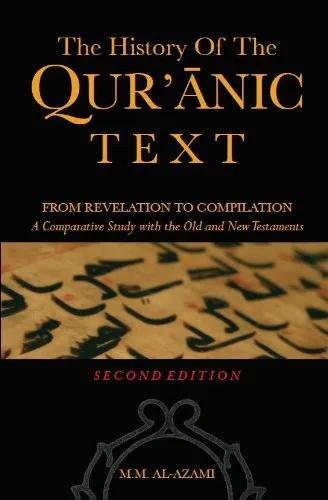
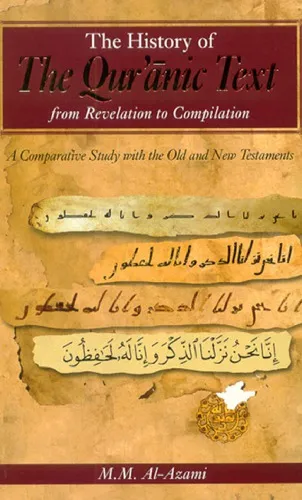
The history of the Qur'ānic text : from revelation to compilation : a comparative study with the Old and New Testaments
Muḥammad Muṣṭafá Aʻẓamī
2003
View book