
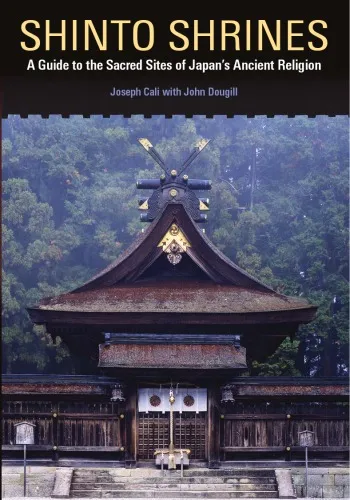
Shinto Shrines A Guide to the Sacred Sites of Japan's Ancient Religion
Cali, Joseph;Ciotti, Geoff;Dougill, John
2012;2013
View book

Book guide and evaluation
Jean Herbert
0 reviews
Published
pages
views
Introduction to "Shinto: At the Fountainhead of Japan" Shinto, often recognized as the indigenous spirituality of Japan, possesses a rich tapestry of rituals, beliefs, and historical narratives that have profoundly shaped Japanese culture and society. In "Shinto: At the Fo
Before you read
Shinto, often recognized as the indigenous spirituality of Japan, possesses a rich tapestry of rituals, beliefs, and historical narratives that have profoundly shaped Japanese culture and society. In "Shinto: At the Fountainhead of Japan," Jean Herbert delves into the intricate layers of this venerable tradition, offering readers a comprehensive exploration of its ethos, evolution, and enduring influence. This book serves not only as an academic inquiry but as a profound cultural journey into the heart of Japan.
Jean Herbert's "Shinto: At the Fountainhead of Japan" embarks on an enlightening exploration of Shinto from its mythical origins in ancient Japan to its status in contemporary society. The book meticulously unpacks the foundational myths that underpin Shinto beliefs, such as the creation story involving deities like Izanagi and Izanami. Herbert discusses how these mythologies inform the spiritual and cultural consciousness of the Japanese people.
Furthermore, the book delves into the various kami (gods/spirits) and their roles, shedding light on how these deities are worshipped through rituals, festivals, and daily practices. Herbert presents a vivid picture of shrine architecture and the significance of nature in Shinto. The book also addresses Shinto’s interactions with other religions, such as Buddhism and Christianity, and how these interactions have shaped its current practice.
Through historical analysis and contemporary observations, Herbert illustrates how Shinto remains a living, breathing aspect of Japanese identity, deeply embedded in everyday life and national consciousness.
"Shinto, more than a religion, is a way of being; it is an integral part of the Japanese soul."
"In the dance of leaves and the whisper of streams, the kami dwell, ever watching, ever nurturing."
"Shinto: At the Fountainhead of Japan" matters because it fills a significant gap in the understanding of an often-misunderstood facet of Japanese life and culture. In a globalized world where cultural knowledge facilitates deeper interpersonal and international relations, understanding Shinto offers profound insights into the Japanese psyche and their worldview.
Jean Herbert doesn’t merely recount historical facts; he provides a narrative that brings to life the elegance and simplicity of Shinto practices. For scholars, travelers, and anyone interested in how religion shapes civilizations, this book is an indispensable resource that enhances appreciation and understanding of Japan beyond the surface. It reveals Shinto as not just a set of rituals but as an inseparable element of Japanese art, politics, literature, and daily living.
Through his authoritative and compelling narrative, Herbert ensures that readers grasp not just the mechanics of Shinto but its soul, which continues to pulse through the veins of Japan.
Your question is answered in the context of this title and author. Each answer uses 2 points.
0 reviews, 2.5 average out of 5
Sign in to publish a review.
Ask a focused question and learn from the community.
Related references that continue this learning path.
Cali, Joseph;Ciotti, Geoff;Dougill, John
Joseph Cali;John Dougill
Kate Wildman Nakai (editor)

Professor of Japanese History Kate Wildman Nakai (editor),Bernhard Scheid (editor)