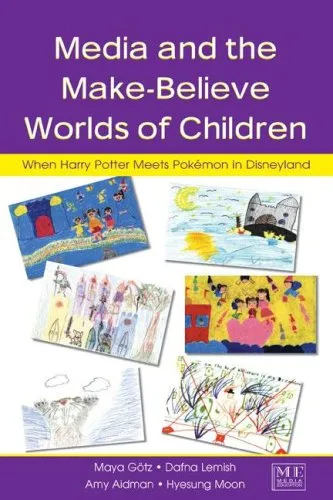
Media and the Make-Believe Worlds of Children: When Harry Potter Meets Pokemon in Disneyland
Maya Gotz,Dafna Lemish,Amy Aidman,Hyesung Moon
2005
View book
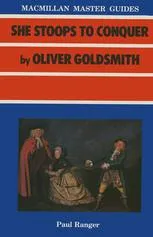
Book guide and evaluation
Paul Ranger (auth.)
0 reviews
Published
pages
views
Introduction Published in 1773, She Stoops to Conquer by Oliver Goldsmith is one of the most enduring comedies of the 18th century. A remarkable example of English Restoration comedy, the play holds a pivotal place in the history of theatre. It is a
Before you read
Published in 1773, She Stoops to Conquer by Oliver Goldsmith is one of the most enduring comedies of the 18th century. A remarkable example of English Restoration comedy, the play holds a pivotal place in the history of theatre. It is a delightful blend of humor, satire, and misunderstandings that highlights societal norms, romantic idealism, and class distinctions, while still remaining relevant to modern audiences.
Set during a single evening in a country manor house, the play teases out misunderstandings and mistaken identities that originate from a young man’s shyness and a lively woman’s clever cunning. It delivers humor that is not only entertaining but also thought-provoking, standing the test of time as both a masterpiece of characterization and insightful social commentary. Let's explore this theatrical gem in greater detail.
She Stoops to Conquer centers around Charles Marlow, a young man who is awkwardly shy around dignified women yet surprisingly bold and confident with women of a lower class. His father arranges a marriage proposal for him with Kate Hardcastle, the daughter of a wealthy countryman, Mr. Hardcastle. The crux of the comedy unfolds when Marlow mistakes Mr. Hardcastle's house for an inn due to a prank played by Tony Lumpkin, Kate's mischievous half-brother.
Marlow’s misunderstanding sets the stage for a series of comical errors. He treats Mr. Hardcastle with little respect, believing him to be an innkeeper. Meanwhile, Kate, realizing Marlow's duality of character, decides to "stoop to conquer" by posing as a barmaid in order to win his heart. This deceptive yet ingenious act exposes Marlow’s genuine nature, creating a contrast between social expectations and personal sentiment.
Alongside this main plot, there is a subplot involving Tony Lumpkin and Constance Neville, who is in love with Hastings, a friend of Marlow. The two are trying to elope while avoiding the grasp of Mrs. Hardcastle, Tony’s overbearing mother and Constance’s guardian. Through layers of wit, confusion, and near-misses, the play’s two central romantic entanglements are resolved in exhilarating scenes of clarity and revelation.
"I love everything that's old: old friends, old times, old manners, old books, old wine."
"Ask me no questions, and I’ll tell you no fibs."
"The humors of the age they live in affect even the gravest of us all."
She Stoops to Conquer holds significance not only as a clever comedy but also as an insightful critique of 18th-century sociopolitical structures and relationships. Its unique blend of farce and sentimentality serves as a timeless reminder of the human tendency to judge based on appearances. Oliver Goldsmith successfully rejects the overly sentimental tone of typical Georgian drama, crafting a lighthearted yet sharp exploration of human behavior.
The play transcends its historical context to resonate with contemporary audiences, as its themes — the absurdity of rigid class systems, the complexities of love, and the value of individuality — remain universal. Furthermore, its role in the history of English theatre is immense, reviving comic traditions and influencing future comedic playwrights. Its wit, relatability, and significance in challenging societal norms make it a must-read (or watch) for literature enthusiasts and theatre lovers alike.
Your question is answered in the context of this title and author. Each answer uses 2 points.
0 reviews, 4.9 average out of 5
Sign in to publish a review.
Ask a focused question and learn from the community.
Related references that continue this learning path.
Maya Gotz,Dafna Lemish,Amy Aidman,Hyesung Moon
Alan Miller,Kimberly Heckert,Brian Davis