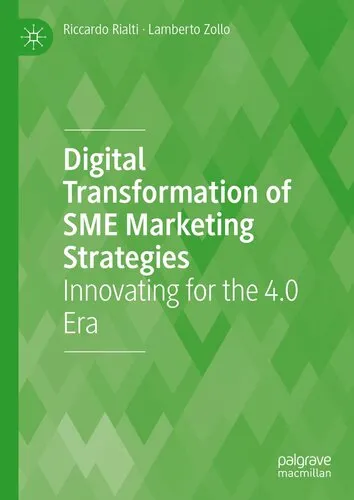
Digital Transformation of SME Marketing Strategies: Innovating for the 4.0 Era
Riccardo Rialti,Lamberto Zollo
2023
View book

Book guide and evaluation
Gerhard Oswald,Michael Kleinemeier (eds.)
0 reviews
Published
pages
views
Introduction to "Shaping the Digital Enterprise: Trends and Use Cases in Digital Innovation and Transformation" In today’s fast-evolving world, digital transformation is more important than ever for businesses striving to remain relevant, competitive, and successful. "
Before you read
In today’s fast-evolving world, digital transformation is more important than ever for businesses striving to remain relevant, competitive, and successful. "Shaping the Digital Enterprise: Trends and Use Cases in Digital Innovation and Transformation", edited by Gerhard Oswald and Michael Kleinemeier, provides a comprehensive exploration of how organizations can harness the power of digital technologies to drive innovation and achieve sustained growth.
This book delves into the core principles, methodologies, and strategies that define the digital revolution. With expert insights and practical use cases, it serves as a guide for business leaders, decision-makers, and innovators who aim to navigate the complexities of the digital age, leveraging its opportunities while overcoming its challenges. Divided into well-structured chapters, the book examines key trends in digital innovation, providing an in-depth understanding of how emerging technologies can reshape enterprises.
The book begins with an exploration of the concept of digital transformation and its implications for organizations across industries. It highlights the factors driving the global shift towards digitization, including technological advancements, customer expectations, and market dynamics. The authors frame digital transformation not merely as a trend but as a fundamental strategic imperative for businesses.
Each chapter is dedicated to a specific dimension of digital transformation, such as cloud computing, big data analytics, the Internet of Things (IoT), artificial intelligence (AI), and blockchain technology. The editors carefully curate insights from leading academics, industry experts, and practitioners to provide a balanced perspective on the tools and technologies shaping the modern business landscape.
Another focal point of the book is its inclusion of real-world use cases. Readers are taken through detailed examples of organizations that have successfully implemented digital initiatives, highlighting their challenges, strategies, and outcomes. These practical insights demonstrate not only the potential of digital transformation but also the importance of cultural change, leadership, and collaboration in achieving meaningful results.
"Digital transformation is less about technology and more about building a culture where innovation thrives."
"The digital age rewards those who are agile, forward-thinking, and customer-oriented while it punishes those clinging to outdated practices."
"Organizations that embrace disruption as an opportunity will be those that lead in the modern economy."
"Shaping the Digital Enterprise" is more than just a theoretical exploration of digital transformation—it is a practical, actionable resource for modern organizations. At a time when businesses are under mounting pressure to adopt digital-first strategies, this book provides clarity, guidance, and inspiration to fuel innovation.
The inclusion of case studies from diverse industries ensures that readers gain a broad understanding of how digital transformation can drive success, irrespective of their niche or domain. Furthermore, the emphasis on leadership, culture, and collaboration makes this a holistic guide for overcoming the human and organizational challenges inherent in the process of digital innovation.
By blending cutting-edge research with tangible examples, the authors bridge the gap between academia and real-world application, making this book invaluable to practitioners and scholars alike. It is a must-read for anyone seeking to shape the future of their organization in an age defined by rapid technological change.
Your question is answered in the context of this title and author. Each answer uses 2 points.
0 reviews, 4.3 average out of 5
Sign in to publish a review.
Ask a focused question and learn from the community.
Related references that continue this learning path.
Riccardo Rialti,Lamberto Zollo
Pulizzi, Joe;Rose, Robert
George Westerman,Didier Bonnet,Andrew McAfee